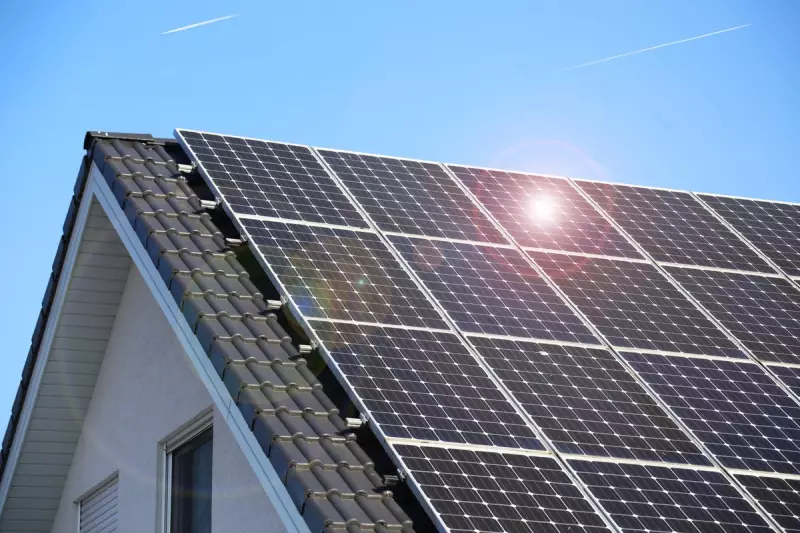
For UK homeowners considering a switch to renewable energy, understanding the long-term value of solar panels is crucial. A key question is how long the investment will last and what happens at the end of its life.
The Impressive Lifespan of Modern Solar Panels
The good news for consumers is that solar technology is remarkably durable. According to UK installer Glow Green, most contemporary systems are engineered to perform for approximately 30 years. This longevity is a primary factor making solar installations a worthwhile investment for households.
This doesn't imply a sudden failure after three decades. Instead, panel efficiency experiences a gradual, predictable decline. On average, output reduces by roughly 0.3% to 0.5% annually. Consequently, after a quarter-century, many systems still operate at 80% to 85% of their original capacity, continuing to generate significant free electricity.

Manufacturers support this with robust guarantees. Most panels come with performance warranties spanning 20 to 30 years, ensuring a minimum power output over time. Separate product warranties cover defects. It's important to note that inverters, which convert solar energy for home use, typically require replacement sooner, often between 10 and 15 years, representing a key maintenance cost.
Recycling Solar Panels: A Straightforward Process in the UK
Yes, solar panels can and must be recycled. In the UK, they fall under Waste Electrical and Electronic Equipment (WEEE) regulations, a framework maintained post-Brexit. These rules mandate proper end-of-life processing for electronic goods.
The composition of a panel makes it highly suitable for recycling. A significant portion is glass and aluminium, both easily recyclable materials. Components like silicon, plastic, and other metals can also largely be recovered. The International Energy Agency (IEA) reports that 80% to 95% of a panel's materials can be reclaimed for reuse.
While the UK doesn't currently manufacture new panels from old ones, the recycled materials find new life in other industries, such as automotive glass. Homeowners should never dispose of panels in general waste or landfill. The process is handled by specialists; typically, your installer or manufacturer can arrange collection via a take-back scheme, or you can contact a licensed WEEE recycling centre.
Understanding Your Solar Panel Warranty and Insurance
A solar panel warranty generally covers two critical areas: manufacturing defects and performance. If a panel fails due to a factory fault, the installer or supplier should coordinate a repair or replacement. The performance guarantee ensures your system's output doesn't fall below a specified level, often around 80% after 25 years.
It is also highly advisable to insure your solar installation. While warranties cover defects and underperformance, they do not protect against physical damage from events like storms or falling trees. Most standard home insurance policies can be extended to cover solar panels, but homeowners must proactively inform their insurer about the installation.
Looking decades ahead, after 30 years, panels will likely still be producing useful power. However, with technology advancing rapidly—efficiency has soared from about 6% in the 1950s to over 22% for commercial panels in 2026—replacement may eventually become cost-effective to harness more energy from the same roof space. Regardless, homeowners can expect decades of sustainable energy generation, backed by clear recycling pathways to ensure environmental responsibility from installation to end-of-life.