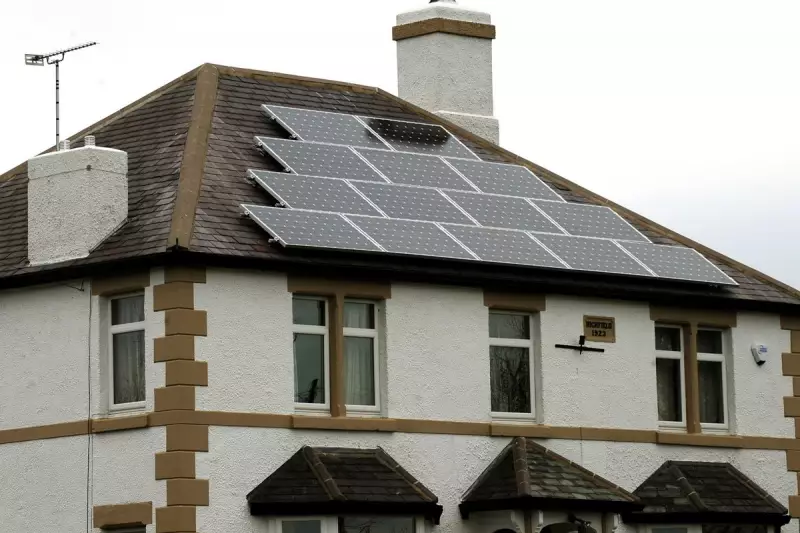
As a growing number of British households install solar panels to slash energy bills and reduce grid dependence, many are finding they generate more electricity than they can use, especially during sunnier periods. The mechanism that allows them to be paid for this surplus is the Smart Export Guarantee (SEG). Introduced in January 2020 to replace the government's older Feed-in Tariff, this scheme enables payments for renewable power sent back to the national grid.
What is the Smart Export Guarantee and Who Qualifies?
The SEG is a government-backed initiative regulated by Ofgem. It requires medium and large energy suppliers to pay households for every kilowatt-hour (kWh) of renewable electricity they export. Crucially, unlike the old Feed-in Tariff, it is an export-only payment with no separate generation tariff. Suppliers set their own market-driven rates, which means prices and terms vary widely.
To be eligible for SEG payments, homeowners must meet several key requirements:

- Have an MCS-certified solar panel installation (or equivalent).
- Use a smart meter capable of providing half-hourly export readings.
- Have their system approved and connected by the local Distribution Network Operator (DNO).
- Generate power from an eligible technology like solar PV, wind, or hydro.
It's important to note that you do not need to buy your electricity from the same supplier that handles your SEG payments, allowing for flexibility to maximise value. However, applications can be delayed by incomplete documentation, with missing MCS certificates being a common hurdle.
Understanding SEG Tariffs and Realistic Earnings
SEG tariffs fall into two main categories: fixed rates, which pay a flat price per kWh, and variable rates, which fluctuate with wholesale market conditions. Suppliers are only obliged to pay above zero, leading to a broad spectrum of offers. Some pay as little as 1p per kWh, while premium tariffs can reach around 15p per kWh, though these often require you to also switch your electricity supply to that provider.
How much you can earn is not solely dependent on the tariff rate. The biggest factor is often self-consumption—how much of your solar energy you use yourself before exporting. A typical 4kW solar system might generate roughly 3,400kWh annually. If a household exports around half of that (1,700kWh), earnings would vary significantly by tariff:
- At 3p/kWh: approximately £51 per year.
- At 10p/kWh: approximately £170 per year.
For most homes without a battery, exports range from 30% to 60% of total generation. Therefore, SEG income should be viewed as a useful bonus that improves overall system payback, not the primary financial return. The majority of savings still come from reducing grid electricity purchases, which is typically far more expensive than any export rate.
Applying for the SEG and the Impact of Solar Batteries
The application process involves choosing a tariff, gathering your MCS and DNO documentation, ensuring you have a compatible smart meter, and submitting your details to a supplier. Approval usually takes a few weeks, with payments typically made quarterly from the acceptance date.
For households with solar battery storage, the SEG still applies, provided the exported energy is renewably generated. Batteries can reduce SEG earnings by storing surplus power for later use, but they dramatically increase self-consumption, which often delivers greater overall bill savings than exporting at a low rate.
To maximise the benefits of your solar investment, regularly compare SEG tariffs, consider whether premium rates require a dual-fuel switch, and ensure your smart meter is correctly configured. For those focused on export income, reducing daytime consumption will send more power to the grid. If bill savings are the priority, using appliances during peak generation hours or adding a battery is often more effective.