Historic Emergency Oil Release Authorised to Counter Iran War Market Disruption
The International Energy Agency (IEA) has taken an unprecedented step to stabilise global energy markets by approving the largest emergency oil stock release in its five-decade history. This decisive action aims to mitigate the severe supply disruptions and price volatility triggered by the escalating war involving Iran in the Middle East.
Unprecedented Scale of Strategic Reserve Deployment
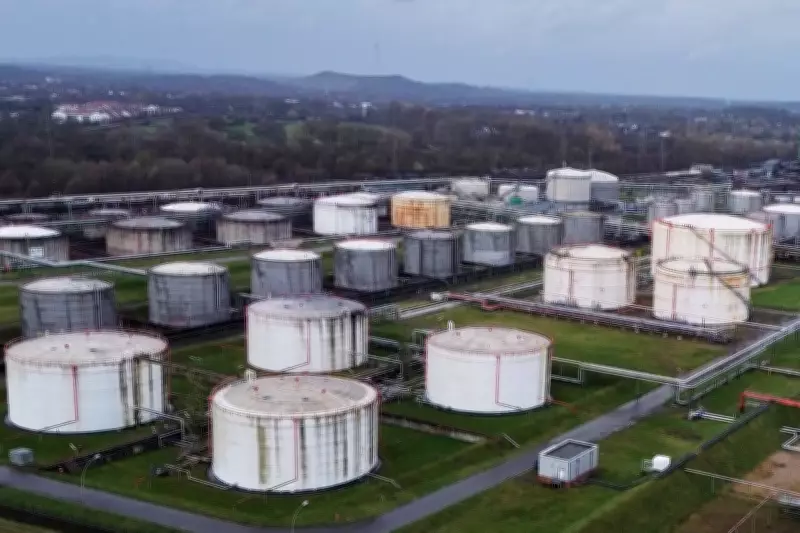
The Paris-based organisation, comprising 32 member nations, will make 400 million barrels of oil available from its collective emergency reserves. This volume significantly exceeds the 182.7 million barrels released in 2022 in response to Russia's full-scale invasion of Ukraine, highlighting the gravity of the current crisis.
IEA Executive Director Fatih Birol emphasised the critical market conditions, stating, "Without sufficient routes to market and with no more available storage, Middle East oil producers have started to reduce production. We have seen further attacks and damage to energy and energy-related infrastructure. Refinery operations have also been disrupted, with major implications for jet fuel and diesel supplies in particular."

Geopolitical Context and Supply Chokepoints
The decision follows a dramatic escalation in regional hostilities, with Iran targeting commercial shipping across the Persian Gulf and launching drone attacks on oil facilities, including the Fujairah terminal in the United Arab Emirates. Tehran has effectively halted cargo traffic through the strategically vital Strait of Hormuz, a narrow passage through which approximately one-fifth of globally traded oil transits from the Persian Gulf toward the Indian Ocean.
These actions form part of a broader campaign by Iran to inflict sufficient economic pain on Western nations to pressure the United States and Israel to cease their military strikes. Consequently, export volumes of crude and refined products have plummeted to less than 10% of pre-war levels, according to IEA assessments.
Coordinated International Response and National Measures
In a coordinated move, Group of Seven energy ministers convened at IEA headquarters in Paris to explore measures to curb soaring prices. Following the IEA's request for the record release, several member states announced immediate actions.
Germany confirmed it would release 2.64 million tons from its strategic reserves, with Economy Minister Katherina Reiche affirming, "Germany stands behind the IEA's most important principle of mutual solidarity." Simultaneously, Austria committed to releasing part of its emergency oil reserve and extending its national strategic gas reserve.
Austrian Economy Minister Wolfgang Hattmannsdorfer underscored the social imperative, declaring, "One thing is clear: in a crisis, there must be no crisis winners at the expense of commuters and businesses." Japan also announced it would begin releasing reserves starting the following Monday.
Ancillary Price Control Mechanisms
Beyond the strategic stock release, national governments are implementing supplementary measures to protect consumers. The German government introduced regulations limiting petrol stations to a maximum of one price increase per day, while Austria restricted price adjustments to only three times per week, effective immediately.
Historical Precedents and Future Stability
This marks only the sixth occasion the IEA has activated emergency stocks since the reserve system was established in 1974 following the Arab oil embargo. Previous deployments occurred during the 1990-1991 Gulf War, after Hurricane Katrina in 2005, during the Libyan civil war in 2011, and twice following Russia's invasion of Ukraine.
While the 400-million-barrel release is designed to provide immediate market relief, Birol cautioned that lasting stability hinges on geopolitical resolution. "This is a major action aiming to alleviate the immediate impacts of the disruption in markets," he stated. "But, to be clear, the most important thing for a return to stable flows of oil and gas is the resumption of transit through the Strait of Hormuz."

The IEA's member countries collectively hold over 1.2 billion barrels of public emergency oil stocks, with an additional 600 million barrels of industry stocks held under government obligation, providing a substantial buffer against prolonged supply shocks.