India Rations Cooking Gas as Middle East Conflict Disrupts Vital Imports
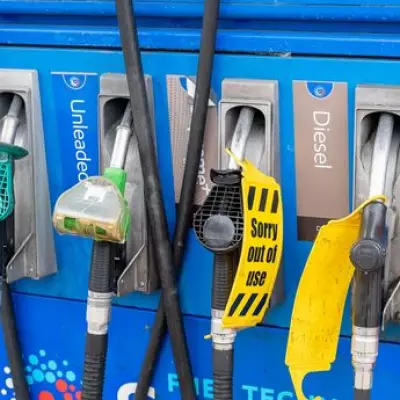
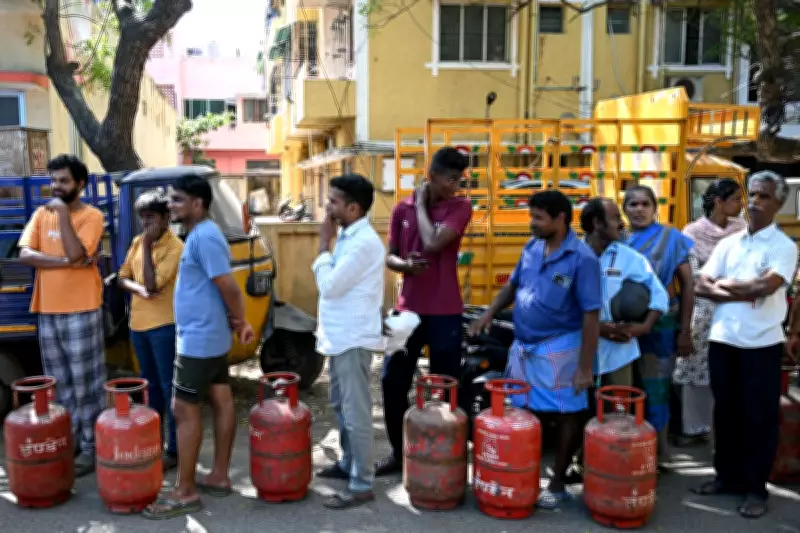
India is implementing emergency cooking gas rationing measures as escalating tensions in the Middle East choke off vital liquefied petroleum gas (LPG) supplies through the strategic Strait of Hormuz. The disruption has already forced numerous restaurants to close nationwide, with industry bodies warning of catastrophic economic consequences for a country that imports approximately 62 percent of its LPG requirements.
Restaurant Industry Faces Catastrophic Closures
The National Restaurant Association of India (NRAI), representing over 500,000 establishments, has issued dire warnings about the sector's heavy dependence on commercial LPG cylinders for daily operations. "Any disruption therein will lead to a catastrophic closure of the majority of restaurants," the association stated in an official communication. This warning comes as the US-Israeli conflict with Iran has effectively halted shipping through the Strait of Hormuz, a critical corridor that normally carries around 27 percent of global LPG flows.
Government Implements Emergency Measures
In response to the crisis, Indian authorities have taken multiple steps to manage tightening fuel availability:

- Ordering refineries to increase LPG production and prioritize household supplies
- Extending the interval between domestic LPG cylinder bookings from 21 to 25 days
- Directing oil marketing companies to prioritize household connections over commercial users
- Forming a three-member committee to review LPG supply requests from restaurants and hotels
- Invoking the Essential Commodities Act to ensure domestic supply stability
The petroleum ministry confirmed these measures on social media, stating that non-domestic supplies from imported LPG are being prioritized for essential sectors such as hospitals and educational institutions.
Asia's Vulnerability to Supply Disruptions
Energy analysts emphasize the regional implications of the Strait of Hormuz closure. "Asia is significantly reliant on LPG imports for its demand and 41 percent of the region's total waterborne LPG needs are barrels that move through the Strait of Hormuz," explains Cairan Tyler, lead research analyst at energy analytics firm Kpler. The same shipping route carries approximately 27 percent of Asian liquefied natural gas imports, underscoring its strategic importance for regional energy security.
Widespread Impact Across Indian Cities
The supply disruption has created varying levels of crisis across India's major urban centers:
- In Bengaluru, small restaurants have limited services to tea and coffee after commercial cylinder refilling ceased on March 7
- In Mumbai, approximately 20 percent of hotels and restaurants have already shut down, with projections suggesting 50 percent closures within days if supplies don't improve
- In Chennai and other cities, numerous establishments have completely shuttered due to cylinder shortages
Sagar Daryani, president of NRAI, reports that since March 9, none of their members have been receiving LPG supplies despite government circulars that recommended rather than mandated diversion to domestic consumption.
Broader Economic Consequences
The crisis extends far beyond restaurant closures, threatening to disrupt India's entire food supply chain. "There will be public hardship in accessing cooked food, affecting everyone from small roadside tea shops to five-star hotels," warns Sundar Singaram of the South India Hotels and Restaurants Association. He notes that hospitals typically don't operate their own catering facilities, meaning even patients could face challenges obtaining cooked meals.
The ripple effects could devastate agricultural and supply networks:

- Farmers, food suppliers, and fishermen who depend on hospitality sector demand
- Widespread food waste as perishable commodities go unconsumed
- Massive employment losses across cooks, helpers, delivery staff, and transport operators
- Supply chain disruptions reaching from urban restaurants to rural producers
Limited Alternatives and Practical Challenges
Switching to alternative fuels presents significant obstacles for India's commercial kitchens. Most establishments are specifically designed for LPG systems, and alternatives require substantial investment and adaptation time. "Based on all this, the only alternative is electric cooking burners, but it will take a lot of time for custom fabrication," Singaram explains. Firewood-based cooking remains largely impractical for most urban establishments, while piped natural gas availability is limited primarily to certain commercial areas and more developed in Delhi-NCR than elsewhere.
Industry bodies have advised restaurants to conserve fuel through menu reductions and judicious energy use, but many smaller establishments report being forced to purchase cylinders from black markets at significantly inflated prices. Nationwide price increases have further complicated the situation, with domestic cylinders becoming dearer by approximately Rs 60 and commercial cylinders by Rs 114.5 per 19kg unit.
Government Response and Future Outlook
Despite the crisis, Petroleum Minister Hardeep Singh Puri maintains that India remains in a "comfortable position" regarding energy security. The government has begun exploring alternative LPG supply partnerships with countries including Algeria, Australia, Canada, and Norway to ease pressure on domestic markets. Meanwhile, India's largest private refiner, Reliance Industries, has committed to maximizing LPG production and diverting locally produced natural gas to priority sectors.
Industry representatives continue to advocate for recognition as essential services, noting that during the COVID-19 pandemic, restaurants were categorized as such. "We are also an essential service and cannot afford supply disruptions," emphasizes Daryani, pointing out that many urban residents depend on restaurants for daily meals, including those living alone, in hostels, or in paying guest accommodations.