Iran Issues Stark $200 Oil Warning Following Strait of Hormuz Ship Attacks
Iran has issued a dire warning to the world, stating that oil prices could skyrocket to $200 per barrel after its military attacked three commercial cargo ships in the strategically vital Strait of Hormuz. This critical waterway, through which approximately 20% of global oil passes daily, has seen Iran establish a domineering presence since the outbreak of the Middle East conflict, leading to significant market volatility.
Military Spokesperson Directs Threat at US and Allies
Ebrahim Zolfaqari, spokesperson for Iran's military command, delivered a pointed message to the United States and its allies: "Get ready for oil to be $200 a barrel, because the oil price depends on regional security which you have destabilised." This statement follows Iran's earlier declaration that it would not allow "one litre of oil" to be shipped from the Middle East if US and Israeli attacks persist. The recent attacks on commercial vessels demonstrate Iran's commitment to this threat.
Details of the Maritime Attacks
The assaults began early on March 11, targeting multiple ships in the region:

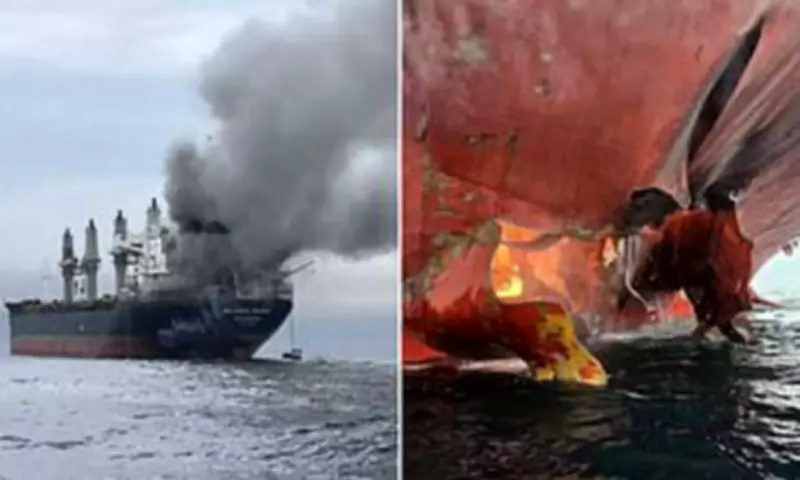
- The Thailand-flagged bulk carrier Mayuree Naree was struck by an unknown projectile at 4:35 AM GMT, 11 nautical miles north of Oman. A fire broke out onboard, and while 20 crew members were rescued by the Omani navy, authorities are still searching for three missing individuals.
- The Japan-flagged container ship One Majesty sustained minor damage from a projectile 25 nautical miles northwest of Ras Al Khaimah in the United Arab Emirates. All crew members are safe, and the vessel is proceeding to a secure anchorage.
- A third vessel, the Marshall Islands-flagged bulk carrier Star Gwyneth, was hit approximately 50 miles northwest of Dubai, suffering hull damage. The crew of this ship is also reported safe.
Iran confirmed responsibility for the attacks, stating, "The American aggressors and their partners have no right to pass."
Escalating Tensions and Regional Warnings
The maritime aggression occurred shortly after American forces destroyed 16 Iranian minelaying vessels near the Strait of Hormuz. The White House had previously warned Iran would face unprecedented consequences if it attempted to mine the strait. This exchange is part of a broader escalation, with overnight air strikes traded between the US, Israel, and Iran across the Middle East.
Amin Nasser, CEO of Saudi Arabia's state oil company Aramco, warned of "catastrophic consequences" for global oil markets if the conflict continues to choke exports. He acknowledged that while Aramco is currently meeting customer demands by tapping storage facilities outside the Gulf, this is not a sustainable long-term solution. "There would be catastrophic consequences for the world's oil markets, and the longer the disruption goes on … the more drastic the consequences for the global economy," Nasser emphasised.
Global Economic and Political Repercussions
The instability has already driven oil prices to a peak of nearly $120 a barrel before settling at $87 at the time of publication. In response:

- European Commission President Ursula von der Leyen announced the EU is considering subsidising or capping gas prices to provide immediate relief, as European gas prices have doubled since the war began.
- Japan's Prime Minister Sanae Takaichi declared her country will lead a release of oil from reserves as early as next week, bypassing a coordinated decision from the International Energy Agency. Japan plans to release 15 days' worth from the private sector and one month's worth from state stocks.
- Ukraine's President Volodymyr Zelensky claimed Russia could become the first nation to send troops to Iran to fight against the US and Israel, amid reports of Moscow sharing intelligence with Tehran.
Broader Conflict and Humanitarian Impact
The Middle East war has expanded, with Lebanon drawn into the fray after Hezbollah attacked Israel in solidarity with Iran. Recent Israeli airstrikes in Beirut set a building ablaze, while strikes in southern Lebanon have resulted in casualties, including a Red Cross worker. France has pledged 60 tonnes of aid to Lebanon, including sanitation kits and a mobile medical post.
In Saudi Arabia, the defence ministry reported intercepting six ballistic missiles and two drones, while in Dubai, two Iranian drones struck near the international airport, injuring four people. Iran's armed forces spokesman urged regional countries to reveal "US-Zionist hiding places" to enhance strike precision, accusing opponents of using civilians as human shields.
As millions of Israelis sought shelter from missile warnings and the sound of explosions echoed across the region, the conflict shows no signs of abating. With Iran's threats materialising through ship attacks and continued hostilities, the global economy braces for potential oil price shocks and prolonged market disruption.