The ongoing US-Israeli military conflict with Iran has sent shockwaves through global fossil fuel markets, starkly revealing the inherent instability of oil and gas dependence. This crisis has punctured former President Donald Trump's repeated campaign promise to slash US gas and electricity prices by "unleashing" domestic fossil fuel production under a "drill, baby, drill" agenda.
Market Volatility and Price Spikes
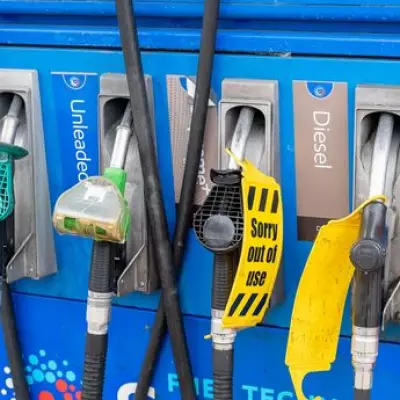
Since strikes on Iran commenced late last month, oil prices have experienced extreme volatility, soaring past $100 per barrel to reach their highest level since the 2022 Russian invasion of Ukraine. Although prices briefly retreated to around $92, they surged back above $100 by Thursday morning. This spike has directly increased gasoline costs nationwide and raised alarms about broader inflationary pressures, which crude oil price hikes often trigger.
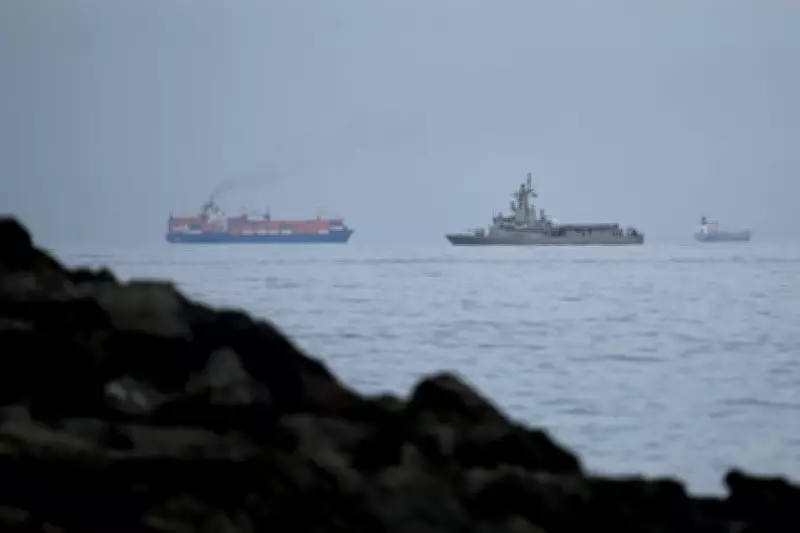
The conflict has critically disrupted supply chains, particularly through the closure of the Strait of Hormuz, a vital maritime channel near Khor Fakkan, United Arab Emirates, through which approximately 20% of global oil flows. Recent incidents in the strait, including projectile attacks damaging three ships, have exacerbated supply fears. Experts emphasize that in a globalized market, the United States cannot unilaterally control oil prices, regardless of domestic production levels.

Interdependencies and Infrastructure Vulnerabilities
Energy finance specialist Gerard Reid notes that even abundant US oil reserves offer limited protection because not all domestically extracted crude can be easily refined domestically. Some types require processing abroad, creating interdependencies that leave the system vulnerable to infrastructure disruptions. "We have this weird situation where you might think you've got lots of oil, but actually you have the wrong type of oil," Reid explained, highlighting how supply chain fragility can lead to significant problems during conflicts.
University of Massachusetts Amherst economics professor Isabella Weber points out that in the fog of war, even perceived threats to supply and demand can cause dramatic price swings. For instance, crude prices recently peaked at $119 per barrel before plummeting by $35 within hours following mixed signals about the conflict's status and potential emergency reserve releases. "In a chaotic situation like the one we are living through, no one knows exactly how supply is evolving," Weber said. "Market prices are anything but rational."
Policy Failures and Renewable Alternatives
Critics argue this crisis represents an "emperor has no clothes moment" for Trump's pro-fossil fuel policies, which they claim have sabotaged renewable energy and efficiency measures that could shield Americans from such shocks. Collin Rees, US policy manager at Oil Change International, stated, "Americans are seeing, in real time, the deep failings of Trump's strategy. We're seeing that he's not doing anything to provide energy stability or price stability."
Trump has dismissed concerns about surging prices, calling them a "very small price" for US safety. However, his administration has rolled back key initiatives, including tax credits for home efficiency upgrades and electric vehicles, while pausing wind and solar projects. These actions, Rees contends, benefit fossil fuel companies by increasing dependence on their products but raise costs for working-class Americans.
Efficiency Gains and Historical Lessons
Michael Klein, a professor of international economic affairs at Tufts University, notes that since the 1970s—a decade marked by stagflation under President Jimmy Carter—the US has made substantial progress in energy efficiency. Improvements in vehicle fuel economy, home insulation, and appliance standards have reduced oil consumption relative to economic output. "Cars in the 1960s and 70s were gas guzzlers," Klein said. "Think about the big Cadillacs of Bruce Springsteen's songs versus now where we have the Prius."

Renewable energy sources like wind and solar offer further insulation from market volatility, as they do not require constant commodity inputs. "You don't need to continually supply a solar panel with oil or gas once it's up and providing energy," Rees explained. "With oil or gas, there's a constant need for that commodity which is vulnerable to shocks. But wind and solar power are going to be produced because the sun is going to shine, the wind is going to blow."
Human and Environmental Costs
The conflict has also underscored the "horrors" of fossil fuel dependence beyond economic impacts. Strikes on fuel depots in Tehran and Karaj have caused massive fires, toxic air pollution, and oil-contaminated rain, posing severe health and ecological risks. Rees emphasized, "War is hell and the human cost is born on so many levels, but it doesn't have to be this way. The quicker that we can conduct a managed transition off fossil fuels, the better off we will be in terms of affordability and energy access, and in terms of potentially ending deadly oil-fueled wars."
In summary, the Iran war has exposed critical vulnerabilities in a fossil fuel-centric energy strategy, challenging Trump's assurances of price stability through increased drilling. As global markets reel from supply disruptions, the push for renewables and efficiency measures gains urgency as a more resilient alternative.