Irish Deputy Premier Condemns Fuel Price 'Anomalies' as Investigation Launched
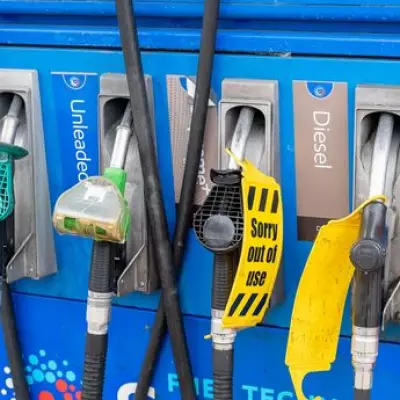
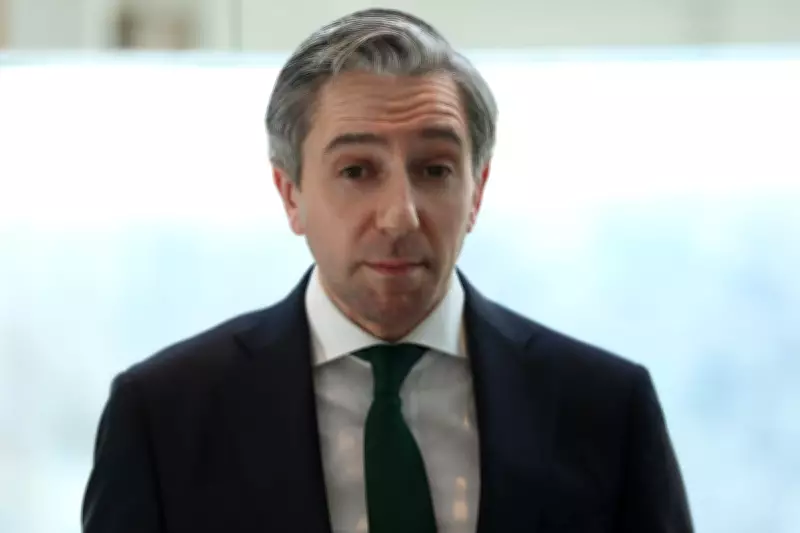
Ireland's deputy premier has sharply criticised significant disparities in fuel prices across the country, asserting that these variations cannot be attributed to geopolitical tensions involving Iran or events unfolding in the Gulf region. Tanaiste and Finance Minister Simon Harris made these remarks during a press briefing in Paris, highlighting concerns over pricing inconsistencies that have emerged amidst ongoing Middle Eastern hostilities.
Public Encouraged to Report Pricing Irregularities
Minister Harris actively encouraged members of the public to submit information regarding fuel pricing to Ireland's Competition and Consumer Protection Commission (CCPC), which he confirmed is currently investigating the conduct of fuel retailers. He emphasised that while global supply and demand factors can justify price increases, the stark contrasts observed between locations merely kilometres apart raise serious questions.
"I accept that there can be reasons in terms of supply and demand that a price can go up – I get that – but I also think there's very peculiar anomalies where parts of Ireland, only a couple of kilometres apart from each other, the price could be X and the price could be Y," Harris stated. "I mean that can't be blamed on Iran. That can't be blamed on any president of any country and I think that's concerning."

Middle East Conflict's Economic Impact Under Scrutiny
The Finance Minister acknowledged that the most effective method to reduce fuel prices would involve a swift "de-escalation" of the Middle East conflict, noting that the duration of hostilities will critically influence economic repercussions. He referenced recent volatility in oil markets, pointing to a "massive spike" in prices followed by a "very significant reduction" after US President Donald Trump suggested the conflict might conclude imminently.
Harris described current oil prices as "still high" and "still elevated," warning that the ultimate resolution will have a "very significant bearing" on potential governmental interventions. When questioned about implementing price caps similar to Croatia's approach, he responded that it is "fair" for different nations to adopt varied strategies, adding that most EU countries are grappling with the economic fallout and determining optimal responses for their citizens.
EU Energy Independence and Russian Sanctions Emphasised
The Tanaiste underscored the necessity for a comprehensive macroeconomic analysis of potential impacts on the Eurozone, advocating for enhanced European energy independence. While acknowledging that Europe's energy market has diversified since 2022, he insisted that excessive reliance on external regions remains a pressing issue, describing the current crisis as a "sharp reminder and wake-up call."
Earlier, Harris vehemently denounced any scenario allowing Russia to profit financially by selling oil and gas to Europe during this period of conflict. He reaffirmed the European Union's commitment to phasing out Russian energy imports following the 2022 invasion of Ukraine, stressing the importance of maintaining steadfast economic sanctions as a tool to end the war.
"The idea that Putin and Putin's Russia would in any way benefit financially from a moment of conflict and pain and trauma in the Gulf region would be utterly despicable," he declared. "It shows the importance of de-escalating the conflict in the Gulf region, and it also shows the importance of not losing focus on Ukraine and showing solidarity to our friends, to our European friends in Ukraine."
Minister Harris concluded by asserting that the Irish Government is keeping all response measures "under review," prioritising a rapid de-escalation of Middle Eastern tensions to mitigate economic damage and stabilise fuel prices for consumers nationwide.