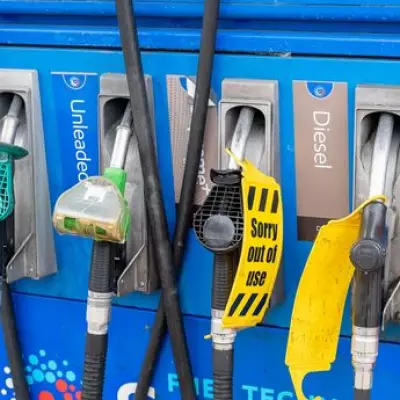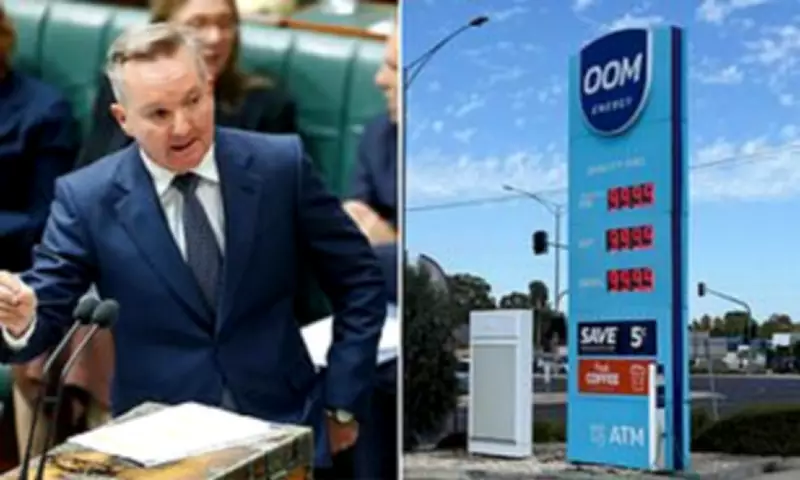
A petrol station located west of Melbourne has experienced its second fuel outage within a single week, amplifying growing anxieties about supply chain disruptions across Victoria and regional Australia. Oom Energy on Derrimut Road in Tarneit was completely devoid of fuel on Tuesday, following a similar shortage that occurred just days earlier on Monday.
Government Response and Ministerial Statements
During parliamentary Question Time on Tuesday, Energy Minister Chris Bowen attempted to assuage public fears by insisting that Australia maintains adequate fuel reserves overall. However, he conceded that supply shocks were indeed causing localised outages in various communities.
'Australia has more than enough supplies coming into the nation,' Bowen stated emphatically. 'But we are seeing diesel shortages in rural and regional Australia, in particular, in the face of spikes in demand.'

The Panic Buying Phenomenon
The minister argued that public anxiety, rather than an actual physical shortage, currently poses the most significant threat to Australia's fuel distribution network. 'The desire by people to get diesel is understandable, particularly when there's some misinformation about supplies,' he acknowledged. 'But it's very important we all remember the biggest risk to availability in Australia right now is panic buying.'
Bowen highlighted specific regions where service stations are buckling under unprecedented demand pressure:
- Adelaide Hills and Barossa Valley experiencing a 238% surge in fuel demand
- Mildura witnessing a 100% increase in consumption
The Energy Minister also issued a stern warning about the dangers associated with fuel stockpiling. 'Stockpiling fuel on property is not an undertaking without risks,' he cautioned. 'It's important we send that message as well.'
Political Pressure and Industry Concerns
Opposition figures have mounted significant pressure on the government to address the escalating crisis. Shadow Energy Minister Dan Tehan and Nationals Senator Bridget McKenzie have formally demanded that the administration immediately release up-to-date fuel stock figures and outline concrete plans to prevent widespread shortages.
Their joint letter highlighted multiple regional petrol stations that ran dry over the weekend, leaving farmers, truck drivers, and entire communities without access to essential fuel supplies. 'Urgent action is required by government to give our transport, logistics, agricultural, mining and fisheries industries, and the general public, confidence they'll be able to get the fuel they need at a competitive price,' they wrote.
Data Transparency and Reserve Levels
The Coalition has criticised the Labor government for relying on petroleum stock data based on figures from last November, arguing this outdated information fails to reflect the current emergency. In response, Bowen announced that fuel reporting will now transition to weekly updates rather than the previous quarterly schedule.
Australia currently maintains strategic fuel reserves at the following levels:
- Approximately 36 days of petrol supply
- Roughly 29 days of jet fuel inventory
- About 32 days of diesel reserves
These figures do not include fuel already circulating in the market or stored in service station tanks across the nation.
Regional Impact and Distributor Warnings
The crisis has extended beyond Victoria, with one of Australia's major fuel distributors urgently calling for government intervention as shortages intensify across rural and regional New South Wales. Transwest Fuels, based in Tamworth and supplying Brisbane, Newcastle, and Sydney, services more than 2,000 agricultural customers across NSW and Queensland.
A company spokesman described the situation as critical, revealing that 'We currently have zero petrol supply at Newcastle or Brisbane. Once our servos run out of petrol, that's it. No more.' The distributor emphasized that shortages are simultaneously affecting multiple regions, creating a compounding effect on Australia's fuel distribution network.

Bowen concluded by stating that the government is actively 'working with the industry' to stabilise supply chains and alleviate pressure on regional areas most severely impacted by the current fuel availability crisis.