Solar Panels in UK Winter: Do They Work and How Much Power?
Solar Panels in Winter: UK Performance Facts

As daylight hours shrink and grey skies dominate, homeowners across the UK often question whether their solar panels are still pulling their weight. Contrary to a widespread belief, photovoltaic (PV) systems do not simply switch off during the colder months. In fact, they continue to produce electricity throughout winter, albeit at reduced levels compared to the summer peak.

Understanding Winter Solar Generation

The fundamental principle is clear: solar panels need light, not heat, to generate electricity. The PV cells within the panels respond to daylight, meaning they remain active whenever light hits them, regardless of the temperature. Interestingly, colder conditions can even improve the efficiency of the panels themselves. The primary challenge is the UK's significantly reduced daylight hours; a typical December day offers only around eight hours of daylight, compared to roughly 16 hours in midsummer.

This reduction in available sunlight inevitably leads to a dip in overall production. Data from the National Grid and the Energy Saving Trust consistently identifies January as one of the lowest-generation months of the year. During winter, you can realistically expect your system to produce between 15% and 30% of its summer output, depending on several key factors.

Key Factors Influencing Winter Output

Several elements determine how well your solar panels perform from October to March. The orientation and pitch of your roof are critical; south-facing installations at an angle of 30–40 degrees are optimal for capturing the low winter sun. Shading from trees or neighbouring buildings also has a more pronounced effect when the sun is low in the sky.

The type of panel you choose makes a difference, with monocrystalline models generally performing better in low-light conditions. Geography plays a role too, as southern England naturally receives more winter sunlight than northern Scotland, though all regions experience a seasonal variation.

How Weather Conditions Affect Performance

Day-to-day weather is a major variable, but it doesn't change the core science. Output depends on how much light reaches the panel's surface.

On cloudy or overcast days, which the UK has in abundance, generation is reduced but not halted. Modern PV panels can capture diffuse light, allowing them to produce a steady, usable output even under grey skies. Some advanced panels are specifically engineered to optimise low-light absorption.

Rain has a dual effect. While it dims the light slightly, it also provides a useful cleaning service, washing away dust, pollen, and debris. This can improve system health and boost performance once the skies clear. Light rain has only a modest impact, and panels continue to produce electricity during heavier downpours if there is ambient daylight.

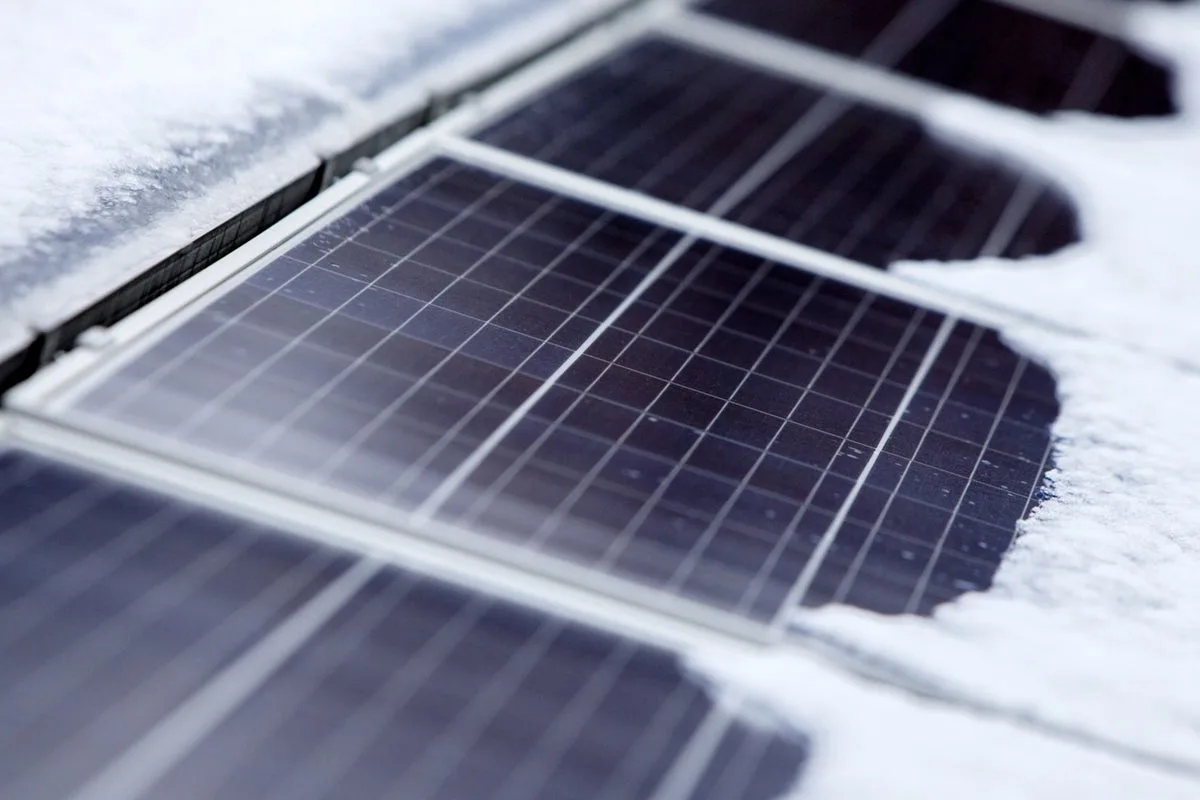
Snow can temporarily block panels if it settles heavily, though prolonged coverage is rare across much of the UK. A light dusting usually melts quickly because the dark panels absorb heat. Some homeowners even notice a short-term spike in efficiency after snow clears due to increased reflectivity from the white surroundings.

Maximising Your System's Winter Efficiency

While you cannot control the weather, you can take steps to ensure your system operates as efficiently as possible during the winter months.

  • Keep panels clean: Dirt and debris have a greater impact when daylight is already limited.
  • Consider a battery: Storing excess electricity generated on brighter days can help smooth out dips in production.
  • Choose high-performance panels: Opt for monocrystalline models or panels with half-cut cells, which handle low light well.
  • Use optimisers: Microinverters or power optimisers can minimise the impact of partial shading on your system's output.
  • Ensure correct installation: A well-designed system with the optimal angle from the outset improves winter light capture.

Are Solar Panels Still Worth It?

The answer is a definitive yes. Winter generation is just one part of the annual cycle. The surplus electricity produced during the long, bright summer months dramatically outweighs the quieter winter period. When combined with falling installation costs, direct savings on energy bills, and payments from schemes like the Smart Export Guarantee, solar power remains a financially sound investment for most suitable homes.

Furthermore, solar panels offer longer-term protection against rising energy prices. Even modest winter output reduces dependence on grid electricity during what is often the most expensive time of the year for energy consumption.

In summary, solar panels do not hibernate. They continue to generate useful electricity throughout the UK winter, even on cloudy days. With thoughtful system design and maintenance, homeowners can benefit from solar energy year-round, achieving meaningful savings and increasing their energy independence.