UK's Two-Day Gas Storage Sparks Household Preparedness Movement
As conflict in the Middle East continues to drive petrol and gas prices higher while amplifying security concerns, experts are urging every British household to be ready to survive independently for at least two weeks. This warning comes alongside startling figures from National Gas revealing that Great Britain currently maintains only two days of fossil gas reserves in storage, as more tankers carrying gas are being redirected from their European routes due to the Iran war.
The Rise of 'Soft Prepping'
Across the country, a growing number of people are embracing what they term "soft prepping" – taking practical steps to prepare for potential disruptions without adopting the extreme survivalist mentality traditionally associated with preppers. Liz Blackshaw, a Labour councillor for Mountsorrel, exemplifies this approach.
"I've bought power banks that double as flashlights and stocked up on gluten-free pasta and snacks for my family," says Blackshaw, who lives with her husband and two daughters. "I don't have a bunker or month's worth of supplies, but being prepared for unforeseen events is simply sensible."

Blackshaw began her preparations earlier this year after seeing a National Grid post about potential power outages. Her concerns are particularly focused on her elderly mother, who has osteoporosis and relies on powered devices for safety and communication.
Expert Recommendations for Two-Week Readiness
Ilan Kelman, professor of disasters and health at University College London, advocates for more extensive preparation. "We should all be prepared to last for a minimum of two weeks, especially given the current Middle East crisis," he states. "If there's a national power outage from a solar storm, it could take that long or longer to restore infrastructure. During a crisis, government priorities necessarily shift away from individual support."
Kelman acknowledges the financial challenges many face during the cost-of-living crisis but urges those who can to prepare food and water supplies. "Running out of gas, supermarket shortages, or water supply cuts become manageable problems if you're properly prepared," he emphasizes.
Practical Preparations Across the Country
The government has issued its own "preparedness plan" advising citizens to maintain non-digital alternatives to radios, power banks, torches, and sufficient food and water for several days of potential service disruption. This guidance comes against a backdrop of recent infrastructure vulnerabilities, including the 2024 worldwide Windows glitch that grounded flights and took TV channels offline, and last year's 10-hour power surge that caused widespread blackouts in Spain and Portugal.
Ema Brown, a 37-year-old make-up artist from Nottinghamshire, began quietly stocking supplies after encountering TikTok content about blackout preparedness. "I panicked and realized I wouldn't be ready," she admits. "Now I have a 'just-in-case box' with torches, batteries, wind-up radios, solar chargers, and enough food and water for my family of four to last two weeks."
Brown's preparations have become something of a family joke, but she maintains: "Should my family need it, they'll be glad I bought it all. We're so used to taking basic services for granted that learning to be more self-sufficient feels increasingly necessary."
Business Response and Practical Advice
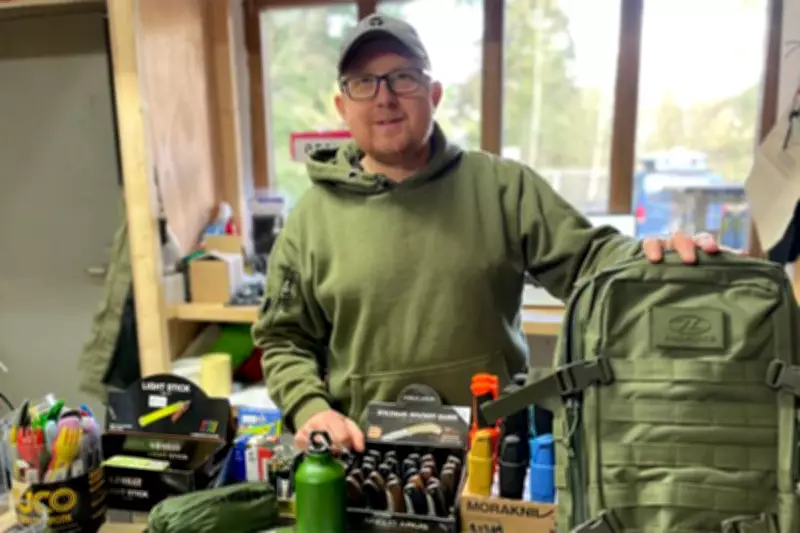
Leigh Price, owner of The Bug Out prepping store in Wales, reports increased business since the Iran conflict began. "We're seeing many first-timers who start thinking about preparedness when global events create uncertainty," he observes.
Price offers straightforward advice for beginners: "Don't panic. Simply buy a few extra tins during weekly shops and invest in basic items like camping stoves, wind-up radios, and torches. Prepping is essentially an insurance policy for your way of life – preparation for mundane disruptions like power outages or heating failures."

Fuel Prices and Broader Impacts
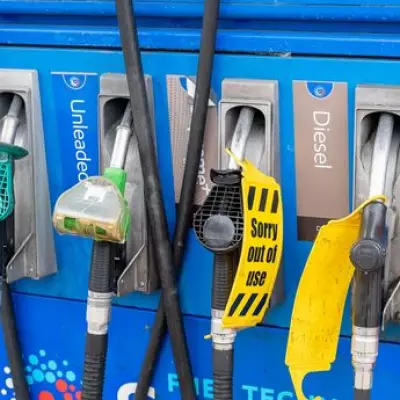
The crisis has already produced tangible economic effects, with heating oil prices doubling in a week and petrol costs soaring as oil reaches $100 a barrel. The AA has advised drivers to stop "non-essential" journeys due to high fuel prices resulting from strikes on Iran.
Mark, a 53-year-old business owner near Cheltenham, represents another facet of soft prepping. Having grown up with frugal grandparents who believed in storing provisions, he now maintains three fridge freezers stocked with frozen basics and recently invested £4,500 in a log burner for alternative heating.
"Even as a high-bracket earner, preparation is becoming difficult with current prices," Mark reveals. "I recently spent £1,500 on oil that would normally cost £500. The Covid pandemic showed how quickly supplies can become inaccessible, and current uncertainty makes some level of preparation wise."
As Middle East tensions continue to influence global energy markets and Britain's minimal gas reserves remain a concern, the soft prepping movement appears poised to grow, blending practical preparedness with measured response to an increasingly uncertain world.