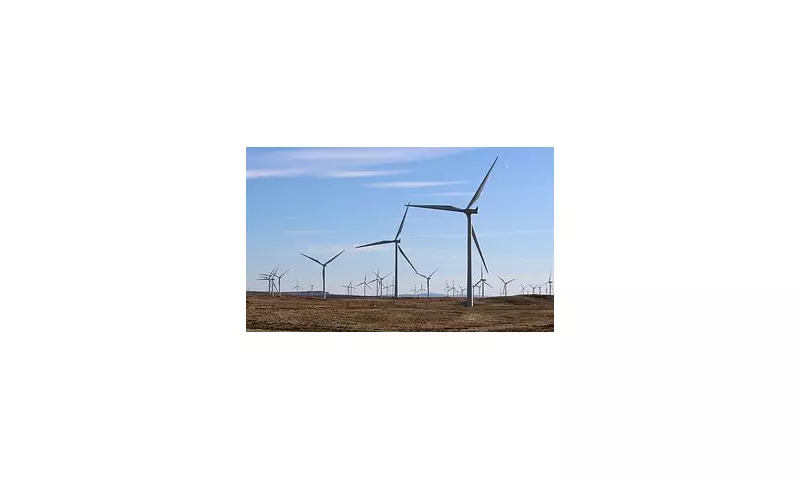
Households and businesses across Britain are footing a colossal bill for wind turbines to be switched off, with new figures revealing the staggering scale of so-called 'constraint payments'. In Scotland alone, wind farm operators received nearly £347 million in a single year to not generate electricity, as part of a UK-wide total exceeding £1.45 billion spent on wasted wind power.
The Staggering Cost of Grid Congestion
Data from the Wasted Wind tracker website shows that an astonishing £1,457,263,000 has been spent in Britain this year turning off wind turbines and paying alternative sources, like gas plants, to switch on. This marks a significant jump from £1.23 billion the previous year. The payments, made when the National Grid is congested and cannot transport power from remote renewable sites to population centres, are ultimately added to consumer energy bills.
According to separate figures from the Renewable Energy Foundation, wind farms in Scotland have been paid £346,847,461 in constraint payments alone up to December 15th. This is the second-highest annual total on record, only slightly below the 2024 peak of £393 million, with two weeks of the year remaining.

Political Outcry and Community Backlash
The scale of the payments has triggered alarm among politicians and campaigners, who argue that consumers are being unfairly penalised for systemic failures. Douglas Lumsden, the Scottish Conservative energy spokesman, stated: ‘Hard-pressed Scots will rightly be questioning these soaring payments. At a time when they are facing rising energy bills, they will wonder why they are footing an ever-increasing bill for turbines to be turned off.’
He added that rural communities are being 'overwhelmed' by the proliferation of wind farms, accusing both Labour and the SNP of riding 'roughshod over local community concerns'. Campaigner Denise Davis of Communities B4 Power Companies echoed the sentiment, noting: ‘The whole of the UK is having to pay for this. Every single time they get a bill, they’re paying.’
The spread of onshore wind infrastructure is vast. Latest figures show the Highlands host the most turbines with 862, followed by South Lanarkshire (518) and Dumfries and Galloway (512). This is in addition to major offshore developments like Scotland's largest wind farm, Seagreen, located in the North Sea.
Government Responses and Grid Upgrades
In response to the crisis, a spokesperson for the Department for Energy Security and Net Zero emphasised ongoing investments: ‘We are reversing decades of underinvestment and delivering the biggest upgrade to the grid, which will minimise constraint costs... The more renewables on the system, the cheaper the wholesale price of electricity.’
However, Gillian Martin, Holyrood’s Energy Secretary, placed blame on the UK-wide system: ‘The current UK energy system is not fit for purpose - in an energy rich country like Scotland, nobody should be struggling to pay their bills... We have consistently called for reform of the electricity market so that Scottish households can benefit from the green electricity produced in our country.’
She highlighted Scotland's renewable potential as a major economic opportunity for job creation and community benefit, underscoring the tension between rapid renewable expansion and the infrastructure needed to support it efficiently.