US Energy Chief Addresses Deleted Strait of Hormuz Post That Sparked Confusion
Iran has shuttered the crucial waterway and vowed to attack any ships that try to pass through.
Thursday 12 March 2026 16:01 GMT
UK Considering Defending Strait of Hormuz, Says Defence Secretary
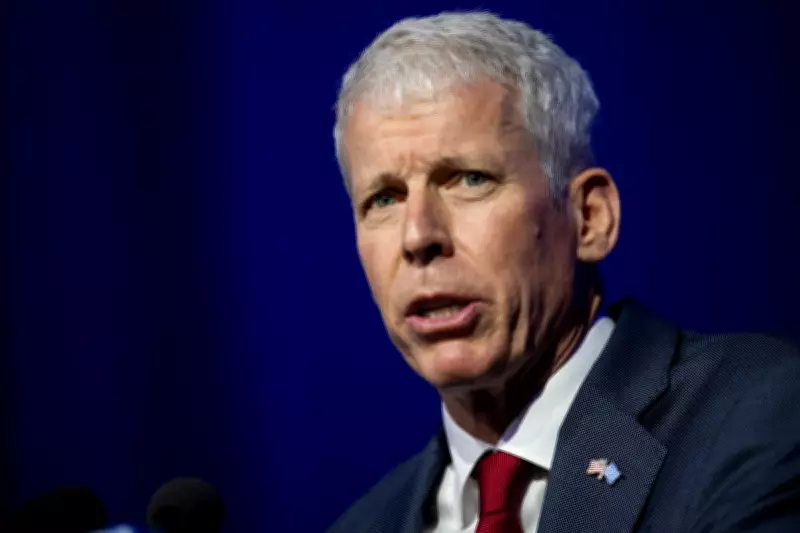
The U.S. Energy Secretary has taken full responsibility for a social media post from his official account that sparked significant confusion about the ongoing military conflict in the strategically vital Strait of Hormuz.

The post on Energy Secretary Chris Wright’s account incorrectly stated that the U.S. Navy had successfully escorted an oil tanker through the strait, which Iran has completely shut down amid the escalating war with the United States and Israel. Wright clarified in an interview with Fox News that the erroneous post resulted from a serious miscommunication within his department. He pledged that he will personally approve all future social media communications to prevent such incidents from recurring.
Secretary Wright also publicly cast doubt on Iran’s aggressive claims that global oil prices will surge to an unprecedented $200 per barrel as a direct consequence of the U.S. and Israel’s sustained attacks on Iranian military infrastructure. "I would say it's unlikely, but we are entirely focused on the military operation and solving this critical problem," Wright told CNN when pressed on whether prices would reach that extreme height.
Wright's careful use of the word "unlikely" was interpreted by market analysts as a veiled concession that a spike to $200 remained a distinct possibility, though he repeatedly emphasized that any major price jump would be measured in weeks rather than months.
Widening Conflict and Oil Market Turmoil
With the U.S.-Israeli war on Iran rapidly widening, two crude oil tankers were reported ablaze in an Iraqi port after being struck by suspected Iranian explosive-laden boats. Scores of other oil-laden vessels remained stranded, unable to navigate with the strait firmly shuttered by Iranian forces.
Global oil prices jumped more than 9% to nearly $100 a barrel in response. Brent crude oil previously hit all-time highs around $147 per barrel in 2008, driven by tension between Western powers and Iran over its nuclear program, a weak U.S. dollar, and widespread inflation fears. This time, energy analysts warn prices could remain elevated for an extended period due to the strait's unprecedented closure.
"Get ready for the oil barrel to be at $200 because the oil price depends entirely on regional security which you have destabilized," declared Ebrahim Zolfaqari, the spokesperson for Tehran's Khatam al-Anbiya military command headquarters, on Wednesday.
Wright told CNN: "We're in the midst of a significant short-term disruption to fix the long-term security of global energy flows." The Biden administration was intensely focused on "pragmatic solutions ... to navigate these few weeks of extremely tight energy supply," he added.
Political Reactions and Military Assessments
Former President Donald Trump wrote in a social media post: "The United States is the largest Oil Producer in the World, by far, so when oil prices go up, we make a lot of money." He stated he was more focused on preventing Iran from acquiring nuclear weapons. On Wednesday, Trump controversially urged international oil companies to attempt travel through the strait despite the severe risks. "I think they should use the strait," Trump said. When asked if Iranian naval mines were present in the waterway, he added: "We don't think so."
Wright informed CNBC on Thursday that the U.S. Navy currently cannot escort commercial ships through the Strait of Hormuz but confirmed it was "quite likely" that such naval escorts could be operational by the end of the month, pending military assessments.
Historic Global Oil Reserve Release
On Wednesday, more than 30 member countries of the International Energy Agency agreed to the largest-ever coordinated drawdown of global oil reserves, releasing 400 million barrels. Approximately 40% of this total, equating to 172 million barrels, will come from the United States Strategic Petroleum Reserve.

The war has compelled Middle East Gulf nations to slash total oil production by at least 10 million barrels per day, representing about 10% of total world demand. The IEA confirmed on Thursday that this constitutes the most severe oil supply disruption in the history of the global market.
Secretary Wright stated on Thursday that the 172 million barrels released from the U.S. reserve would be swapped with more than 200 million barrels that are scheduled to be replenished into the reserve within one year.
Wright told CNBC the current energy shortages were less likely to severely affect the United States and other Western Hemisphere nations. "There's no shortage or even a genuinely tight oil market in the Western Hemisphere. The primary issue is concentrated in Asia," he explained.
Impact on Consumers and Political Landscape
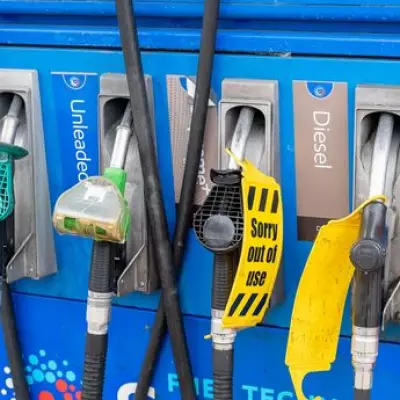
U.S. gasoline prices continue to spike, averaging $3.60 per gallon according to AAA, thirteen days into the conflict. Soaring oil prices are also projected to increase costs for a wide range of other goods. The closed strait is stalling shipments of vital fertilizer ingredients and will likely raise prices on numerous household items, impacting consumers for many months.
Former President Trump had campaigned extensively on promises of lower gasoline and consumer prices. Americans are set to vote this November in pivotal midterm elections that will determine whether his fellow Republicans maintain control of Congress, with economic conditions being a central issue.