As American consumers face sharply rising costs at fuel stations following the commencement of joint U.S.-Israeli airstrikes on Iran, White House officials are offering assurances that the financial pain will be short-lived and ultimately beneficial.
Leavitt's Long-Term Price Prediction
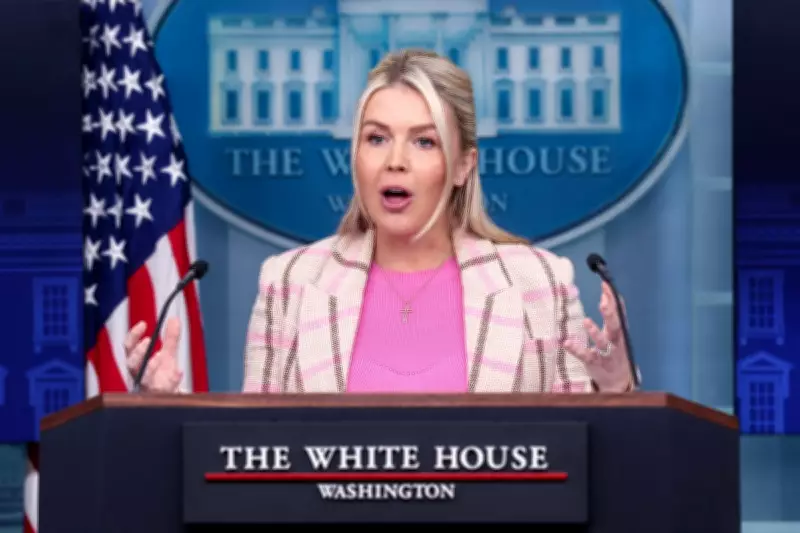
During a press briefing at the White House on Tuesday, March 10, 2026, Press Secretary Karoline Leavitt addressed growing public concern over escalating gasoline prices. She characterized the current surge as merely "temporary" and made the striking claim that the ongoing military campaign against Iran would "result in lower gas prices in the long term."
Leavitt elaborated that once the national security goals of Operation Epic Fury are fully accomplished, Americans should anticipate a rapid decline in oil and gasoline costs. She suggested prices might even fall below pre-conflict levels, while simultaneously creating a safer global environment free from Iranian nuclear threats.

Current Fuel Cost Reality
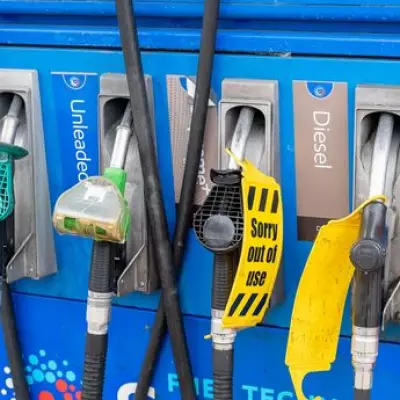
These optimistic projections contrast sharply with present conditions at pumps across the United States. According to data from the American Automobile Association, the national average gasoline price reached $3.48 per gallon on Monday, marking a 17 percent increase. By Tuesday, that figure had climbed further to $3.54 per gallon, representing a 19 percent overall surge.
Regional disparities remain pronounced, with California drivers confronting prices as high as $5.20 per gallon, while motorists in Kansas pay approximately $2.92. This volatility directly correlates with disruptions in global oil markets caused by the Middle Eastern conflict.
Market Disruption and Global Impact
The aerial bombardment campaign, now entering its tenth day, has provoked Iranian threats to shipping traffic through the strategically vital Strait of Hormuz. This narrow maritime passage facilitates the transport of roughly 15 percent of the world's crude oil to refineries worldwide.
Consequently, oil prices experienced significant turbulence, briefly surpassing the $100 per barrel threshold on Monday for the first time since the Ukraine war outbreak four years prior. This price explosion reflects severe interruptions to Persian Gulf crude oil flows, demonstrating how geopolitical instability rapidly translates into economic pressure on consumers.
The Trump administration's decision to initiate military action against Iran has thus created immediate financial repercussions for American households, even as White House spokespeople forecast eventual relief. Market analysts continue monitoring the situation closely, weighing short-term supply shocks against the administration's long-term strategic predictions.