

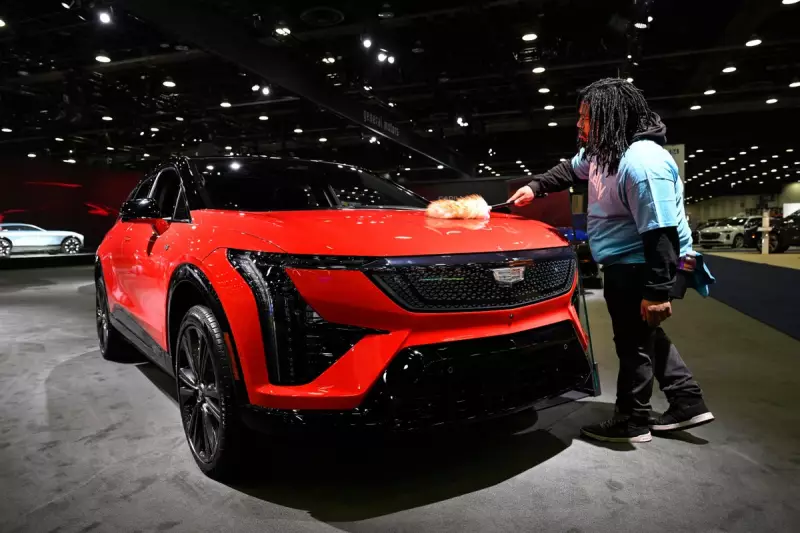
The roar of petrol engines and the squeal of tyres once again dominated the show floor at this year's North American International Auto Show in Detroit. In a symbolic shift, the event's organisers have removed the dedicated track that was previously reserved exclusively for electric vehicles, opening both indoor test strips to hybrids and traditional combustion-engine cars.
A Show Floor Reflecting Policy Shifts
This change at the premier US auto event is a direct reflection of the dramatic policy U-turn on electrification since President Donald Trump returned to the White House. The show's chairman, auto dealer Todd Szott, stated plainly that the event "will always reflect what’s happening in the industry at the consumer level," acknowledging that "things have changed in the EV landscape."
Industry players at the show are now emphasising "consumer choice," but the data reveals a stark transatlantic divide. According to figures released this week by Benchmark Mineral Intelligence, US sales of electrified cars, including plug-in hybrids, grew by a mere 1% in 2025. This pales in comparison to a 17% surge in China and a 33% increase across Europe. The US pure-electric vehicle market share sat at just under 8% last year, with 1.23 million units sold—a slight decline from 2024.

The Policy Engine Driving Change
President Trump used a visit to Detroit's Ford River Rouge Complex to champion his administration's pro-fossil fuel agenda. He boasted of ending what he called "the radical left war on oil and gas" and revoking the Biden-era target for half of all new US vehicle sales to be electric. His administration has also cut tax incentives for EV buyers, tried to block funding for national charging networks, and weakened fuel economy standards.
"I love electric cars. I think they’re great," Trump remarked, before adding, "But I’ve been saying it for four years. They wanted everybody to have an electric car in a very short period of time." The financial impact on automakers has been severe. Ford Motor Co. announced a $19.5 billion charge related to its electrification efforts last month, while General Motors took a $6 billion hit. Even Tesla faced a difficult 2025.
Global Competitiveness at Risk, Experts Warn
Despite the domestic policy shift, industry leaders expressed deep concern about America's ability to compete globally. During a panel on industry trends, Michael Robinet of S&P Global Mobility voiced a common worry: "What we worry about is how competitive will we be on the global stage as the market continues to advance around us."
Michigan Governor Gretchen Whitmer pointed squarely at the international challenge. "In a word—China," she said in a speech at the show. "China wants to dominate every part of auto manufacturing. They’re making major headway." Will Roberts of Benchmark Minerals warned that US policy has made "all the difference," suggesting automakers should keep developing compelling EVs in the background to stay in the race.
Former US Transportation Secretary Pete Buttigieg, speaking on another panel, argued that while Trump cannot stop the global ascendancy of electric vehicle technology, "he can stop America from being the leader in that technology." He urged the industry to chart a different course. For now, as Ford marketing manager Shawn Strain conceded, commitment to EVs remains but is "not as overt as we once were," a sentiment physically embodied on the quietened EV track of the Detroit show floor.






