

European consumers considering purchasing Chinese electric vehicles have received a stark warning from a senior automotive industry figure, who suggests many of these brands may not endure in the competitive continental market.
Consolidation Inevitable as Market Overheats
Martin Jahn, Skoda's Member of the Board of Management responsible for sales and marketing, brings unique insight to the discussion, having spent four years leading a Volkswagen joint venture with Chinese state-owned manufacturer FAW. Speaking to The Independent, Jahn stated unequivocally that the current proliferation of electric vehicle brands in China is unsustainable.
"Everybody knows there will be a consolidation," Jahn asserted. "There are about 150 electric brands in China – that is not sustainable."

Survival of the Fittest in European Market
While acknowledging the formidable challenge posed by Chinese manufacturers, particularly in markets beyond Europe, Jahn expressed serious doubts about the longevity of many Chinese brands currently establishing themselves across the continent.
"Some of them, yes," Jahn responded when asked if he genuinely believed some Chinese brands would disappear from Europe. "The strongest one will survive – MG will survive. BYD will survive. These two for sure. The rest, can they all keep running in Europe? I'm not sure."
Jahn emphasised that European manufacturers are prepared to defend their home territory, noting: "The Chinese are a bigger problem for us in the non-European markets, in North Africa, in the Middle East. In Europe, we will defend our borders."
Skoda's Response to Chinese Competition
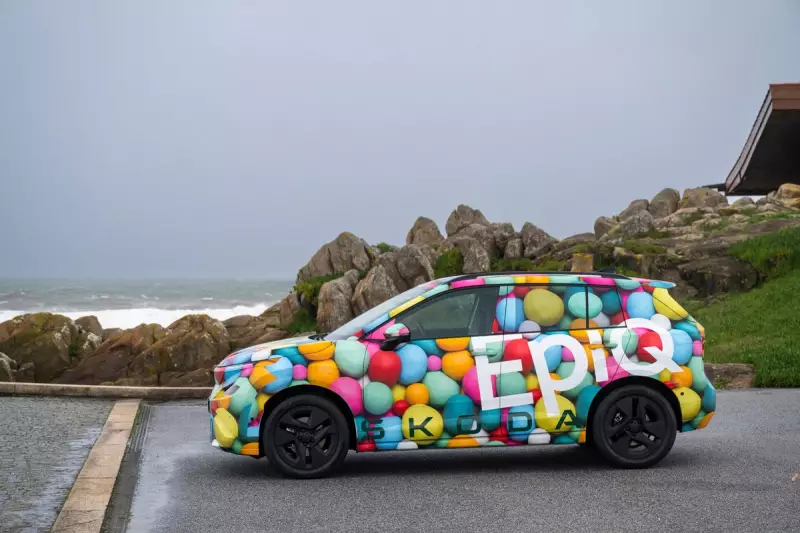
The comments came during an early drive event in Portugal for Skoda's forthcoming Epiq, a new small all-electric SUV that forms part of the Czech manufacturer's renewed product offensive. This includes the larger seven-seat Peaq electric SUV, with both models scheduled to reach customers in 2027.
Jahn admitted that Skoda has accelerated its development cycles in response to Chinese competition, while questioning the financial sustainability of the rapid product launches characteristic of some Chinese manufacturers.
"We know we have to become faster," Jahn explained. "On the other hand, the question is, what is financially sustainable? I think there will be a consolidation of the Chinese car industry. And the question is, how long can you keep so many brands and launching new cars at this pace – the question is whether you can depreciate all the investments."
Differentiation Through Simplicity and Service
Rather than attempting to match Chinese manufacturers feature-for-feature, Jahn revealed that Skoda is pursuing a strategy of product differentiation centred on its 'Simply Clever' brand philosophy.
"We have mentioned simplification," Jahn noted. "We noticed that sometimes the cars and the features are too much. What do you really use in the car? How many buttons can you really use? So, we are looking more at simplification. We want to bring a good package; a good car with good specs and good service."
Jahn identified several areas where he believes European manufacturers maintain advantages over their Chinese counterparts:
- Established service networks across Europe
- Proven reliability and build quality
- Stronger residual values for used vehicles
"I think that's our differentiations to the Chinese," Jahn stated. "We will stick to that for a while and see what happens."
Market Implications and Pricing Strategy
The Skoda Epiq is scheduled for full revelation in May, with pricing expected to begin around £25,000 when it reaches customers in early 2027. The range-topping Peaq model will follow shortly after, with an unveiling anticipated in June and prices likely exceeding £40,000.
This pricing strategy positions Skoda's electric offerings competitively against both established European manufacturers and incoming Chinese brands, while the company banks on its reputation for value, practicality, and established dealer networks to maintain market position during what Jahn clearly anticipates will be a period of significant market turbulence and consolidation.






