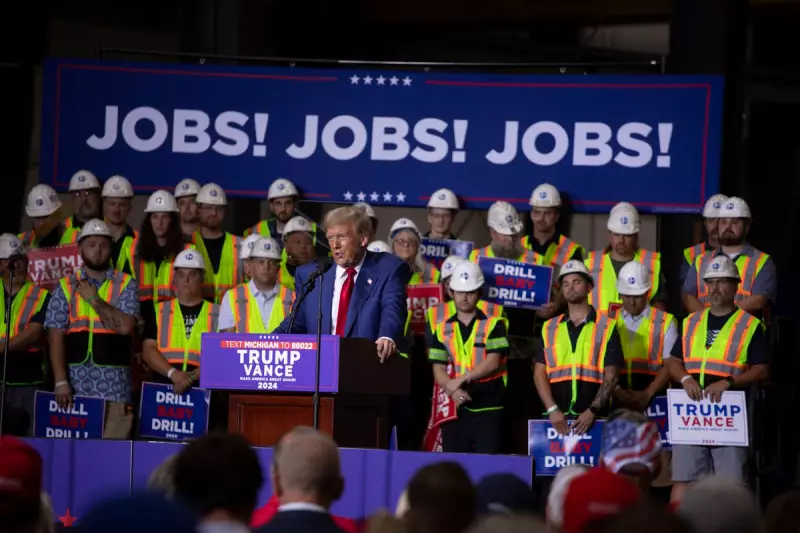
President Donald Trump is travelling to Detroit, Michigan, on Tuesday 13 January 2026, in a high-profile visit focused on American manufacturing and economic affordability.
Factory Tour and Economic Speech
The President's itinerary includes a tour of a Ford manufacturing facility that produces the F-150 pickup truck, which was the bestselling domestic vehicle in 2025. Following the plant visit, Trump is scheduled to deliver remarks to the Detroit Economic Club in the afternoon.
This trip comes at a critical time for the US industrial sector. Recent data from the Labor Department revealed the nation lost roughly 8,000 manufacturing jobs in December 2025 alone. This marks the eighth straight month of declines in factory employment, a trend that began after the President announced extensive global tariffs.

Focus on Affordability and Consumer Prices
Amid the ongoing slump in manufacturing jobs, the administration is seeking to shift the narrative towards the cost of living. The average price of a new car rose last year, and some industry analysts predict it could exceed $50,000 in 2026.
Trump has recently intensified his focus on the issue of affordability, aiming to counter Democratic messaging. He has asserted that his administration is successfully lowering consumer prices and making everyday life more affordable for Americans. During his visit, he is expected to reiterate the claim that "we've done a great job on the word affordability."
Political and Economic Context
The visit to the key industrial state of Michigan is seen as a strategic move to promote the administration's economic record directly to workers and business leaders. By highlighting the success of the Ford F-150, the President will likely argue that his policies are supporting iconic American industries, even as broader employment figures tell a more complex story.
The event will be closely watched for any new policy announcements or shifts in messaging regarding trade, manufacturing, and the economic challenges facing American consumers.