

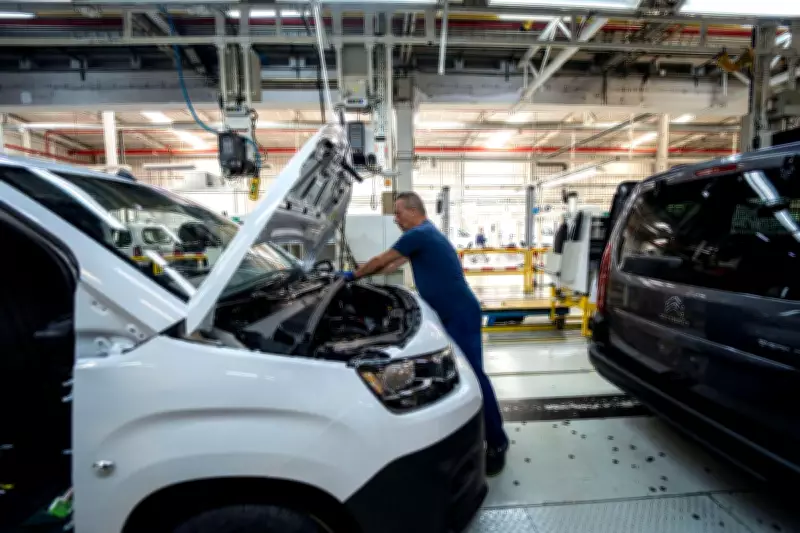
The UK automotive sector has experienced its most challenging period in decades, with official data revealing a substantial 15% decline in overall vehicle production during 2025. According to the latest report from the Society of Motor Manufacturers and Traders (SMMT), this represents the most difficult year for British manufacturing in a generation.
Production Figures Show Significant Decline
The detailed statistics paint a concerning picture for the industry. Throughout 2025, British factories produced 717,371 cars alongside 47,344 commercial vehicles. These numbers represent significant decreases of 8% and 62% respectively compared to previous years, highlighting particular strain on commercial vehicle manufacturing.
Multiple Factors Behind the Downturn
Industry experts have identified several critical issues that contributed to this substantial production decline. A major cyber incident that halted operations at Jaguar Land Rover (JLR) created significant disruption across the sector. Additionally, newly implemented tariffs affecting transatlantic trade created further complications for manufacturers.

The ongoing restructuring required as plants transition toward decarbonised production methods also played a role in reducing output. Mike Hawes, Chief Executive of the SMMT, described 2025 as "the toughest year in a generation for UK vehicle manufacturing".
Mixed Performance Across Different Vehicle Types
While overall production declined, the data reveals a more nuanced picture when examining different vehicle categories. Production for both the domestic UK market and export markets fell by approximately 8% across the board.
However, there was one significant bright spot amidst the broader downturn. Production of electrified vehicles, including battery electric, plug-in hybrid, and hybrid models, actually increased by 8.3% to reach just under 300,000 units. This represents a record 41.7% share of total output, demonstrating the industry's accelerating shift toward greener technologies.
Export Markets and Geographic Distribution
The SMMT's comprehensive data provides insight into where British-built vehicles are being exported. Europe remains the dominant destination, receiving 56% of all exported vehicles. The United States follows as the second-largest market at 15%, with China accounting for 6.3% of exports.
Optimistic Outlook for Recovery in 2026
Despite the challenging figures for 2025, industry leaders express cautious optimism about the coming year. The SMMT predicts that total car production will return to growth in 2026, with output expected to increase by more than 10%.
This anticipated recovery is supported by several positive developments. The planned launch of seven new electric vehicle models is expected to boost production figures significantly. Additionally, improving economic conditions in key international markets should create more favourable conditions for British manufacturers.
Industry Calls for Supportive Policy Environment
Mike Hawes emphasised that long-term growth depends on creating the right competitive conditions for investment. He highlighted several critical requirements including reduced energy costs, avoidance of new trade barriers, and maintaining a healthy domestic market.
"Government has set out how it will back the sector with its industrial and trade strategies, and 2026 must be a year of delivery," Hawes stated, underscoring the importance of policy implementation for the industry's recovery.
The automotive sector's performance remains a crucial indicator of UK manufacturing health, and these latest figures will undoubtedly influence both industry strategy and government policy as stakeholders work to rebuild production capacity and competitiveness.






