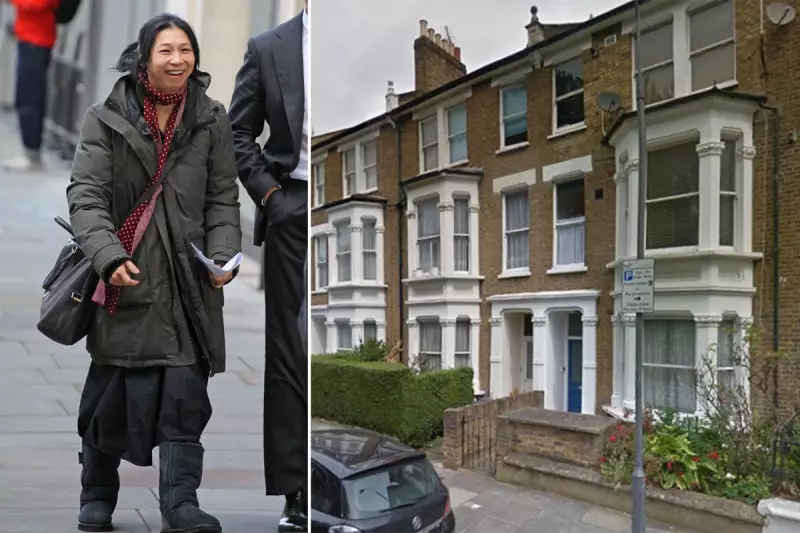
A London-based artist has lost a landmark legal battle after claiming her ex-husband signed over their £1.5 million family home to her through WhatsApp messages. The High Court test case has set a significant precedent on when digital communications become legally binding for property transfers.
The Disputed Digital Promise
Hsiao Mei-Lin, a 54-year-old painter, married Icelandic financier Audun Mar Gudmundsson, also 54, in 2009. The couple, who had two children, lived in a £1.5m house in the affluent north London area of Tufnell Park. Their marriage was troubled, with Ms Lin stating Mr Gudmundsson became addicted to methamphetamine and cocaine, and they separated in 2016.
During divorce proceedings, a judge ordered in March 2020 that Mr Gudmundsson hand over his 50% stake in the Southcote Road property to Ms Lin. Unbeknownst to her, he had been declared bankrupt just one week earlier, following a petition from a former friend alleging debts exceeding £2.5 million. This bankruptcy meant Ms Lin could not receive his share, which instead passed to the trustees managing his insolvency.

WhatsApp Messages at the Heart of the Case
Ms Lin then launched a novel legal argument, centred on WhatsApp messages sent by her ex-husband before his bankruptcy. She insisted these messages constituted a "written and signed" document that legitimately transferred sole ownership to her.
One key message from Mr Gudmundsson read: "I suggest that the responsibility for taking care of the kids goes to u 100%, then I can sign over my share of Southcote road to u without any complications as I don't need any accommodation in London." He added, "Please let me know that u r happy with this and we can then close the financial part of the divorce this week," to which Ms Lin replied, "with some monthly maintenance then ok."
Her legal team argued that because Mr Gudmundsson's name appeared in the message header on her phone, it satisfied the legal requirement for a signature. The trustees of his bankruptcy estate, Maxine Reid-Roberts and Brian Burke, fiercely contested this, warning that a ruling in her favour would mean any WhatsApp message could be considered signed, creating legal uncertainty.
High Court Ruling Sets a Precedent
In a judgment delivered on Thursday 15 January 2026, Mr Justice Cawson dismissed Ms Lin's appeal. He ruled that the sender's name in a WhatsApp chat header is not equivalent to a legal signature.
"I consider that the header within a WhatsApp 'chat' identifying the sender is analogous to the email address that is added by the relevant service provider to the top of an email," the judge stated. "It is not, as I see it, part of the actual message itself, but merely provides a mechanism... to allow the sender to be identified. It is properly to be regarded as incidental to the message itself."
Furthermore, Mr Justice Cawson found that the content of the messages did not demonstrate an intention to immediately and unequivocally relinquish his share of the property. Instead, they pointed towards negotiations for a future divorce settlement. "The evidence falls well short of supporting a finding that Mr Gudmundsson...evinced an intention to divest himself immediately of his beneficial interest," he concluded.
Consequences and Eviction
The ruling has major implications for Ms Lin. The judge allowed the trustees' appeal and significantly reduced the time she has to leave the property. She was originally ordered to sell the house by 2032, once her children reached adulthood. She must now vacate the Tufnell Park home by 31 July 2027.
The case serves as a crucial test for the digital age, clarifying that while WhatsApp is a ubiquitous communication tool, the automatic display of a sender's name does not carry the legal weight of a signature for disposing of valuable assets like property. For now, traditional formalities still hold sway in English property law.