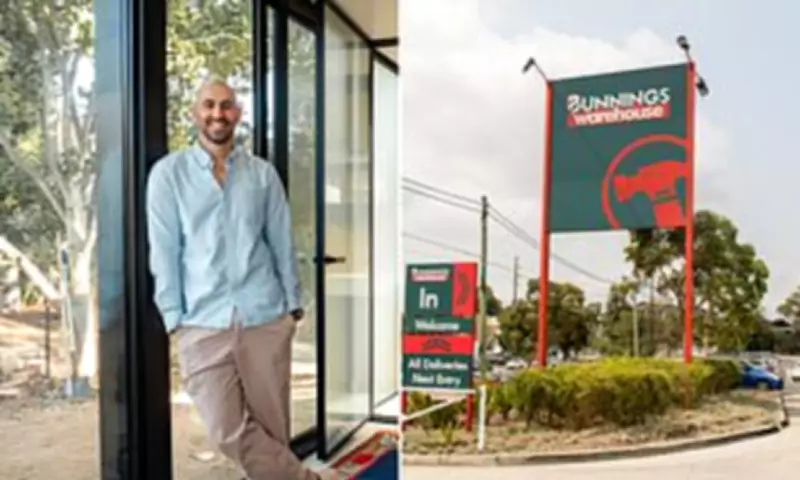
In a significant strategic expansion beyond its traditional hardware offerings, Bunnings is leveraging its retail dominance to enter the prefabricated housing market. The move comes as Australian policymakers urgently seek solutions to the nation's escalating housing affordability crisis, with supply shortages and bureaucratic delays exacerbating the situation.
Partnership with Innovative Start-Up
Bunnings has formed a partnership with Melbourne-based start-up Elsewhere Pods to market flat-pack tiny homes through its established retail channels. These modular units range from compact standalone rooms to more spacious double-storey dwellings, all designed to circumvent traditional building permit requirements through clever design and construction methods.
Product Specifications and Pricing
The hardware retailer is making these innovative housing solutions available both online and through its in-store special orders desks. Customers can choose between two primary models: a compact 2.7m × 2.4m room priced at $26,100, and a more substantial 4m × 2.4m studio available for $42,900. According to company representatives, these units can be fully assembled in as little as two days, presenting a dramatically faster alternative to conventional home construction which typically requires a year or longer.

Versatile Applications
Bunnings is positioning these pods as versatile, DIY-friendly options suitable for multiple applications including crisis accommodation, home offices, yoga studios, or teenage retreats. This flexibility addresses various contemporary housing needs while offering relatively affordable solutions compared to traditional construction methods.
Founder's Inspiration
The genesis of Elsewhere Pods traces back to founder Matt Decarne's personal experience during the 2020 floods that devastated Byron Bay. Witnessing his mother lose her home exposed what he describes as the painfully slow, excessively costly, and bureaucratically burdensome nature of traditional rebuilding processes.
'I observed neighbours trapped in caravans and tents while rebuilds dragged on indefinitely due to red tape, trade shortages, and material delays,' Decarne explained. This frustrating experience prompted him to leave his career in international trade and finance to develop flat-pack, modular eco-pods designed for installation within days rather than months.
Company Growth and Market Response
Since its establishment four years ago, Elsewhere Pods has generated over $9 million in sales, with demand doubling annually as more Australians turn to compact, energy-efficient housing alternatives. The company's offerings now extend from basic backyard studios and granny flats to comprehensive three-bedroom dwellings, all following the same efficient assembly principles.
'Everything arrives as a flat pack and our installation team assembles it on site,' Decarne described. 'The process resembles high-tech Lego construction or represents a luxury version of Ikea furniture assembly.'
Broader Market Trends
The emergence of tiny homes reflects a fundamental shift in Australian housing perspectives. According to the Australian Tiny House Association, more than 10,000 people currently reside in tiny homes or pods nationwide, with this figure expected to increase substantially over the next five years.
Industry projections indicate the prefabricated building market, encompassing tiny and modular homes, will grow approximately 7 percent annually, potentially reaching $18 billion by 2030. A significant portion of this appeal stems from the ability to bypass lengthy planning processes that typically delay conventional construction projects.
Customer Demographics
Before securing the Bunnings partnership, approximately 40 percent of Elsewhere Pods sales went to Airbnb investors seeking income from regional properties, while another 30 percent supported eco-tourism developments. 'Our pods now occupy some of Australia's most picturesque locations,' Decarne noted. 'Customers are investing in spaces where they can disconnect, immerse themselves in nature, while still enjoying high-quality, design-focused accommodation.'

Government Housing Targets and Shortfalls
The Federal Government's ambitious Housing Accord originally aimed to construct 1.2 million new homes by 2029. However, according to the latest Propertybuyer's Australian property market outlook, the nation is projected to miss this target by a staggering 426,000 homes.
This looming supply gap is anticipated to intensify pressure on property prices, rental costs, and overall housing affordability, potentially deepening Australia's existing housing crisis. Both federal and state building ministers have explicitly identified modular and prefabricated housing as essential components for addressing the supply shortage, rather than mere boutique alternatives.
State-Level Initiatives
Modular housing is emerging as New South Wales' strategic approach to confronting the housing crisis, with the state positioning itself as an early adopter of this technology at scale. During the 2025–26 financial year, the NSW Government plans to deliver 90 modular homes statewide, including 80 duplexes across 40 sites throughout Greater Sydney and regional NSW.
NSW Housing Minister Rose Jackson emphasised the urgency of the situation: 'Thousands of people desperately need roofs over their heads. These aren't substandard structures—they represent beautiful, modern homes built to last. Families will take pride in living in them.' She further noted that 'modular housing already enjoys widespread adoption across Europe and globally.'
The collaboration between established retail giant Bunnings and innovative start-up Elsewhere Pods represents a significant development in Australia's housing landscape, offering practical, rapidly deployable solutions during a period of unprecedented housing challenges.