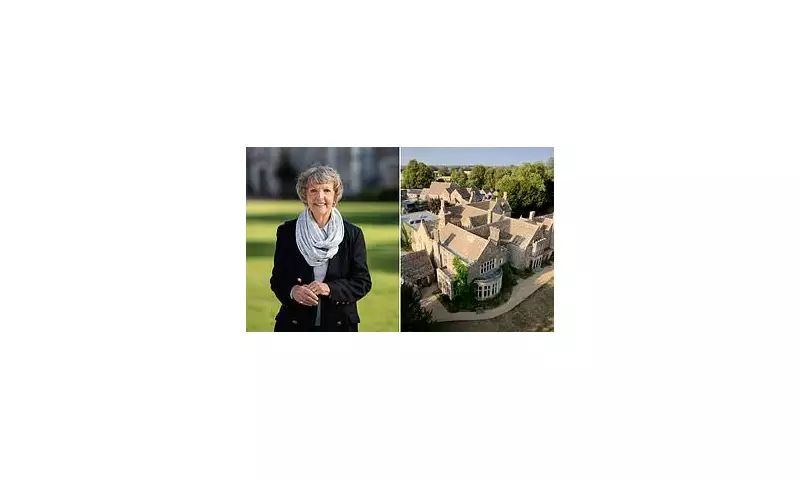
For most teenagers, a bedroom is a sanctuary for posters and PlayStation games. For George Lowsley-Williams, it was a space he had to share with spectral residents. 'I spent the first 17 years of my life living in a room that had to be exorcised twice,' he recalled. His childhood home was the historic Chavenage House in the Cotswolds, a setting ripe with paranormal potential that its current custodians seem curiously reluctant to exploit.
The High Cost of Heritage
George's son, James Lowsley-Williams, now manages the estate with his wife, Emma. The formidable challenge they face is the property's staggering running costs, which hover close to £400,000 a year. Nestled just a couple of miles from King Charles's country retreat at Highgrove, the house demands a constant influx of cash to maintain its grandeur.
Their proposed solution? Opening a yoga studio in one of the property's barns. While wellness is a growing trend, generating nearly half a million pounds annually from downward-facing dogs presents a financial puzzle of its own. The couple's strategy appears to overlook the house's most marketable asset: its ghosts.

A Missed Spectral Opportunity
Haunted country houses are experiencing a significant boom in popularity, particularly with American audiences enchanted by series like the BBC's Ghosts. The trend shows no sign of slowing, with shows like Daisy May Cooper's Nightwatch and the long-running Most Haunted captivating viewers. Yet, during a tour for the More4 series Saving Country Houses, narrated by Penelope Keith, James and Emma seemed almost apologetic about their home's eerie side.
They guided cameras into rooms untouched for centuries. One chamber, its walls clad in 'hideous faded tapestries,' hadn't seen a sleeper in 200 years—a fact that, for paranormal enthusiasts, is pure gold. Another was chaotically piled high with chairs, and a creepy, lanky straw doll lay in a cradle, described by Emma as her 'worst nightmare.'
Raising Cash by Raising the Dead?
The episode also featured other historic properties, including Northamptonshire's Ashby Manor, infamous as the plotting ground for the 1605 Gunpowder Plot. However, the focus remained on Chavenage's untapped potential. The couple concluded their tour in a dusty attic, where a decaying model train layout wound through the rafters, and bats flitted past cobwebs.
Their thought of restoring the trains as an attraction seems to miss the point entirely. In an age where the supernatural sells, the most straightforward revenue stream might be staring them in the face—or floating through the walls. Instead of costly renovations, the answer to their financial woes could be as simple as monetising the manor's long-standing spectral residents.