

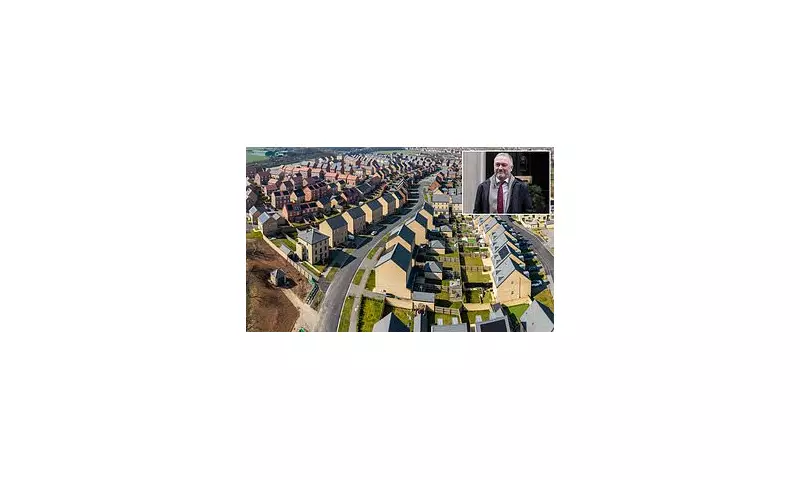
The Labour government has been accused by the Conservatives of launching an "all-out assault" on the green belt and reviving "garden-grabbing" tactics, following the unveiling of a major overhaul of England's planning rules. Ministers presented the changes as the most significant rewrite of planning policy in over a decade, designed to accelerate housebuilding across every region.
What the New Planning Framework Proposes
In a statement to the House of Commons, Housing and Planning Minister Matthew Pennycook set out the latest update to the National Planning Policy Framework (NPPF). The government claims the revisions will make the system "clearer" and "more predictable." The reforms are a central part of Labour's drive to fulfil its manifesto pledge to build 1.5 million new homes across England within five years.
The proposed changes include several key measures. A new "presumption in favour" of development will be applied to areas within a 15-minute walk of railway stations deemed "well-connected," based on service frequency and local economic performance. This will apply even within the green belt, subject to a minimum density requirement of 50 dwellings per hectare.

Other measures aim to boost higher-density development on smaller and underused sites, simplify biodiversity rules, and give preferential treatment to projects that support local businesses or improve town centres. These follow earlier NPPF changes in December, which introduced mandatory housing targets for councils and incentives to develop lower-quality "grey belt" land within the green belt.
Conservative Fury and 'Garden-Grabbing' Claims
The announcement triggered immediate condemnation from the opposition. Conservative shadow housing minister Gareth Bacon MP lambasted the government's approach, labelling its housebuilding record "dreadful" and predicting it would take seven years to meet its 1.5 million home target.
"This Labour Government's last planning framework began pushing development onto rural areas, prioritising concreting over the green belt and green fields," Bacon told MPs. "It sounds as though the Government is going to double down on this with an all-out assault on the green belt."
He accused ministers of "eroding trust" by sidelining local concerns with top-down targets and disproportionately focusing on rural areas instead of cities. Bacon also claimed Labour was "returning to something the previous Labour government did, namely garden-grabbing," due to a failure to prioritise brownfield land.
Government's Defence and Brownfield Focus
In response, Housing Secretary Steve Reed argued the current planning system says "'no' more often than it says 'yes'" and that reform is essential to help aspiring homeowners. Minister Matthew Pennycook directly countered the Conservative criticism, insisting the government was "doubling-down on a brownfield-first approach" with the new framework.
Pennycook acknowledged that progress towards the 1.5 million homes target had been "slow" in the early part of the Parliament. He blamed this on inheriting a housing market downturn and "anti-supply changes" made by the previous Conservative government, including the abolition of mandatory housing targets.
The political row sets the stage for a fierce battle over the future of England's landscape, as the government presses forward with its contentious plan to solve the nation's chronic housing shortage.






