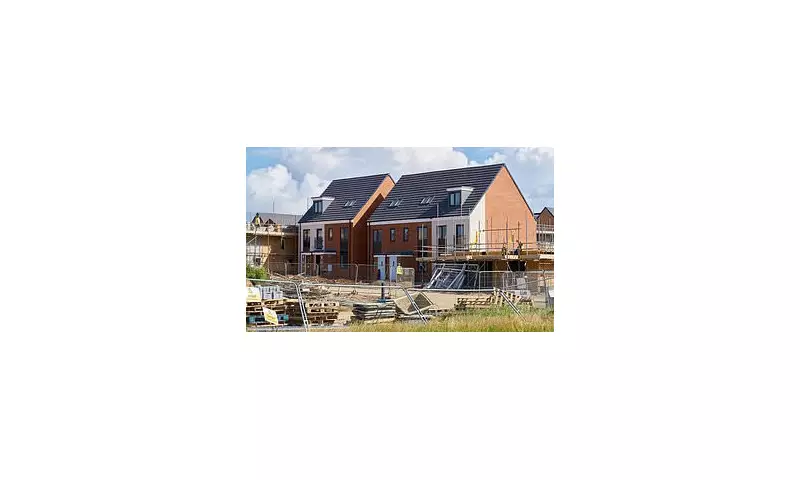
The Labour government has unveiled what it describes as the most significant overhaul of England's planning system in over a decade, as it races to meet its pledge of constructing 1.5 million new homes within five years. Ministers claim the sweeping changes to the National Planning Policy Framework (NPPF) will make planning 'clearer' and 'more predictable', accelerating housebuilding in every region.
Key Reforms: Green Belt Stations and High-Density Building
Central to the new framework is a default 'yes' approach to residential development around train stations, even within the protected green belt. Stations will be assessed based on service frequency and local economic performance. If deemed 'well-connected', developments within a 15-minute walking radius will be permitted, subject to a minimum density requirement of 50 dwellings per hectare.
Housing Minister Matthew Pennycook stated this policy applies to stations 'within existing settlements and around well-connected stations outside settlements'. The same permissive stance will apply to building upwards in towns and cities, with ministers pledging to make it easier for developers to construct higher-density housing like modern apartments on smaller, under-used sites.

The government also vows to encourage a more diverse housing mix, including affordable rural homes and accessible properties for older and disabled people. Developments that boost local economies and provide new shops or leisure facilities will receive preferential treatment.
Controversy and Criticism: Garden-Grabbing and Biodiversity
The proposals have sparked immediate political backlash. The Conservative Party accuses Labour of reviving 'garden-grabbing' tactics—building new homes on existing residential gardens—by erasing planning protections introduced during the Coalition era. Shadow Housing Secretary Sir James Cleverly criticised the move, saying it threatens 'quiet suburban neighbourhoods' with 'ugly apartment blocks'.
Conservation groups have raised significant alarms over a proposed weakening of Biodiversity Net Gain (BNG) rules. The reforms include exempting smaller developments under 0.2 hectares and some brownfield sites from the requirement to deliver a 10% net gain for nature.
Richard Benwell, chief executive of Wildlife and Countryside Link, warned that exempting small sites could 'wreck the policy'. Beccy Speight of the RSPB called the decision 'a blow for nature' that 'undermines fair competition' and risks clean water and flood protection in nature-poor urban areas.
Swift Bricks and the Defence of Nature Policies
In a bid to offset environmental concerns, the new rules mandate that all new homes in England must include 'swift bricks'. These £35 cavity bricks provide nesting spaces for swifts, whose UK population has plummeted by 66% between 1995 and 2022 due to lost nesting sites in modern buildings.
Defending the broader package, Housing Secretary Steve Reed argued the current system 'favours obstructing instead of building', with real consequences for aspiring homeowners. Minister Pennycook rejected claims he was pitting development against the environment, insisting the government seeks a 'win-win for both'.
The success of these reforms now hinges on balancing the urgent demand for housing with legitimate concerns over local character, green space, and environmental protection. The coming months will reveal whether this planning shake-up can truly deliver its promised 1.5 million homes.