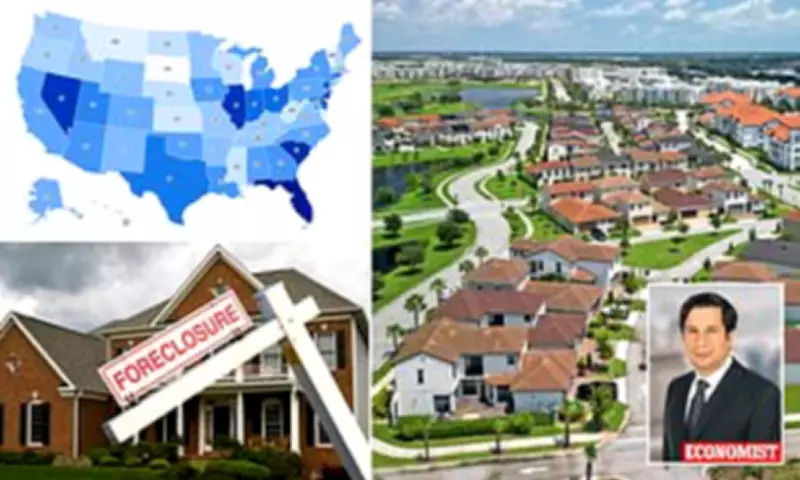
Lenders are reclaiming properties at accelerating rates across the United States, with new data revealing a concerning 14 percent annual increase in foreclosure activity. According to ATTOM's comprehensive figures, a total of 367,460 US properties faced foreclosure filings during 2025, indicating they were in various stages of repossession by financial institutions.
The Sunshine State's Perfect Storm
Florida has emerged as the epicentre of this national crisis, with an alarming one in every 230 homes entering the foreclosure pipeline. This troubling development compounds existing challenges in a state already wrestling with skyrocketing insurance premiums and escalating homeowners' association fees.
Economist Michael Szanto identifies Florida's deepening condominium crisis as a significant contributing factor. 'Florida is being uniquely affected by a massive rise in assessments for older condo buildings in response to the tragic Surfside collapse,' he explained, referencing the catastrophic 2021 condominium disaster that prompted sweeping safety regulation reforms across the state.

Regional Spread Reveals National Problem
Close behind Florida, Delaware and South Carolina experienced nearly identical foreclosure pressures, with approximately one in every 240 homes confronting filing proceedings. The crisis extends beyond coastal regions, with Illinois and Nevada completing the top five most affected states, each witnessing about one in 248 housing units drawn into the foreclosure process.
This geographical diversity underscores the nationwide nature of the housing strain. The hardest-hit states represent contrasting regions - from beachfront communities to industrial heartlands, politically diverse territories, and both booming metropolitan areas and established urban centres.
Urban Centres Feel the Squeeze
Major metropolitan areas with populations exceeding one million residents are experiencing pronounced foreclosure pressures. Jacksonville led the nation in 2025 with one foreclosure for every 200 homes, followed closely by Las Vegas (1 in 210), Chicago (1 in 214), and Orlando (1 in 217).
The situation appears even more acute in smaller metropolitan regions. Lakeland, Florida recorded the nation's highest rate at one foreclosure for every 145 homes, with Columbia, South Carolina (1 in 165), Cleveland (1 in 187), Cape Coral, Florida (1 in 189), and Atlantic City, New Jersey (1 in 192) following closely behind.
Economic Undercurrents Driving the Crisis
Experts point to multiple converging factors creating this perfect storm. Tight housing supply combined with elevated mortgage rates continues to exclude potential buyers from the market, while rising living costs increasingly outpace household incomes across numerous regions.
Rob Barber, CEO at ATTOM, suggests these figures represent a 'normalization' following years of artificially suppressed foreclosure rates. However, the broader economic context reveals deepening concerns, with the United States adding only approximately 584,000 jobs in 2025 - marking the weakest annual employment growth outside a recessionary period since 2003.
Ripple Effects Across Communities
As foreclosure numbers climb, neighbourhoods face inundation with discounted, bank-owned properties that inevitably depress surrounding home values. For countless homeowners, this translates to diminishing equity based solely on their geographical location, creating financial vulnerability where none previously existed.
The surge in foreclosure filings indicates profound financial distress among households. Homeowners grappling with escalating property taxes and interest expenses are falling behind not only on mortgage payments but frequently on other financial obligations including credit card debts and automobile loans.
Warning Signs for the Future
Economists caution that the situation may deteriorate further in 2026. Michael Szanto warns, 'If the job market weakens, and it may very well, then we could unfortunately down the road see the increase in the foreclosure rate significantly accelerate.'

This mounting pressure inevitably draws uneasy comparisons to the 2008 financial downturn. When American households struggle to meet mortgage obligations, they typically reduce spending on essential items including food, transportation, and healthcare - creating an affordability squeeze that ultimately constrains broader economic growth.
The scattered geographical pattern of the hardest-hit states confirms this is not a regional downturn but rather a nationwide strain manifesting across every corner of the country, with no single economic explanation sufficing to explain why such diverse states top the foreclosure rankings.