Macy's Reports Robust Fourth-Quarter Performance Despite Economic Headwinds
Macy's has announced stronger-than-expected profits for the crucial fourth quarter, with comparable sales showing continued growth. The department store giant attributes this success to a comprehensive overhaul of its merchandise and significant improvements in customer service, which have encouraged higher spending among shoppers.
Mixed Outlook Amid External Pressures
Despite the positive results, the company—which also operates Bloomingdale's and the beauty chain Bluemercury—has offered a mixed outlook for the upcoming year. Macy's projects sales above Wall Street expectations but maintains a conservative stance on profits. CEO Tony Spring explained that this cautious approach reflects the "tension" between Macy's relatively healthy business operations and external economic volatility.
Key factors contributing to this uncertainty include President Donald Trump's tariffs and the ongoing war in Iran, which has driven energy prices sharply higher. Spring noted in an interview with The Associated Press, "Sitting here today, there’s more unknown than there is known."
Record Holiday Sales and Competitive Advantages
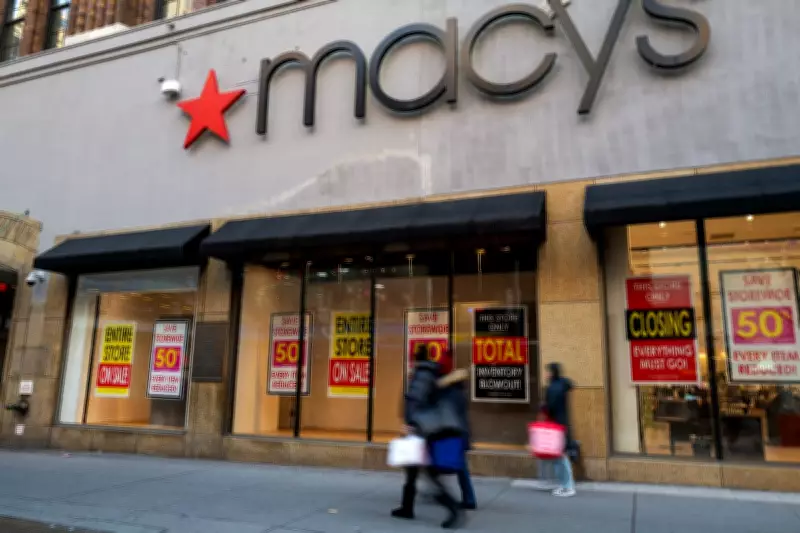
Under Spring's leadership, now entering his third year, Macy's has implemented strategic changes such as closing unprofitable stores and investing millions in modernizing others. These efforts have paid off, with Bloomingdale's achieving its highest holiday sales performance on record. Industry analysts suggest that some of this outsized performance may be linked to the Chapter 11 bankruptcy of the company running Saks Fifth Avenue and Neiman Marcus, reducing competition in the luxury segment.
However, Macy's faces the same challenges that have impacted its rivals and the broader retail sector. The U.S. tariffs have disrupted global trade, leading to higher prices, while many Americans are reprioritizing their spending habits. The Iran war, which began late last month, has exacerbated these pressures, causing sharp increases in gasoline and diesel prices—the latter being crucial for shipping logistics.
Economic and Legal Complexities
The Supreme Court recently struck down the largest of President Trump's tariffs, though the administration is seeking to replace them with new measures. Additionally, while a federal judge ruled that companies are entitled to refunds from overturned tariffs, retailers remain uncertain about when—or if—they will receive these funds.
Consumer spending has been uneven, characterized by a "K-shaped economy" where higher-income households continue to spend freely, while lower-income families pull back. Spring expressed concerns about the duration of the Iran conflict and potential disruptions to the Strait of Hormuz, stating, "I think we have to lean into what we can control, and then respond accordingly as we learn more."
Financial Highlights and Future Projections
Macy's reported net income of $507 million, or $1.84 per share, for the three-month period ending January 31, compared to $342 million, or $1.21 per share, in the same period last year. Adjusted per share results were $1.67 for the latest quarter. Net sales slightly declined to $7.64 billion from $7.68 billion, reflecting the closure of more stores.
Comparable sales—which include established online channels and physical stores—rose by 1.8%, though this was below the 3.2% increase seen in the fiscal third quarter. Encouragingly, comparable sales at the 125 revamped locations increased by 0.9%, indicating a positive return on investment. The company has begun revamping an additional 75 Macy's locations starting early this year.
Bloomingdale's comparable sales surged by 9.9% in the latest quarter, while Bluemercury's rose by 1.3%. The addition of exclusive brands like Totême, Christian Louboutin, Victoria Beckham Beauty, and Skims has boosted spending from existing customers and attracted new ones.
Looking Ahead
For the current year, Macy's expects net sales to range between $21.4 billion and $21.65 billion, with comparable sales projected to be anywhere from down 0.5% to up 0.5%. Earnings per share are forecasted to be between $1.90 and $2.10, compared to analyst expectations of $2.20 per share on sales of $20.97 billion, according to FactSet.
Spring acknowledged that while Macy's has yet to see increased shipping costs due to the Iran war, prolonged conflict could change this scenario. The company may absorb some costs initially but may eventually need to pass them on to shoppers. Despite these challenges, Macy's remains focused on differentiating its luxury offerings and enhancing customer service to navigate the volatile economic landscape.