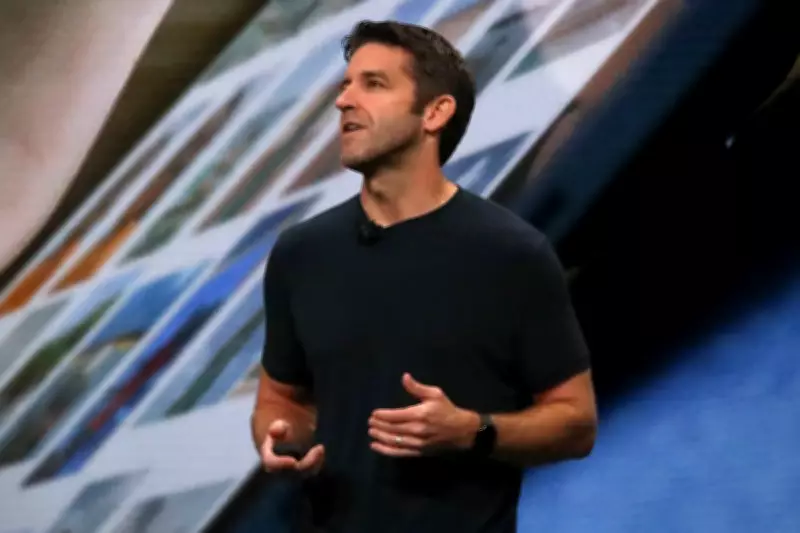
Apple's selection of John Ternus as its next chief executive officer reveals much about the company's strategic direction regarding artificial intelligence and potential vulnerabilities. Colleagues characterize Ternus as collaborative, risk-averse, detail-oriented, and even-keeled—a "product guy" considered a safe pair of hands. At fifty-one years old, Ternus has dedicated half his life to Apple, contributing significantly to the development of the iPad, AirPods, and numerous iPhone and Apple Watch generations.
Steady Leadership Amid Strategic Challenges
Now, those steady hands will guide the world's third most valuable company, a $4 trillion behemoth that recently celebrated its fiftieth anniversary. Founded in Steve Jobs' bedroom in 1976 and rescued from near-bankruptcy in the 1990s, Apple has flourished under Tim Cook's leadership. However, as Tim Cook passes the baton to John Ternus, Apple confronts two monumental strategic challenges: artificial intelligence and hardware innovation.
Apple's Position in the AI Race
Undeniably, Apple trails behind competitors in the artificial intelligence arena. Despite Siri being one of the world's most recognizable virtual assistants, it cannot match the capabilities of OpenAI's ChatGPT or Anthropic's Claude. Currently powered by Google's Gemini, Apple's "Apple Intelligence" software suite has struggled to gain traction. Nevertheless, a subtle strength exists beneath this apparent weakness. Even as generative AI transforms the world, people still access it through traditional devices that Apple manufactures. Apple receives a commission whenever users subscribe to ChatGPT or Claude via their iPhone applications. As Axios recently noted, "Apple could win the AI race without running."

Doubling Down on Hardware Expertise
Appointing Ternus signals Apple's intention to leverage this advantage by intensifying its focus on consumer hardware. Apple's microchips are exceptionally well-suited for training and running AI models. According to Bloomberg, Ternus played a pivotal role in transitioning the company from Intel processors to developing its proprietary Apple Silicon line. These chips have transformed Apple's Mac Mini into a sought-after commodity for AI entrepreneurs and hobbyists, resulting in severe shortages and shipping delays.
Amid ongoing bottlenecks in constructing new server farms and growing bipartisan criticism labeling them as unsightly with potential health concerns, offloading AI processing to consumers' personal computers could represent a viable path forward for technology giants. While rival companies invest billions in data centers and AI experiences—often compensating through massive layoffs—Apple has largely avoided such workforce reductions.
The Looming Question of Human-Computer Interaction
In the long term, however, a critical question persists for Apple. Historically, human-computer interaction has evolved from room-sized mainframes with text-only terminals to personal computers with virtual desktops navigated by mice, and now to smartphones with ultra-sensitive touchscreens. The next paradigm shift remains uncertain. Some anticipated voice control, like Amazon's Alexa, while others bet on augmented reality using specialized headsets to overlay virtual objects onto the physical world. Still others, notably Meta's Mark Zuckerberg, envisioned migration to an interconnected virtual reality dubbed "the metaverse."
Currently, the AI race has postponed this question without resolving it. Even Zuckerberg, who renamed his entire company Meta to symbolize his commitment, is retreating from augmented and virtual reality after losing approximately $80 billion. Apple possesses more institutional expertise in this domain than perhaps any other consumer electronics company. Although its $3,500 Vision Pro AR/VR headset has been a commercial failure, it may yet prove a strategic victory if it equips Apple with knowledge and capabilities for a future augmented reality boom.

Stiff Competition and Merging Challenges
Competition remains fierce, particularly from Apple's former design guru Jony Ive, who orchestrated the aesthetics of the iPod and iPhone. Collaborating with another top Apple designer, Tang Tan, Ive is working with OpenAI on a mysterious AI-first, screenless device. Whether this innovation will revolutionize the world or fail spectacularly remains uncertain.
This is where Apple's dual challenges converge. Ironically, AI chatbots have reverted users to one of the earliest computer interfaces: typing text commands and receiving text responses. How long will this last? How might human interaction with AI—which accelerates technological change—evolve over the next five or fifteen years?
The Need for Breakthrough Innovation
Apple only needs to excel, not pioneer, with an AI-focused product. The iPhone was not the first smartphone; it simply integrated previous innovations into an elegant package that appealed beyond gadget enthusiasts. However, no empire endures indefinitely. Critics already accuse Apple of settling into a pattern of incremental changes while failing to produce another groundbreaking device. Most companies never launch a revolutionary product; Apple has been fortunate enough to achieve this multiple times. The question remains: will John Ternus's safe, steady hands prove agile and swift enough to capture lightning in a bottle once more?