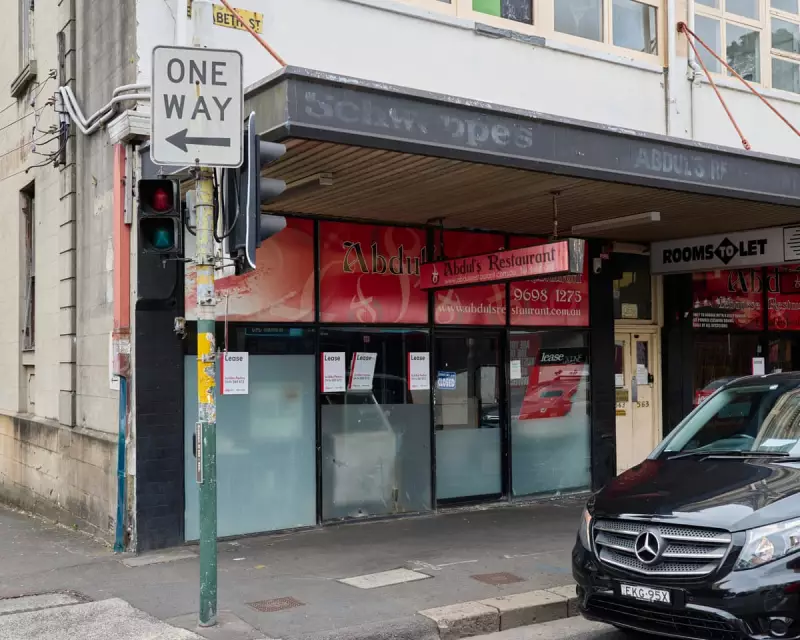
The closure of a decades-old culinary institution leaves a unique kind of emptiness, a sentiment keenly felt across Sydney as the beloved Lebanese restaurant, Abdul's, has served its final meal. For 60 years, it was a cornerstone of Surry Hills, a place of constancy in a changing city, and its departure has prompted a wave of collective grief among its legion of devoted patrons.
A Constant in a Changing City
Located on a key corner at Elizabeth and Cleveland streets, Abdul's was a landmark in an area once considered less desirable. Its charm lay in its glorious resistance to change. The decor remained frozen in time, the carpets grew threadbare, and laminated menus were the order of the day. For regulars, this was not a drawback but a comfort. The service was famously curt, the hummus impeccably smooth, and the act of paying was a test of willpower, with the counter's display of baklava and Turkish delight proving an almost irresistible final temptation.
For writer Emily Mulligan, whose family's history was deeply entwined with the restaurant, Abdul's functioned as an alternate living room for over three decades. Her parents' first date was held there, and subsequent key family milestones—birthdays, anniversaries, pregnancy announcements—were all celebrated within its unchanging walls. The family who ran it became quasi-characters in their own family narrative, a dependable presence churning out excellent food day after day.

An Enduring Legacy of Flavour and Family
Abdul's story began in the mid-1960s, introducing a then-novel cuisine to the Sydney palate. It remained a family-run business for its entire six-decade operation, a feat of endurance and quality that stood in stark contrast to the tumultuous world of corporate hospitality. Its appeal was broad: from a quick, dependably fresh kebab to a sprawling banquet that left patrons needing to be rolled out the door.
The restaurant's authenticity was subtly endorsed by the famous faces who visited, with photographs of celebrities like rugby league coach Wayne Bennett and actor Miranda Tapsell proudly displayed on the wall. It was a quintessentially Sydney detail: celebrity-approved kebabs in a no-frills setting. The restaurant even held out as one of the last cash-only bastions before eventually, and reluctantly, installing an EFTPOS terminal.
Where Does a City Turn When an Institution Closes?
The final closure, coming after the immense pressures of the pandemic on hospitality, has left a void. For Mulligan and countless others, the question now is where to turn for that specific craving—a vat of baba ghanouj, the perfect tangy tabbouleh, or simply the reassuring thud of a bag of Lebanese bread hitting the table. There is a palpable sense of regret for not visiting more often, for taking its permanent presence for granted.
Abdul's seemed fossilised into the very fabric of its streets, a permanent fixture immune to the passage of time. Its departure is a sharp reminder that even the most steadfast institutions are vulnerable. The restaurant's legacy, however, is secured in the memories of generations of Sydneysiders who found a home away from home within its walls, and whose families were introduced to the delights of Lebanese cuisine. As one chapter closes, the city is left to mourn not just a restaurant, but a cherished piece of its own social history.