The United Kingdom boasts an impressive collection of historic palaces, world-class museums, and thrilling theme parks. However, for every successful attraction, there are ambitious projects that never managed to get off the ground.
These large-scale ventures, which promised to become major tourist landmarks, ultimately fell victim to soaring costs, logistical nightmares, or shifting political priorities. We explore some of the most spectacular attractions that could have changed the UK's leisure landscape but sadly never saw the light of day.
The British Disneyland That Never Was
In the 1980s, an ambitious plan was hatched to transform an old quarry in Corby, Northamptonshire into a £346 million theme park dubbed the 'British Disneyland'. Named WonderWorld, the project was envisioned as a direct response to the success of Disney's Epcot.
The park was set to feature 13 themed villages, with the first six scheduled to open in 1992. It aimed to showcase the best of British design, with input from notable figures including botanist David Bellamy, who would help devise a mock safari, and astronomer Sir Patrick Moore, who would assist in designing an observatory.
The ambitious plans included high-tech rides, themed restaurants, shops, a 10,000-seat stadium for sporting events, and a Disney-style resort with seven hotels offering 6,000 rooms and 100 holiday villas. Projections estimated it would attract four million visitors annually.
Tragically, after planning delays and rising costs caused backers to pull out, all that was ever built was a sign and a wooden cabin. The site is now a housing estate, with no indication it was once destined to become a major British attraction.
London's Garden Bridge Debacle
London's Garden Bridge project represents one of the most costly failures in recent memory, with £53.5 million spent on a bridge that never broke ground. The pedestrian bridge, planned between Waterloo Bridge and Blackfriars Bridge, was conceived as a floating garden covered in shrubs and flowers.
An inquiry by Transport for London (TfL) concluded that £43 million of the sunk costs came from public funds. Expenditure included £21.4 million in construction costs and £1.7 million in executive salaries, along with £161,000 on a website and £417,000 on a gala for the failed proposal.
The idea, originally conceived by actor Joanna Lumley in 1998 as a "floating paradise" honouring Princess Diana, gained traction in 2012 when Boris Johnson was Mayor of London. Although planning permission was secured in 2014, the project faced criticism over its impact on sight lines of St Paul's Cathedral.
When Sadiq Khan became mayor, he ordered a review and subsequently withdrew support. The project was officially cancelled on August 14, 2017.
Trafalgar Square's Giant Pyramid
Following victory against the French at the Battle of the Nile, MP and soldier Sir Frederick William Trench proposed an extraordinary addition to London's landscape: a 300-foot pyramid in the middle of Trafalgar Square.
The 1812 proposal featured a pyramid with 22 steps, each representing a year of the two Anglo-French wars. At the time, it would have been among London's tallest structures, completely transforming the city's skyline.
One suggestion to bring the plan to life involved employing recently discharged armed forces personnel. However, only a scale model was ever constructed, which ended up in the home of the Duke of York. The land was eventually cleared to create the Trafalgar Square familiar to millions of visitors today.
The London Resort: Britain's Latest Failed Theme Park
More recently, the £2.5 billion London Paramount Entertainment Resort was announced in 2012, with plans for a massive theme park in Swanscombe, Kent, earning it the nickname 'Dartford Disneyland'.
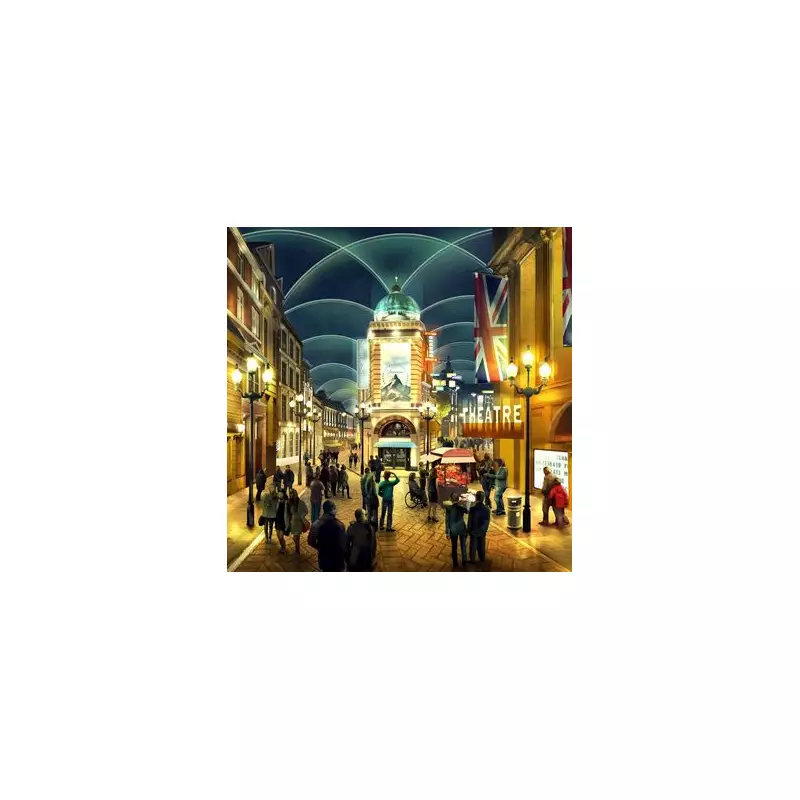
The resort was set to include Europe's largest indoor water park, theatres, live music venues, attractions, cinemas, restaurants, event spaces and hotels. Themed areas included Spaceport, The Isles, The Kingdom, and High Street, all celebrating British culture.
The project faced significant hurdles when Natural England designated a large portion of the planned park area as a Site of Special Scientific Interest (SSSI). Plans were scaled back in 2022, but the company behind the project, London Resort Company Holdings (LRCH), eventually went into administration and faced a lawsuit from Paramount.
In January 2025, the High Court ordered the company to be wound up, effectively ending the dream of this massive entertainment resort.
These failed projects serve as poignant reminders of how ambitious visions can falter despite significant investment and planning. While the UK's attraction landscape remains vibrant, these ghost projects represent what might have been—alternate realities where British families could have experienced homegrown versions of the world's greatest theme parks and landmarks.