Russia has begun actively working to circumvent the latest wave of US sanctions, aiming to ensure that India can maintain its high-volume imports of discounted Russian crude oil, according to industry analysts.
A Strained Alliance and a Defiant Stance
Since the outbreak of the war in Ukraine, India has risen to become the world's second-largest purchaser of Russian crude oil, capitalising on heavy discounts resulting from Western sanctions. This burgeoning trade has severely strained relations between Washington and Delhi in recent months.
The Trump administration has aggressively attempted to coerce India into halting its reliance on cheap Russian oil, accusing Delhi of bankrolling Vladimir Putin's war effort. In August, the US imposed a punitive 25% tariff on Indian imports over the issue. India, however, refused to back down, asserting its purchase of Russian oil as a sovereign matter not subject to third-country dictates. Subsequent trade negotiations have failed to yield agreements.

The pressure intensified last week with new US threats to impose 500% tariffs and withdraw from India-led global initiatives if Russian oil purchases continue.
Sanctions' Initial Impact and Rapid Evasion
From the end of November, US sanctions specifically targeted companies purchasing oil from Russia's two largest exporters, Rosneft and Lukoil, which are the primary sellers to India. The measures had an immediate effect, with India's daily imports of Russian crude dropping from an average of 1.7 million barrels to roughly 1.2 million barrels in December—a decrease of about one-third.
However, analysts doubt this marks a long-term shift. Crucially, a significant loophole exists: refineries are not sanctioned if their crude is supplied by a company other than Rosneft or Lukoil. Export data now shows that several new Russian oil exporters emerged by December, acting as shadow middlemen to bypass the restrictions.
"It looks like new players are emerging, which is a sign that Russia is already trying to reorganise the supply chain," said Homayoun Falakshahi, head crude oil analyst at Kpler. "Obviously the Russians are not going to sit and just watch the sanctions take effect."
Falakshahi predicts it is only a matter of two to three months until the supply chain is fully reorganised, with most barrels supplied by companies not directly named in the sanctions.
An Irresistible Discount and Market Skepticism
The economic incentive for India remains overwhelming. The nation imports 90% of its oil, and the discounts on Russian crude have deepened post-sanctions, now sitting at $9 to $10 per barrel cheaper than oil from Saudi Arabia or Iraq.
"The discount is just too attractive for the Indian refiners not to buy the oil," said June Goh, a senior oil market analyst at Sparta Commodities. This expectation is reflected in global oil markets, where an initial price spike has subsided. "The market just doesn't believe that this sanctions enforcement will likely take place in a big way," Goh added.
Falakshahi calculates that for willing companies, buying Russian oil could represent annual savings of almost $4 billion, a risk worth taking. He expects imports, particularly by India's public sector, to soon return to previous levels.
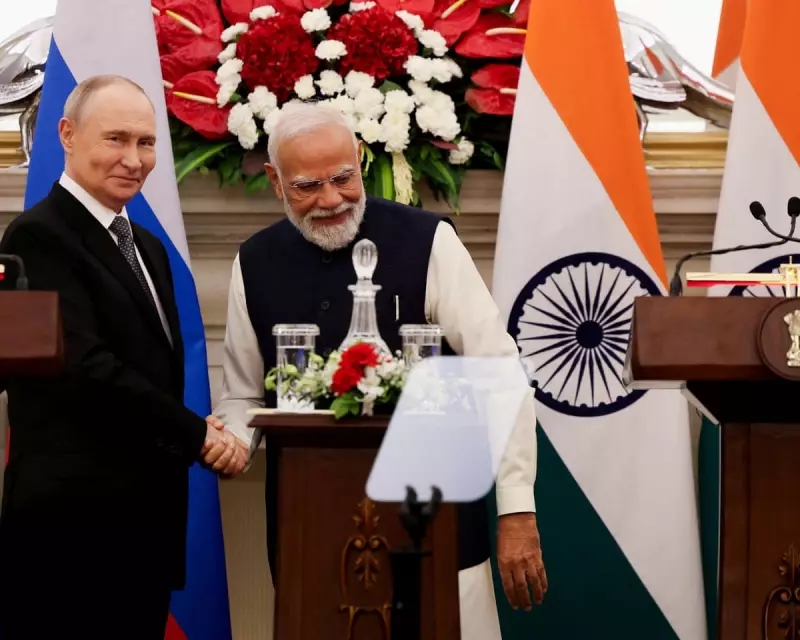
The Indian government has issued no direct mandate to refineries, only advising them to act in their operational interest. During a December visit, President Vladimir Putin assured India that Russian oil shipments would remain "uninterrupted."
Reliance's Strategic Pivot and Venezuelan Opportunity
A notable exception is Reliance Industries, India's largest private oil company and formerly its biggest buyer of Russian crude. Since November, Reliance has publicly declared it will no longer import Russian oil into its Jamnagar refinery, citing an "impeccable record" of sanction compliance. January marked its first month with zero Russian crude imports.
This move is seen as a response not only to US sanctions but also to EU rules that ban refined products made from Russian oil. The EU is a major export market for Reliance's diesel and jet fuel.

As Reliance seeks alternatives, analysts note that recent US actions in Venezuela, including the capture of Nicolás Maduro, may present a timely opportunity. Reports indicate Reliance is among companies in talks with Washington for authorisation to resume purchases of Venezuelan oil, which India imported before sanctions. A company spokesperson stated they would "consider buying the oil in a compliant manner."