South Korean lawmakers have passed a crucial law to implement Seoul's pledge of $350 billion in investments across the United States. This legislative move is designed to help South Korea avoid the highest tariffs threatened by the Trump administration, which has been increasing pressure on trade partners globally.
Background and Legislative Action
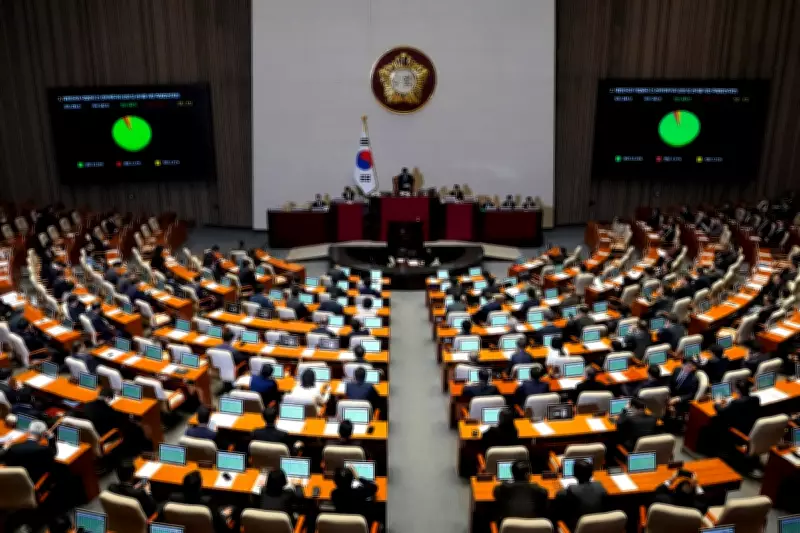
The bill, which was submitted in November, passed with an overwhelming majority of 226 votes to 8 on Thursday. Government officials had been urging lawmakers to act swiftly due to mounting uncertainty for South Korea's trade-dependent economy. The economy has already been rattled by President Donald Trump's protectionist policies and now faces potential fallout from his administration's actions in the Middle East.
Trump Administration's Trade Pressure
Hours before the bill's passage, the Trump administration escalated its trade strategy by opening a new investigation into manufacturing practices in foreign countries, including South Korea, Japan, and China. This investigation could lead to new import taxes if U.S. officials deem these practices unfair. Trump and his team have indicated they aim to use tariffs to recoup lost revenue after the U.S. Supreme Court invalidated previous tariffs issued under emergency powers.

Details of the Investment Law
The newly passed law calls for the establishment of a public corporation to manage the promised U.S. investments. This corporation will be responsible for reviewing and selecting projects based on input from both South Korean and U.S. trade authorities. The investment pledge includes $200 billion directed toward U.S. semiconductor and other high-tech industries, along with an additional $150 billion for shipbuilding.
Opposition and Concerns
Despite the bill's passage, some lawmakers expressed strong opposition during the debate. Son Sol, a member of the minor opposition Progressive Party, voiced frustration over Trump's new trade investigations and the potential impact of conflicts in the Middle East. She argued that the bill does not grant the legislature sufficient power to review and reject investments that might conflict with South Korean business or public interests, stating, "We cannot be the money machine Trump wants us to be."
Negotiations and Agreement
Following months of tense negotiations, South Korea finalized an agreement with the United States in November. In exchange for the $350 billion investment pledge, Washington agreed to lower reciprocal tariffs on South Korean goods from 25% to 15%. This agreement was reached after a breakthrough at an October summit between Trump and South Korean President Lee Jae Myung.
The deal also includes a cap on South Korean investments at $20 billion per year to protect the country's foreign currency reserves. Lee's liberal Democratic Party introduced the legislation in November, but it faced resistance from opposition lawmakers concerned about the economic implications.
Political and Economic Implications
The legislative holdup had frustrated Trump, who in January threatened to raise tariffs on South Korean autos, pharmaceuticals, and other goods back to 25%. This threat increased pressure on opposition lawmakers to move the bill forward, highlighting the vulnerability of South Korea's export-dependent economy and its reliance on imported fuel.
Overall, this law represents a significant step in South Korea's efforts to navigate complex trade relations with the United States, balancing economic interests with geopolitical pressures.