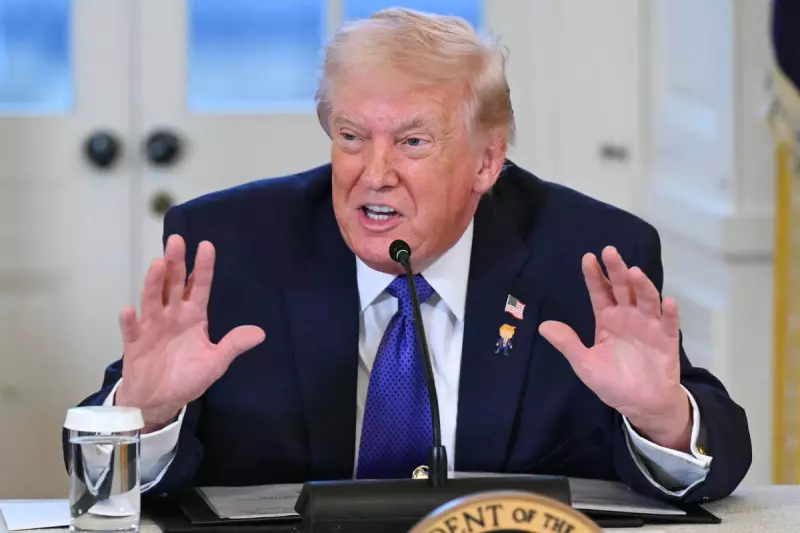
Former US President Donald Trump has suggested that the $2,000 tariff rebate cheques he has pledged to American voters could be distributed "sometime toward the end of the year." The update, given in January 2026, comes amidst significant uncertainty over the policy's legal and financial foundations.
Confusion and Contradictions Over the Rebate Plan
When initially questioned by The New York Times, Trump appeared to forget his high-profile promise before later clarifying his position. He made the contentious assertion that congressional approval would not be necessary to issue the payments, bypassing the traditional legislative process. Furthermore, he repeated a previously debunked claim, stating that a separate $1,776 "warrior dividend" for military members was funded by tariff revenue. In reality, this payment was a congressionally-approved housing supplement.
The White House has yet to publish a detailed, concrete plan for delivering the cheques. This lack of clarity is echoed within the administration itself, where officials have expressed differing levels of confidence. Treasury Secretary Scott Bessent's comments on the feasibility of the rebates have been notably mixed, adding to the overall ambiguity.

The Supreme Court's Decisive Role
The entire premise of the tariff rebate scheme faces a monumental legal obstacle. Its feasibility is almost entirely dependent on an impending ruling from the US Supreme Court. The court is set to decide on the extent of the president's authority to impose sweeping, unilateral tariffs.
A ruling in Trump's favour would potentially unlock the tariff revenues he claims will fund the rebates. However, a ruling against him would likely dismantle the financial mechanism for the $2,000 payments, leaving the promise unfulfilled. This places the Supreme Court at the centre of a major economic and political pledge.
Implications and What Comes Next
For American households anticipating the financial boost, the message is to prepare for a prolonged wait with no guarantee of outcome. The "end of the year" timeline is provisional at best, contingent on a favourable legal judgement and the subsequent creation of a workable distribution plan by an administration that has so far provided scant details.
The situation highlights the ongoing debate over executive power and the use of tariff revenues. It also underscores the gap between campaign trail promises and the complex realities of governance and constitutional law. As the nation awaits the Supreme Court's decision, the future of the $2,000 tariff rebate cheques remains deeply uncertain.