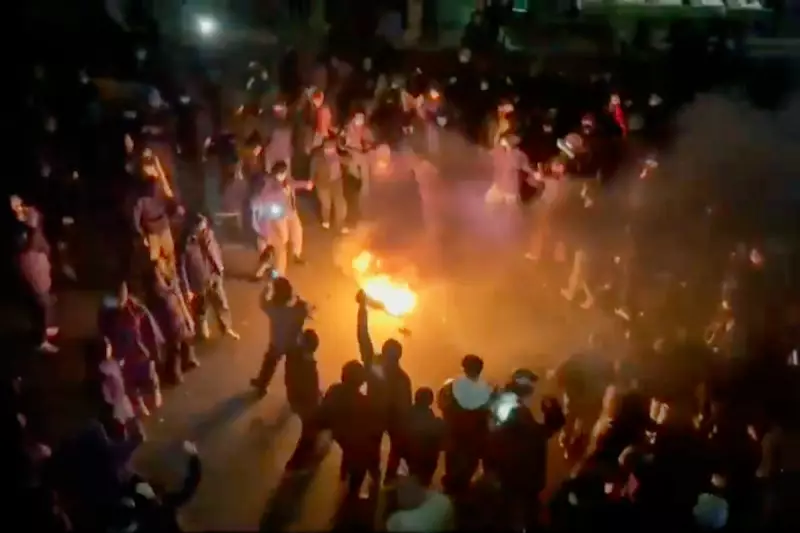
In a significant shift of strategy, former US President Donald Trump has turned his controversial tariff weapon towards Iran, imposing penal secondary tariffs of 25 per cent on nations that continue to trade with the Islamic Republic. The move, announced on Tuesday 13 January 2026, is framed as a peaceful means to support the Iranian people during a period of intense internal unrest and counter-revolution.
The Logic of Economic Pressure
The policy's core aim is to apply indirect pressure on Tehran's regime by crippling its primary source of revenue: oil exports. Analysts, including commentator Sean O'Grady, argue that while Trump's broader tariff wars have often been criticised for destabilising the global financial order, this specific application may be justified. The funds from exports bankroll the state's security apparatus, including the powerful Islamic Revolutionary Guard Corps (IRGC), and the leadership itself.
With the Iranian economy and its currency already in dire trouble—a key driver of the widespread protests—the loss of major markets could be decisive. The tariffs target key Iranian trading partners, including China, Iraq, the United Arab Emirates, India, Turkey, and Pakistan. The hope in Washington is that this amplified economic pain will force the ruling ayatollahs to reconsider their brutal crackdown on dissent.

A Preferable Alternative to Military Action
Advocates of the measure contend it is the most viable peaceful tool at America's disposal. It is explicitly positioned as a safer alternative to military options, which were reportedly presented to Trump by his chiefs of staff. The risks of a bombing campaign, even if limited to nuclear and military sites, are deemed prohibitively high.
"Any military action could rapidly spiral out of control," notes O'Grady, prompting a nationalist rallying effect that would bolster the very regime the West seeks to pressure. The ghost of President Jimmy Carter's failed 1980 hostage rescue mission in Tehran looms large—a debacle that strengthened the revolutionary government and contributed to Carter's electoral defeat. Similarly, any dramatic covert action, such as an attempt to capture Supreme Leader Ayatollah Khamenei, would likely backfire spectacularly.
The Geopolitical Stakes and a Vision for a New Iran
The long-term goal, as seen from this perspective, is not merely regime change but a fundamental transformation. A "new Iran" free from what is described as incompetent religious tyranny could prosper without pursuing nuclear weapons. It could revert to being a leading regional power and a source of stability, ending proxy conflicts in Yemen and ceasing support for Russia's war in Ukraine via drone technology.
Such an Iran would likely maintain support for the Palestinian cause but could cease sponsoring groups labelled as terrorist organisations, like Hamas and Hezbollah. It could also end its protracted proxy war with Saudi Arabia and live at peace with neighbours like Syria and Iraq. For this prize, the argument runs, economic pressure—however blunt an instrument—is a price worth paying. The challenge now lies with other trading partners, notably the European Union and Germany, to weigh their geopolitical interests against commercial gain as they consider their own trade with Iran.