Trump's Global Tariffs Take Effect at Reduced 10% Rate
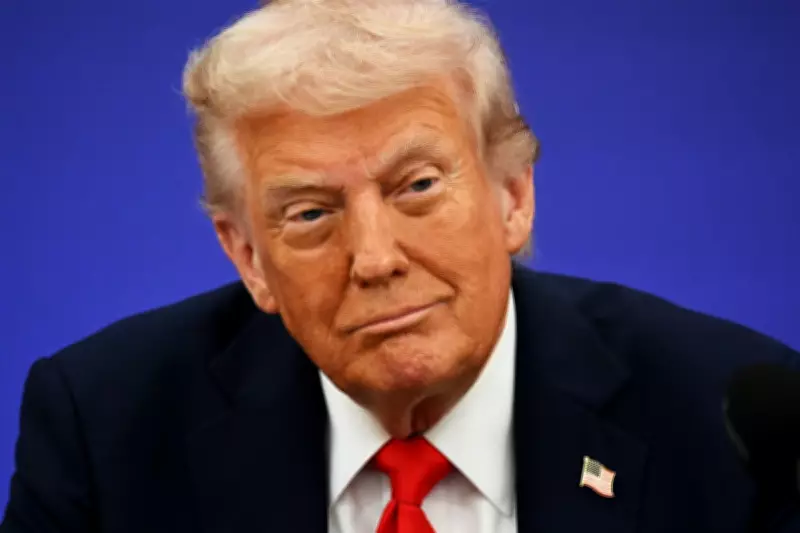
President Donald Trump's sweeping new global trade tariffs have officially come into force, imposing a 10% levy on imports to the United States. This implementation follows a dramatic weekend where the US leader had threatened to escalate the rate to 15%, creating significant anxiety within international business communities.
Executive Action and Legal Backdrop
The tariffs were enacted through an executive order signed by President Trump on Friday evening, February 23rd, 2026. This move came immediately after the US Supreme Court overturned his previous import taxes policy in a ruling delivered earlier that day. Utilizing section 122 of the Trade Act of 1974, the administration bypassed Congressional approval, establishing the 10% tariff for an initial period of 150 days, until July 24th, 2026.
The new levy applies on top of America's existing most favoured nation duties, affecting a wide range of imported goods from trading partners worldwide. This development represents a significant shift in US trade policy, reintroducing protectionist measures that had been temporarily halted by judicial intervention.

Business Reaction and Economic Uncertainty
The British Chambers of Commerce (BCC) has expressed mixed reactions to the tariff announcement. While acknowledging relief that the implemented rate stands at 10% rather than the threatened 15%, business leaders warn of persistent uncertainty that complicates planning and investment decisions.
William Bain, Head of Trade Policy at the BCC, commented: "While a new 10% tariff rate, instead of the threatened 15%, will provide some relief, it shows how difficult it is for businesses to plan ahead. It is far from clear what will happen next and whether a higher tariff rate is still on the way."
Bain elaborated on the practical challenges facing UK exporters: "Despite the immediate reprieve, there is fresh uncertainty for UK firms exporting goods to the US. This makes it very difficult for firms to understand the prices and margins they will be able to secure for their goods, currently under production, for export in several months' time. Inevitably this will have an impact on their sales and hit the economy."
Political Context and International Response
The tariff announcement followed President Trump's declaration on his Truth Social platform on Saturday, February 24th, where he stated his intention to raise the rate to 15%. This created a tense forty-eight hour period for international traders before the actual implementation at the lower rate.
Downing Street has responded cautiously to the developments, with a spokesperson stating on Monday that "nothing is off the table" regarding potential UK countermeasures. However, the government emphasized its preference for "constructive engagement" with the Trump administration, acknowledging that a full-scale trade war would harm businesses on both sides of the Atlantic.
Notably, certain exports covered under a transatlantic trade agreement negotiated between UK Prime Minister Sir Keir Starmer and President Trump would be exempt from the higher 15% rate should it be implemented.
Market Volatility and Investor Concerns
Financial markets have exhibited heightened volatility in response to the tariff uncertainty. On Monday, global stock markets experienced significant fluctuations, with investors seeking refuge in traditional safe-haven assets like gold as the US dollar weakened.
In London, the FTSE 100 index closed marginally lower on Monday, down just 2.15 points at 10,684.74, while the FTSE 250 suffered a more substantial decline of nearly 1%. Tuesday's early trading saw continued pressure, with the FTSE 100 dropping 0.2% following overnight losses on American markets, where the Dow Jones Industrial Average tumbled 1.7%.
Derren Nathan, Head of Equity Research at Hargreaves Lansdown, observed: "Investors were on edge as AI fear and tariff uncertainty hang thick in the air." This comment highlights how concerns about artificial intelligence's impact on technology sectors have compounded market anxieties surrounding trade policy.

The BCC's William Bain concluded with a warning: "The risk of further tariff pain to come is still real and the Government must do everything it can to prepare for the worst." This sentiment underscores the precarious position of UK exporters, who face both immediate cost increases and the looming threat of even higher tariffs in the coming months.