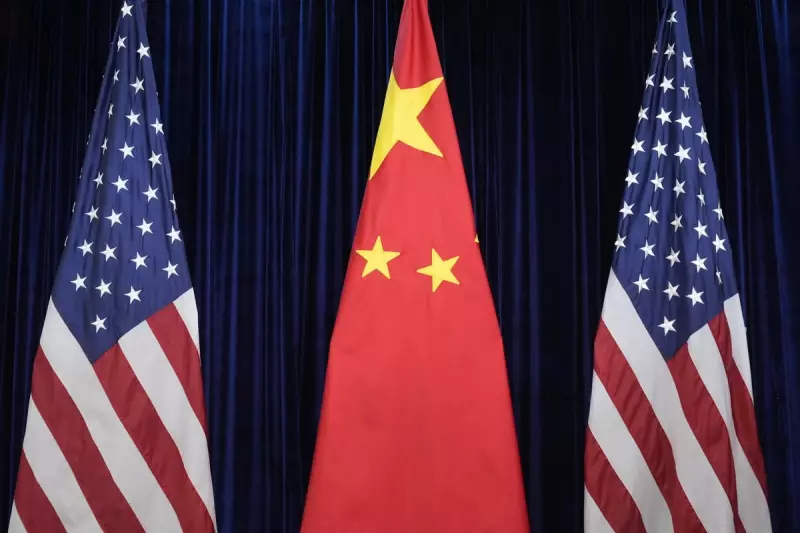
A significant shift in priorities for American companies operating in China has been revealed in a major new survey, with the nation's cooling economy now eclipsing longstanding trade tensions as the foremost worry.
Survey Highlights Shifting Business Concerns
The American Chamber of Commerce in China (AmCham China) released its findings on Friday, 16 January 2026. The survey, which gathered responses from 368 companies, showed that 64% viewed slowing growth in the world's second-largest economy as their top concern. This compares to 58% who cited ongoing U.S.-China trade tensions as a key challenge.
One driving factor behind this shift is the nature of many U.S. firms' operations in China. A substantial number are focused on serving the country's vast domestic market of approximately 1.4 billion consumers, rather than relying on exporting goods back to the United States. Consequently, the internal health of the Chinese economy directly impacts their bottom line more acutely than tariff disputes.

Economic Context and Political Landscape
Economists anticipate China's economy will slow further this year, following an expansion at an annual pace of around 5% in 2025. Notably, last year saw exports grow faster than imports, resulting in a record trade surplus of nearly $1.2 trillion.
The report indicated a slight improvement in overall business sentiment compared to the previous year. More than half of the respondents estimated they were profitable in 2025, an increase from less than half a year earlier.
The period has been turbulent for American businesses, particularly after the return of President Donald Trump to office nearly a year ago. Some uncertainty has been alleviated by a year-long trade truce reached between Washington and Beijing. This followed Trump's imposition of tariffs of up to 145% on certain Chinese imports. Upcoming diplomatic engagements, including an expected Trump visit to Beijing in April and a potential visit by Chinese leader Xi Jinping to the U.S. later this year, are being closely watched.
Investment Trends and Official Stance
Despite the truce, broader foreign investment flows into China have weakened. Official government data shows foreign direct investment stood at 693 billion yuan ($99 billion) in the first eleven months of 2025, marking a 7.5% decline from the same period the previous year.
Michael Hart, President of AmCham China, addressed the complex environment at a media briefing. "Our companies have to live with the political realities, but they’re focused on the business opportunities," he stated. Hart added, "We have felt that the Chinese government does want foreign investment, they do want American investment."
There are glimmers of optimism in the survey data: 48% of respondents expressed optimism about growing their Chinese market share over the next two years, up from 37% the year before. This sentiment aligns with signals from Beijing's high-level annual economic work conference in December, where Chinese leaders acknowledged the need to reform and improve systems for promoting foreign investment.
The AmCham survey was conducted between 22 October and 20 November 2025, coinciding with the meeting between Trump and Xi in South Korea where they agreed to extend the trade truce.