In a remarkable fusion of modern infrastructure and ancient history, two new stations on Rome's Metro Line C are poised to open their doors to the public, transforming into underground museums. The stations, San Giovanni and Amba Aradam-Ipponio, have been built amidst a treasure trove of archaeological discoveries, which will now be displayed in situ for passengers to experience.
A Subterranean Journey Through Time
The construction of the long-awaited Metro Line C, which began in 2007, has been a logistical and archaeological challenge from the start. Digging through the historic heart of Rome inevitably means encountering layers of the past. The project has now turned this challenge into a unique opportunity for public engagement. The San Giovanni station is scheduled to open on 16 December 2025, with Amba Aradam-Ipponio following shortly after in early 2026.
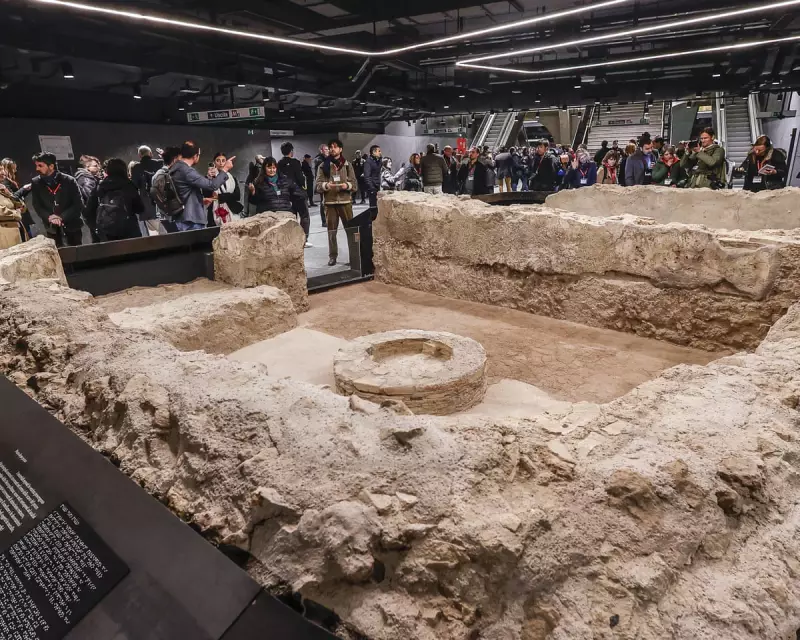
At San Giovanni, excavations revealed the foundations of a lavish farm villa from the imperial age, complete with intricate mosaic floors and sophisticated irrigation systems. These finds are not being removed to a distant warehouse. Instead, they have been carefully preserved and integrated into the station's architecture, allowing commuters to walk directly above history.

The Military Barracks of Amba Aradam
The discoveries at the Amba Aradam-Ipponio station are even more striking. Here, builders uncovered the remains of a second-century military barracks (castra) from the era of Emperor Hadrian. The scale of the find is impressive, encompassing 39 rooms, a central corridor, and a large hall that may have served as a communal space or command centre.
Perhaps the most poignant discovery was a room containing 13 skeletons, believed to be soldiers, found alongside 18 bronze coins. This silent testimony to the past has been meticulously preserved. Visitors will be able to view the barracks from a suspended walkway, offering a breathtaking overview of the ancient complex that lies beneath the modern street level.
Preservation as a Core Principle
This innovative approach did not happen by accident. It is the result of a deliberate and complex preservation strategy mandated by Rome's archaeological authorities. The standard procedure of excavating, documenting, and then dismantling historical finds to make way for construction was deemed insufficient for discoveries of this magnitude and quality.
Instead, a new plan was forged: to build the stations around the archaeology. This required significant engineering adjustments, including relocating access shafts and escalators, and designing special structures to protect the fragile remains. The result is a seamless blend where modern engineering defers to ancient craftsmanship, creating a museum without walls that is an integral part of the city's transport network.
The opening of these stations marks a significant milestone for Rome's beleaguered metro expansion. It demonstrates a forward-thinking model for urban development in historic cities worldwide, where progress and preservation are not mutually exclusive but can be woven together to enrich the daily lives of citizens and visitors alike.