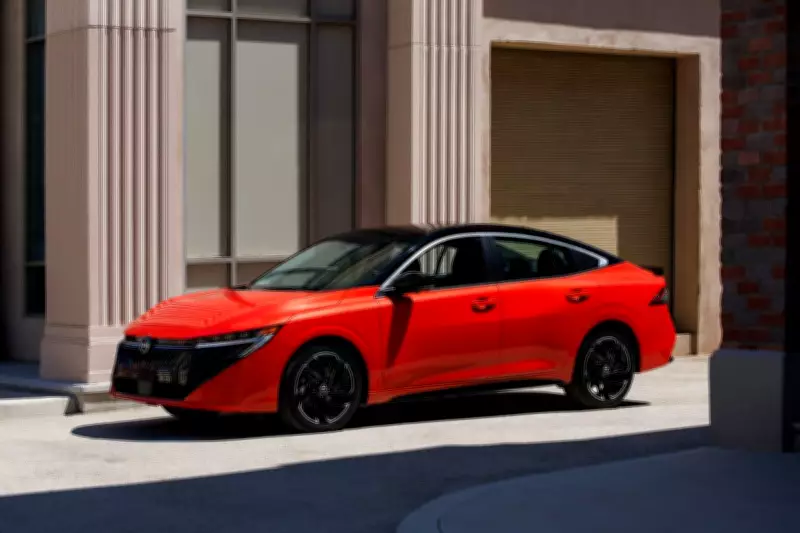
Edmunds' 2026 Sedan Showdown: Nissan Sentra vs Toyota Corolla Tested
With average new car prices approaching $50,000, the Toyota Corolla and Nissan Sentra stand out as crucial, budget-friendly entry-level options for 2026. In an era where many SUVs and electric vehicles are prohibitively expensive, these sedans offer a new-car experience with warranties and that fresh scent, all priced under $25,000. Edmunds' automotive experts have rigorously tested both models to help consumers decide which compact sedan delivers the better value.
Power and Fuel Efficiency: Corolla Takes the Lead
Both the Corolla and Sentra are equipped with four-cylinder engines, but the Toyota holds a clear advantage in performance. The Corolla's engine produces 169 horsepower, enabling it to accelerate from zero to 60 mph in 8.8 seconds during Edmunds' testing. While this pace is somewhat leisurely, it is nearly one second quicker than the Sentra, which manages 149 horsepower and requires more aggressive driving to keep up with highway traffic.
In terms of fuel economy, the Corolla also outperforms the Sentra. The Sentra achieves up to an EPA-estimated 33 mpg in combined city and highway driving, whereas the Corolla reaches up to 35 mpg combined and demonstrated even better results in real-world tests by Edmunds. Additionally, the Corolla offers a hybrid variant that boasts up to 50 mpg combined and an available all-wheel-drive option, features not present in the Sentra.

Winner: Corolla
Technology and Infotainment: Sentra Shines with Modern Upgrades
For the 2026 model year, Nissan has completely revamped the Sentra's interior, introducing dual 12.3-inch displays for digital gauges and infotainment that span half the dashboard. This wide-screen setup comes standard on most trims, giving the Sentra a cutting-edge feel. In contrast, the Corolla appears dated with its standard 8-inch display or optional 10.5-inch touchscreen.
Both sedans include wireless Apple CarPlay and Android Auto integration, along with optional wireless phone charging and upgraded audio systems. They also share standard advanced driver-assist features like blind-spot warning and adaptive cruise control with lane centering. However, the Sentra goes further by offering enhanced adaptive cruise control for stop-and-go traffic, rear parking sensors, and a high-definition surround-view camera system, providing exceptional value for the price.
Winner: Sentra
Interior Space and Comfort: Sentra Offers Superior Roominess
Compact cars are inherently space-efficient, but both the Toyota and Nissan models are surprisingly roomy. The Sentra excels with more elbow room and front legroom due to its slightly longer and wider body, though its sleek roof design reduces rear headroom, which taller passengers may find restrictive. The Sentra's cabin benefits from a recent redesign, featuring fresher materials and cloth or synthetic leather upholstery, while its front seats are praised for comfort on long journeys.
Cargo capacity is another area where the Sentra has an edge, with a 14.3-cubic-foot trunk that can accommodate multiple suitcases. The Corolla's trunk is smaller at 13.1 cubic feet, but buyers can opt for the Corolla Hatchback, which offers nearly 18 cubic feet of space.
Winner: Sentra
Price and Overall Value: A Close Call Between the Two
The Nissan Sentra starts at $23,845, including destination fees, making it slightly more affordable than the Corolla, which begins at $24,120. Upgrading to the Sentra SV trim adds features like a larger digital gauge cluster for about $500 more than the base Corolla. The Sentra also includes a larger touchscreen, enhanced cruise control, and more trunk space as standard.
However, the Corolla counters with superior performance and fuel efficiency, which can lead to long-term savings on fuel costs. This balance of attributes makes it a strong contender despite the higher initial price.
Winner: Tie

Edmunds' Final Verdict: Which Sedan Should You Choose?
Edmunds officially rates the Sentra slightly higher than the Corolla overall. The decision ultimately hinges on personal priorities. If fuel economy and engine power are paramount, the Corolla is worth the extra investment. Conversely, the Sentra excels in roominess, utility, and technology, making it the better choice for those seeking modern features and comfort at an affordable price.
This analysis underscores the enduring appeal of these entry-level sedans in a challenging automotive market, providing consumers with viable options without compromising on quality or innovation.