The UK government has announced a major legislative shift aimed at dramatically accelerating the deployment of public electric vehicle charging infrastructure across England. The move targets one of the most significant administrative bottlenecks that has hampered the pace of charger installations to date.
Streamlining the Installation Process
At the heart of the change is a clause within the new Planning and Infrastructure Act. This clause removes the requirement for chargepoint operators to obtain a section 50 licence under the New Roads and Street Works Act 1991 before carrying out works on the public highway. Instead, operators will now apply for standard street works permits, placing them on a similar footing to utility companies.
The previous section 50 licence system, while designed to manage road disruption, had become a notorious bottleneck. Application times and costs varied wildly between local authorities, often adding months of delay before installation could even begin. The new system will utilise Street Manager, the existing digital platform used by highway authorities and utilities, which the government states will make applications faster to process and cheaper to obtain.

A Broader Package of Support and Funding
This legislative change is part of a wider strategy to boost EV adoption. The government has also proposed removing the need for planning permission for most home charger installations, a measure it claims could save drivers up to £250 per installation. A separate £25 million scheme will assist residents without driveways to install cross-pavement charging solutions.
Funding remains central to the plan. Ministers have announced an additional £600 million this year alone to accelerate the national chargepoint rollout. This builds on the commitment to deliver more than 100,000 new public chargers across the UK. The current total stands at 87,168, representing a 21% increase since the end of 2024.
Industry and Government Reaction
Transport Secretary Heidi Alexander emphasised the government's focus on supporting businesses to drive the transition. "Backing the EV revolution shouldn’t be a drain on companies’ time or balance sheets," Alexander said. "That’s why our landmark Act will speed up processes and reduce planning delays, making it easier and cheaper than ever for firms to install public EV chargers."
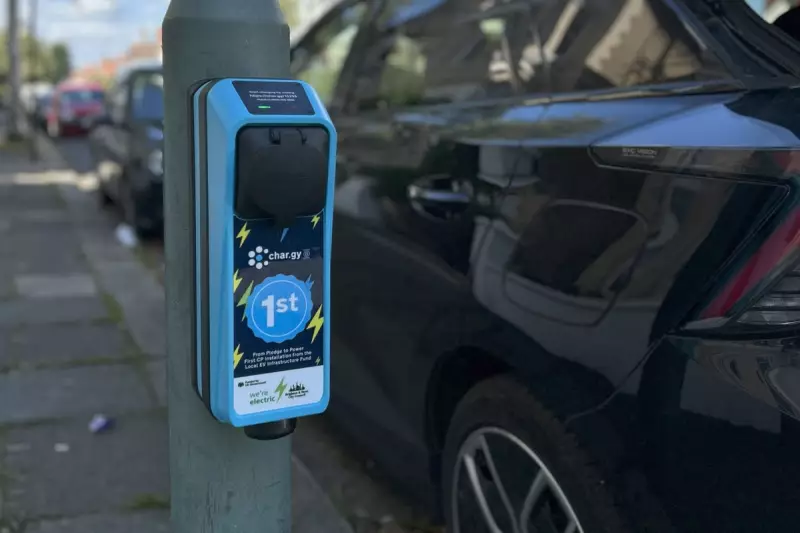
Industry leaders have welcomed the move. John Lewis, CEO of chargepoint operator char.gy, commented: "This is a genuinely positive step that tackles one of the biggest practical barriers to rolling out public charging at pace. Moving away from section 50 licences to a streamlined Street Works permit system will cut unnecessary red tape, reduce costs and, crucially, speed up installations on the ground."
In a parallel development, the government has launched a review into the cost of public EV charging. This will examine energy prices and other cost factors, with an aim to lower prices for consumers. A key point of scrutiny will be the VAT disparity, where public charging is taxed at 20% compared to 5% for domestic electricity.