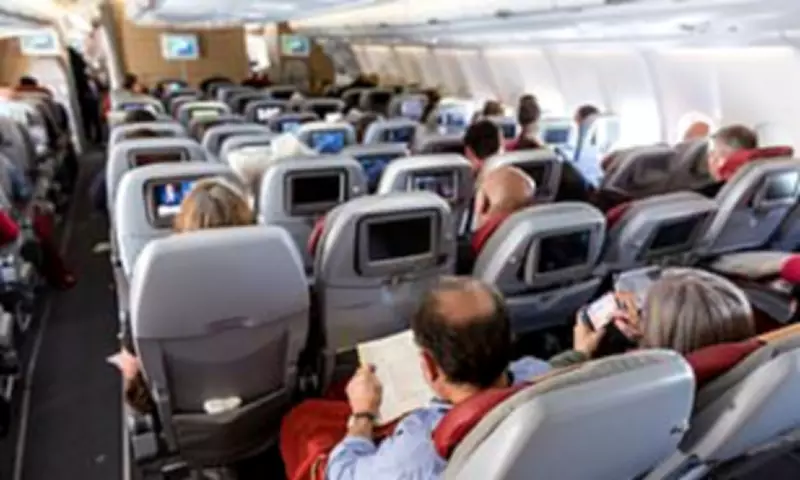
British travellers are confronting a stark new reality in the skies, as flights operate at their highest capacity levels ever recorded. Fresh data reveals that more than 83 out of every 100 seats on an aircraft are now occupied, virtually eliminating the spare capacity that passengers once took for granted.
The End of the Empty Seat Era
The days of lightly loaded flights are decisively over. The empty middle seat, the spare row at the back, and the chance of a last-minute upgrade due to a half-empty cabin have become rare luxuries rather than realistic expectations for UK flyers.
Record-Breaking Load Factors
New figures released by the International Air Transport Association last week show the global passenger load factor hit 83.6 per cent for the full year of 2025, setting a new annual record. December 2025 alone reached 83.7 per cent. Airlines are now predicting this figure is likely to climb even higher throughout 2026, intensifying the squeeze on available space.

A Capacity Crisis Driving Fullness
These record load factors are not solely a product of booming travel demand. They are being driven by a profound capacity crisis that is compelling airlines to fly planes fuller than they would ideally prefer. A severe mismatch is emerging between demand growth, estimated at 5.3 per cent annually, and capacity expansion, which is lagging at just 5.2 per cent.
The aviation industry is grappling with severe supply chain disruptions affecting aircraft and engine manufacturers. In particular, engine maker Pratt & Whitney has forced hundreds of aircraft out of service for unscheduled inspections and repairs, as highlighted by travel experts AirAdvisor. Consequently, airlines that had planned to retire older, less efficient jets are being forced to keep them operational because new replacement aircraft are not arriving on schedule.
The Hidden Costs for UK Passengers
For millions of flights and billions of passengers worldwide, this translates into consistently full planes. For UK travellers specifically, it creates a cascade of hidden problems and inconveniences.
Empty seats have virtually disappeared, even during traditional off-peak travel times, and they are set to become even more elusive in 2026. This new environment means that when a flight is cancelled or significantly delayed, rebooking passengers becomes an operational nightmare. The practice of overbooking is on the rise, making it more likely passengers will be involuntarily bumped from their flights in the coming year.
Furthermore, the opportunities to use frequent flyer points for award seats or upgrades are drying up rapidly, and last-minute bargain deals are vanishing from the market. The assumption that one might find an empty seat beside them on board is now largely wishful thinking.
Expert Analysis: A "High-Utilisation, Low-Slack" System
Anton Radchenko, founder and aviation expert at AirAdvisor, provided a stark assessment. 'When airlines and aviation analysts talk about record load factors, they frame it as an industry success story. And from a financial perspective, it is,' he said.
'But what nobody is explaining to passengers is that this efficiency comes at their expense. For UK passengers, the practical implications are profound. You need to book earlier, pay for flexibility when it is available, and build much larger buffers into your travel plans.'
Radchenko elaborated on the shifting norms: 'The spontaneous weekend city break booked on Thursday for Saturday departure is becoming a relic of a different era. The belief that the airline will easily rebook you if something goes wrong is dangerously naive. In 2026, the passengers who thrive are the ones who accept that flying is now a high-utilisation, low-slack system and plan accordingly. Those who keep operating on old assumptions are going to find themselves stranded, frustrated, and out of pocket.'
The message for British travellers is clear: the era of abundant, flexible air travel has passed. Adapting to this new, tightly packed reality requires advanced planning, managed expectations, and a strategic approach to booking and travel insurance.