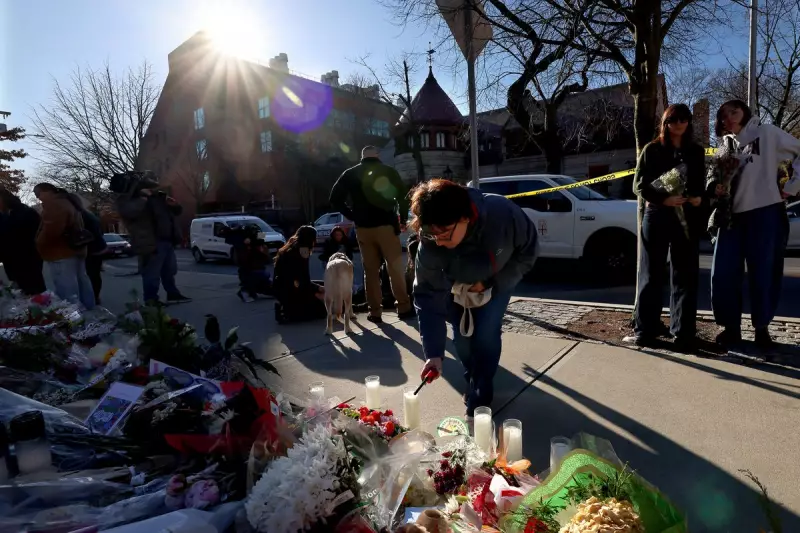
Federal investigators have revealed that the man responsible for a deadly shooting spree at Brown University and the murder of an MIT professor had been planning his attacks for at least three years.
Months of Meticulous Planning Uncovered
The U.S. Department of Justice confirmed on Tuesday that Claudio Neves Valente, a 48-year-old Portuguese national, had meticulously orchestrated the violence for at least six semesters. Valente, a former Brown student, was found dead in a New Hampshire storage facility following the attacks.
His rampage began on 13 December, when he entered an engineering building at Brown University in Providence. The assault resulted in the deaths of two students and left nine others injured. Just two days later, on 15 December, Valente travelled to the Boston suburb of Brookline, where he murdered MIT professor Nuno F.G. Loureiro at his home.

Chilling Video Confessions Recovered
During a search of the storage facility where Valente's body was discovered, the FBI recovered an electronic device containing a series of short videos. In these recordings, made after the shootings, Valente spoke in Portuguese and admitted to having "planned the Brown University shooting for a long time."
He offered no motive for targeting the prestigious Ivy League institution or Professor Loureiro, despite having attended school with the academic in Portugal decades earlier. Instead, Valente expressed a defiant and unrepentant stance.
"No Apology" from the Perpetrator
In a stark declaration captured on video, Valente stated his desire to "leave on his own terms" and complained of sustaining an eye injury during the attacks. He explicitly refused to express remorse, telling the camera: "I'm not going to apologise because during my lifetime no one sincerely apologised to me."
The release of this information by the Justice Department paints a picture of a prolonged and premeditated campaign of violence, raising significant questions about campus security and the detection of threats within academic communities. The investigation, which links the two incidents across state lines, remains a priority for federal and Boston authorities.