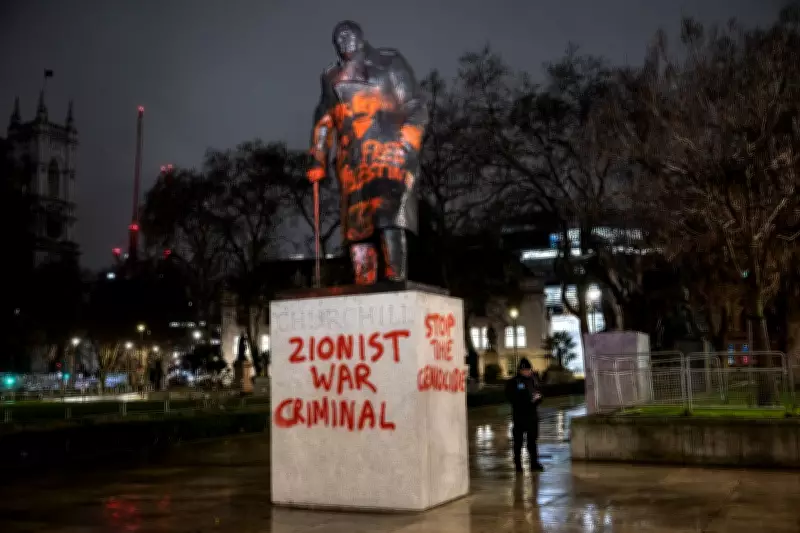
A prominent statue of Sir Winston Churchill in the heart of London has been defaced with pro-Palestine graffiti, sparking outrage and prompting a swift clean-up operation. The bronze sculpture, located in Parliament Square, Westminster, was found sprayed with red paint bearing the phrases "Free Palestine", "Zionist war criminal", and "Globalise the infitada".
Graffiti Details and Immediate Response
Additional slogans, including "Never again is now" and "Stop the genocide", were also painted onto the monument. Authorities have cordoned off the area, and cleaning efforts commenced on Friday morning to restore the statue to its original state. The Metropolitan Police have been contacted for further comment on the incident.
History of Targeting and Legal Protections
This is not the first time the Churchill statue has been vandalised. During the Black Lives Matter protests in 2020, it was similarly defaced, and last year, trans activists climbed on it during demonstrations. In response, the government introduced stricter protections last summer, making it a crime to climb on the statue. Offenders now face up to three months in prison and fines of up to £1,000 for desecrating the monument.

The statue has been added to a list of protected monuments, which includes the Cenotaph in Whitehall and the Royal Artillery Memorial, highlighting its historical significance.
Police Stance on Controversial Slogans
In December, both the Metropolitan Police and Greater Manchester Police announced that anyone chanting the slogan "globalise the intifada" would face arrest. This decision followed the Bondi Beach terror attack and the terror attack at Heaton Park synagogue in Manchester on October 2, underscoring the sensitivity around such phrases.
Historical Context of the Statue
The 12-foot statue of the World War II leader was unveiled in Westminster Square in 1973 by his widow, Clementine, eight years after Churchill's death. The ceremony was attended by both Queen Elizabeth II and the Queen Mother, marking its importance in British heritage. Interestingly, it is understood that Churchill personally selected the spot for the statue during the approval of Parliament Square's redevelopment in the 1950s.
The incident raises questions about security measures for protected monuments and the ongoing tensions surrounding political protests in public spaces.