New Forensic Examination Questions Crucial Evidence in Jeremy Bamber's 41-Year Murder Case
A distinguished British forensic physician has concluded that a silencer was not used in the shooting of Sheila Caffell during the 1985 White House Farm murders, directly challenging the prosecution's central argument that has kept Jeremy Bamber imprisoned for 41 years. Professor Jason Payne-James, president of the European Council of Legal & Forensic Medicine, examined crime scene photographs for the Guardian and found the bullet injuries inconsistent with a contact or close-range injury caused by an Anschütz 525 rifle with a silencer attached.
The Silencer That Sealed a Conviction
On 7 August 1985, five people were found dead at White House Farm in Essex: 28-year-old Sheila Caffell, her six-year-old twin sons Daniel and Nicholas, and her adoptive parents June and Nevill Bamber. All had been shot with a rifle. The case initially appeared to be a tragic murder-suicide committed by Caffell, who had recently been hospitalised with schizophrenia and was found with the rifle on her chest.
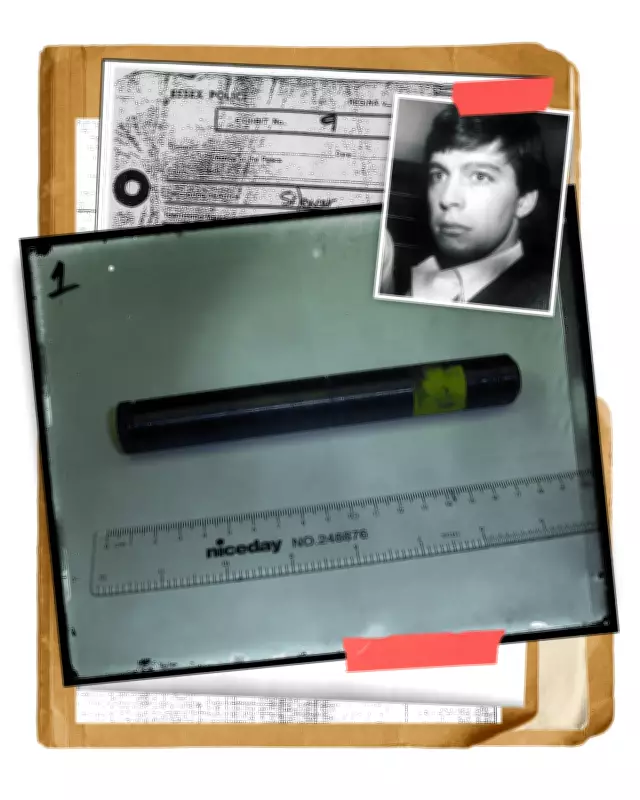
However, one month later, Jeremy Bamber was arrested and subsequently convicted of the murders. He has now served 41 years in prison, maintaining his innocence throughout. The conviction hinged crucially on a silencer discovered three days after the murders in a downstairs cupboard by Bamber's relatives.

At the 1986 trial, Justice Maurice Drake told the jury that if they believed the silencer had been attached to the rifle used to kill Sheila Caffell, then Jeremy Bamber must have killed all five family members. The jury returned a guilty verdict on a 10-2 majority just 21 minutes after receiving clarification that blood in the silencer matched Caffell's blood group.
Forensic Analysis Challenges Prosecution Narrative
Professor Payne-James told the Guardian: "The pattern imprint on the skin is not large enough to suggest that a silencer was used, either at very close range or in contact with her body. These are close-range bullet holes, and the nature of the moderator or silencer is such that you'd expect some form of pattern imprint equivalent to the diameter of the silencer if it was used in contact or at very close range."
This analysis aligns with previous findings by American pathologist Dr David Fowler, who concluded in 2012 that the rifle was fired without a silencer. His report was peer-reviewed by two equally eminent American pathologists who agreed with his conclusions. Ballistics expert Philip Boyce conducted experiments showing that wounds with a silencer attached created larger, halo-effect injuries, unlike the clean wounds found on Caffell.
Bamber and his legal team believe this forensic evidence represents a gamechanger. Without the silencer evidence, the prosecution's case collapses, as Caffell could have shot herself without needing to remove a silencer afterward.
Controversial History of the Silencer Evidence
The silencer's discovery itself remains mysterious. Why wasn't it found when Essex police searched the cupboard on the day of the killings? If Bamber was the calculated killer prosecutors portrayed, why would he carefully replace the key evidence in a cupboard where it was bound to be discovered?
Further complications emerged regarding the blood evidence. While Justice Drake told the jury the silencer contained only Caffell's blood, the Forensic Science Service had already informed all parties that the blood grouping matched 8% of the population, including Robert Boutflour, who regularly used the family guns. A second blood group found in the silencer didn't match any deceased family members or Bamber, though it potentially matched David Boutflour.
DNA testing before Bamber's 2002 appeal revealed the moderator contained three mixed DNA profiles. The Criminal Cases Review Commission referred the case back to the court of appeal, but three judges ruled that while blood grouping evidence was less certain, the "vast" amount of other evidence meant the conviction remained safe.

Disarray at the Criminal Cases Review Commission
The CCRC has taken four years to consider less than half the evidence Bamber has submitted. Last year, the commission's chair and CEO resigned after an independent review highlighted poor management, weak decision-making processes, and a culture resistant to challenging the court of appeal.
When Dame Vera Baird took over as interim chair in June 2025, she told Radio 4's Today programme that the CCRC "look for reasons not to refer rather than to refer." Bamber believes the commission's rejection of Dr Fowler's evidence exemplifies this approach, asking why they didn't hire their own expert to examine the wounds if they doubted his expertise.
A CCRC spokesperson stated: "It would be inappropriate for us to discuss the case or make any further comment while the application is being reviewed."
Mounting Questions About Witness Credibility
The case against Bamber relied heavily on testimony from his former girlfriend Julie Mugford, who changed her story multiple times. It later emerged that Mugford had agreed to sell her story to the News of the World for £25,000 if Bamber was convicted. Essex police and Crown prosecutors had also agreed to drop multiple charges against her because prosecuting her could jeopardise her credibility as a key witness.
Aside from the silencer, evidence against Bamber was largely circumstantial. There was no DNA linking him to the crime, and while the prosecution argued there had been a fierce struggle between Bamber and his father, they conceded Bamber was unmarked.
New Hope for a Case Review
Professor Payne-James's report for the Guardian negates the CCRC's previous objections to Dr Fowler's analysis, as he states that irrespective of whether it was a contact or close-range injury, he does not believe a silencer was used. "I'm in agreement with Dr Fowler," he concluded after reviewing digitised crime scene photographs.
Philip Walker, a spokesperson for the Jeremy Bamber Innocence Campaign, says: "The CCRC has spent well over a decade dismissing the report of the three senior US pathologists on totally spurious grounds. Thankfully the Guardian has done the work the CCRC should have been doing all this time."
Writing from Wakefield Prison, Bamber states: "I am very pleased that one of the UK's leading experts in forensic medicine has confirmed what we have known for years; namely that Sheila was shot without a moderator on the rifle. It completely removes the central plank of the prosecution's case."
With five forensic experts now stating they do not believe a silencer was attached to the gun that killed Caffell, pressure mounts on the CCRC to reconsider its position. Bamber believes that without the silencer evidence, "the whole case collapses" and hopes this new analysis will finally lead to his case being referred back to the court of appeal.