Gerry Adams Faces High Court Over IRA Bombings: 'As Culpable as Bombers'
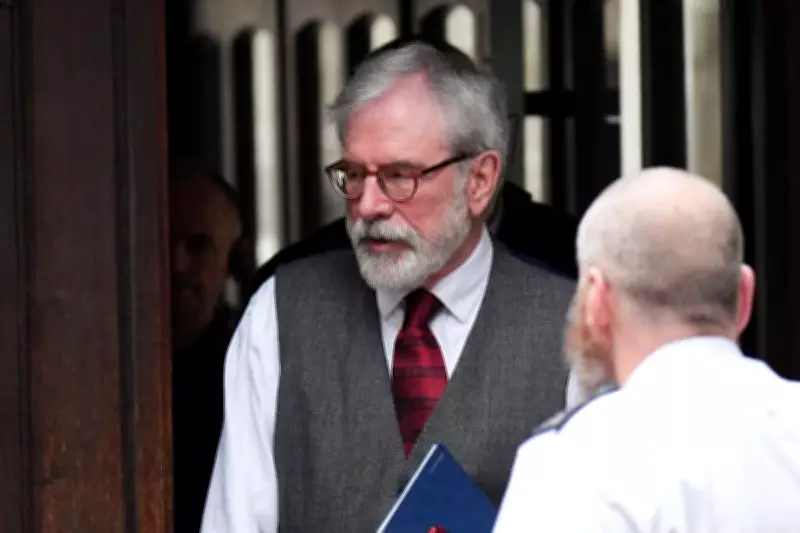
Former Sinn Fein president Gerry Adams appeared at London's High Court on Monday for a landmark civil lawsuit that aims to hold him personally liable for Irish Republican Army bombings in Britain. This high-profile case could significantly impact the legacy of the prominent republican leader, who has long denied involvement with the paramilitary group.
Background and Accusations
Adams became Sinn Fein leader in 1983, when the party served as the political wing of the IRA, positioning himself as the face of the movement seeking to end British rule in Northern Ireland. He later reinvented his image as a peacemaker after helping secure the 1998 Good Friday Agreement, which largely ended three decades of sectarian conflict known as the Troubles.
Despite his public role, Adams has consistently denied being a member of the Provisional IRA (PIRA), though accusations from various sources, including former paramilitary members, have persisted for decades. The 77-year-old is now being sued by individuals injured in three separate bombings: the 1973 attack at London's Old Bailey court and two blasts in 1996 targeting London and Manchester.

The Legal Battle Unfolds
The three claimants are seeking nominal damages of just 1 pound (approximately $1.33) alongside a judicial finding that, on the balance of probabilities, Adams was a senior member of the IRA during the Troubles. Their lawyer, Anne Studd, argued forcefully at the trial's opening that Adams was "so intrinsically involved in the PIRA organisation that he is as culpable for the assaults... as the individuals who planted and detonated the bombs."
In stark contrast, Adams' legal team has countered in court documents that there is "no credible evidence to support the claimants' allegation that (Adams) was a senior member of the PIRA." Adams attended court wearing a Palestinian flag pin and is expected to give evidence later this week, adding another layer of symbolism to the proceedings.
Political Context and Legacy
After playing a crucial role in bringing both the IRA and Northern Ireland's Roman Catholic minority behind the Good Friday Agreement, Adams transitioned into mainstream politics. He served as a member of the Northern Irish Assembly and later the Irish parliament, eventually stepping down as Sinn Fein leader in 2018.
This civil case represents a significant challenge to his carefully crafted legacy as a peacemaker, potentially reopening old wounds from the Troubles era. The outcome could influence historical perceptions of his dual roles in both political leadership and paramilitary activities during one of Britain's most turbulent periods.