High Court Dismisses Freemasons' Legal Challenge Against Metropolitan Police
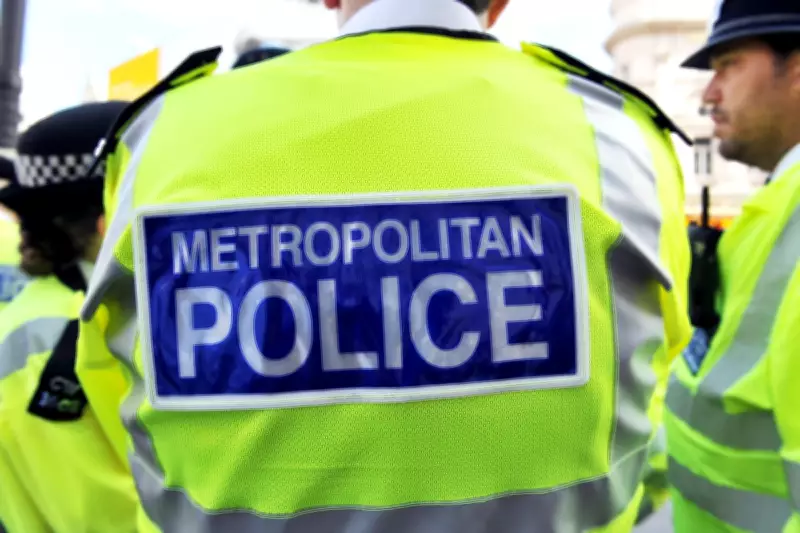
A High Court judge has thrown out a legal challenge brought by three Freemasonry organisations against the Metropolitan Police's controversial policy requiring officers and staff to declare their membership. Mr Justice Chamberlain ruled on Tuesday that the Met's decision to implement the declaration requirement serves a legitimate aim and is proportionate in maintaining public confidence in policing.
The Legal Challenge and Ruling
Three bodies representing Freemasons across England, Wales, the Isle of Man, and the Channel Islands, along with two serving police officers who are Freemasons, had sought permission to bring judicial review proceedings against the force. Their challenge followed the Met's announcement in December that membership of the Freemasons or similar organisations would be added to its declarable associations policy.
In a detailed 17-page ruling, Mr Justice Chamberlain stated that the grounds of the proposed legal challenge were not "reasonably arguable." He emphasised that the policy's purpose is dual: eliminating potential for actual bias where officers might discharge their functions improperly, and addressing perceived bias where there might be suspicion of improper conduct.

The judge declared: "The requirement is, in my judgment, 'designed to secure the proper exercise of the functions of a constable'. The contrary is not reasonably arguable." He further noted that leaving declaration decisions to individual officers on an "ad hoc basis" would not achieve the objective of maintaining or enhancing public trust.
The Metropolitan Police's Declaration Policy
The controversial policy requires Metropolitan Police officers and staff to declare membership "past or present" of any organisation that is "hierarchical, has confidential membership and requires members to support and protect each other." This specifically includes Freemasonry organisations.
Approximately 400 Met officers and staff have already made declarations under this policy since its implementation. The force maintains that the measure is necessary to ensure transparency and maintain public confidence in police impartiality.
Arguments Presented in Court
During a hearing on February 11, lawyers representing the Freemasonry organisations argued that the policy created an institutional signal of suspicion and could effectively establish a "black list" against Freemasons. Claire Darwin KC, representing the claimants, contended that the move breached Freemasons' human rights and was based on "limited, opaque and heavily perception-driven" evidence.
Darwin further argued that the police appeared to rely on "long-standing conspiracy theories and/or prejudicial tropes about Freemasons" as justification for implementing the measure.
In response, barristers for the Metropolitan Police strongly rejected these claims. James Berry KC, representing the force, stated that suggestions officers would be blacklisted were "plainly wrong" and emphasised that employees remained "free to become or remain Freemasons." He argued that claims of human rights breaches were "without merit" and that fears of stigmatisation were "not supported by the evidence."
Addressing Stigma and Public Trust
Mr Justice Chamberlain addressed concerns about potential discrimination, ruling that the policy was not discriminatory or "unduly stigmatising" against Freemasons. He acknowledged the existence of stigma associated with Freemasonry but noted that the Metropolitan Police has a responsibility to address this in connection with police duties and functions.
Berry elaborated on this point during proceedings, stating: "The defendant is not responsible for the stigma; but the defendant is responsible for addressing it, in connection with the exercise of police duties and functions by the defendant's officers and staff, and for positively maintaining public confidence in the impartiality and transparency of the Metropolitan Police."

Organisations Involved in the Challenge
The legal challenge was brought by the United Grand Lodge of England, the Order of Women Freemasons, and the Honourable Fraternity of Ancient Freemasons, along with two serving police officers who are Freemasons. The United Grand Lodge had previously expressed concern that the reporting requirement could undermine the public credibility of Freemasons.
With the High Court's dismissal of their application for judicial review, the Metropolitan Police's declaration policy remains in effect, requiring continued transparency from officers and staff regarding their membership in Freemasonry organisations.