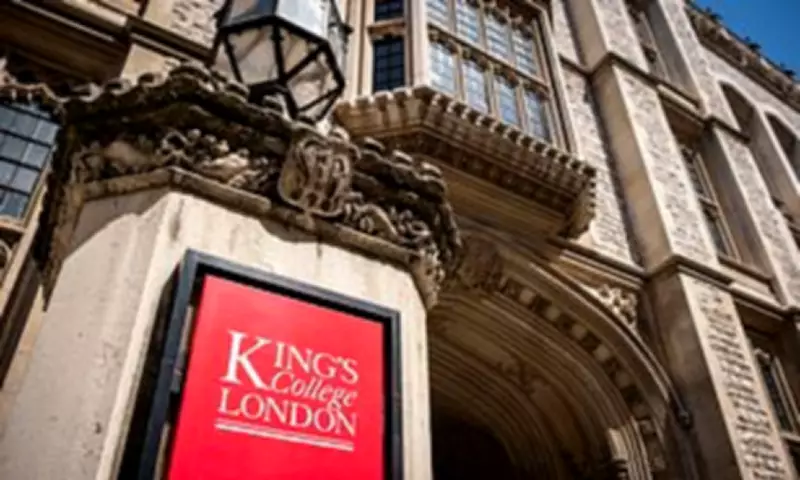
King's College London, a prestigious member of the elite Russell Group, is implementing a significant overhaul of its assessment methods in a bid to become more 'inclusive'. The university aims to 'validate diverse knowledge systems and lived experiences' by scaling back traditional exams and overlooking grammar mistakes in student work.
Major Changes to Assessment Framework
The new framework discourages what it calls 'over-reliance' on traditional examinations, instead offering 'more options' for how students can be evaluated. Staff have been instructed to provide students with 'choice in assessment formats', such as increased coursework opportunities. This shift is part of a broader initiative to make education more accessible and responsive to diverse student backgrounds.
Grammar and Linguistic Diversity Focus
In a recent presentation to academic staff, slides with the heading 'equality, diversity and inclusion' explicitly stated that educators should 'focus on ideas, not grammar'. The guidance emphasizes that assessment should be 'culturally responsive' and 'reward the use of culture, language and identity'. Marking practices are expected to be 'inclusive' and 'embrace linguistic diversity', potentially overlooking grammatical errors in favour of content and cultural expression.

Essay Word Limits Reduced
In a separate but related announcement, the university has introduced shorter word limits on essays to prevent students from being 'overburdened'. Some essays will now be capped at 1,300 words, down from the previous 2,000-word standard. The stated goal is to reduce academic stress and create a more manageable workload for students across various disciplines.
Backlash from Academics and Students
These changes have sparked considerable controversy within the university community. Lecturers have branded the overhaul as 'dumbing down', arguing that it compromises academic rigour. One anonymous King's College academic criticized the framework as being 'dreamt up by middle management to justify their existence', suggesting it's more about political positioning than educational improvement.
Students have also expressed strong opposition, particularly to the new word limits. In an open letter, students slammed the reduced essay lengths, arguing that the caps would prevent them from properly exploring their subjects in depth. The backlash has been significant enough that students have set up a petition against the changes.
Concerns About Grade Inflation and Academic Freedom
The anonymous academic warned that the new approach could leave educators vulnerable to challenges from students seeking to inflate their grades. 'A student could object to the grade they get on the basis that their 'culture and identity' hasn't been respected,' they cautioned. This raises questions about consistency and fairness in assessment practices.
Dr Edward Skidelsky, lecturer in philosophy at the University of Exeter and director of the Committee for Academic Freedom, commented: 'These attempts to dumb down assessment in the name of "inclusivity" are being pushed by university managers against the will of academics and students themselves, the best of whom hunger for an education that is deep and rigorous.'
Context and Institutional Goals
The move comes as King's College London, where nearly 70 percent of students are from ethnic minority backgrounds, has committed to 'inclusion' in its official 'access plan'. Documents submitted to the Office for Students reveal the university's ambition to close the attainment gap between black students and their white peers by 2034. In the 2021/2022 academic year, black students at King's were 18.2 percentage points behind their white counterparts in achieving a First or 2:1 degree classification.
University's Defence of the Changes
A spokesman for King's College London defended the new approach, stating: 'Standards at King's remain as high as ever. Our approach still includes rigorous exams, alongside other forms of assessment that help students build the practical skills employers are looking for. We have worked closely with students, alongside academic experts, to develop this approach so that our graduates are ready for the workplace – without compromising academic integrity.'

The university emphasizes that traditional exams will still be part of the assessment mix, but will be complemented by alternative formats designed to better prepare students for professional environments. The institution maintains that these changes represent an evolution rather than a dilution of academic standards.