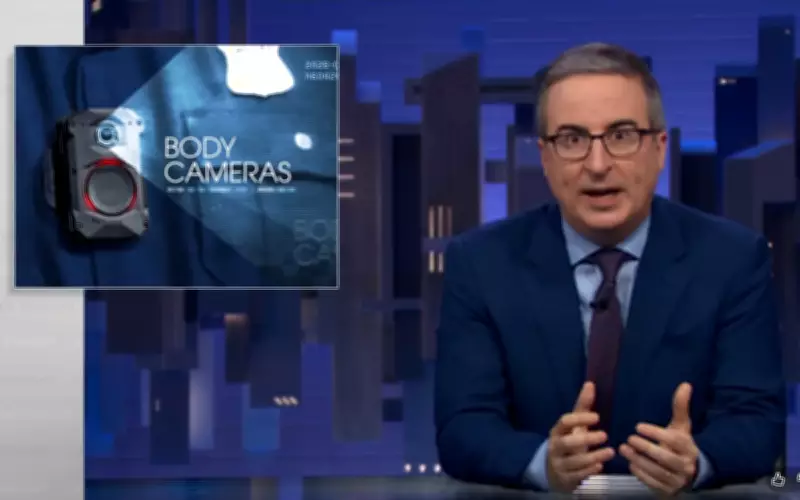
John Oliver Exposes Systemic Failures in Police Bodycam Usage
In a recent episode of Last Week Tonight, host John Oliver delivered a scathing critique of police body-worn cameras, arguing that their proliferation has not delivered the promised transparency and accountability in law enforcement. Oliver emphasised that while bodycams are often touted as a solution to police misconduct, their effectiveness hinges entirely on proper usage, which is frequently lacking.
The Illusion of Transparency
Oliver highlighted that bodycams have become a popular tool among Democratic lawmakers, with calls for "masks off, body cameras on" in negotiations involving Immigration and Customs Enforcement (ICE) agents. He noted the appeal of bodycams in calming interactions, but cautioned that this notion is misleading without strict protocols. "The more you look into bodycams, the more you realize they are only effective if used properly, and in many cases, they are just not," Oliver stated, pointing to widespread misuse.
Limitations and Misuse of Camera Footage
Oliver enumerated several critical limitations of body cameras:

- Recordings are restricted to the camera's view, which can be incomplete or misleading.
- Officers often mute, obscure, or turn off cameras intentionally, as seen in cases like an Oklahoma police stop where an officer complied with a request to disable the device.
- Laws in states like Connecticut allow cameras to be turned off during breaks, personal business, or sensitive encounters, leaving critical incidents unrecorded.
He added that even when footage is captured, the sheer volume—such as Axon's cloud storage of over 100 petabytes—means most of it is never reviewed, missing opportunities to identify patterns of abuse.
Case Studies Highlighting Accountability Gaps
Oliver cited the murder of George Floyd in 2020, where a review of Minneapolis police footage revealed prior incidents of Derek Chauvin using neck restraints, yet supervisors cleared his conduct. A state civil rights commission found that a "substantive audit" could have prevented further abuse. Similarly, the case of Ronald Greene in Louisiana showed bodycam footage was withheld for two years until leaked, exposing officers turning off cameras during violent arrests. Oliver remarked, "Hoping for leaks cannot be the system here," criticising the reliance on unofficial disclosures for accountability.
Calls for Enforceable Reforms
Oliver argued for systemic changes, including:
- Clear, enforceable rules mandating footage retention, routine review, and timely release, especially for critical incidents.
- Independent third-party oversight to monitor compliance and reduce police influence.
- Reducing dependence on bodycams alone, noting that cellphone footage from bystanders often provides more reliable evidence, as in the shooting of Alex Pretti in Minneapolis.
He concluded that without significant reforms, bodycams will fail to shine a light on misconduct, urging continued public vigilance and advocacy for transparency in policing.