Mayor Mamdani's First Showdown with NYPD Over Surveillance Technology
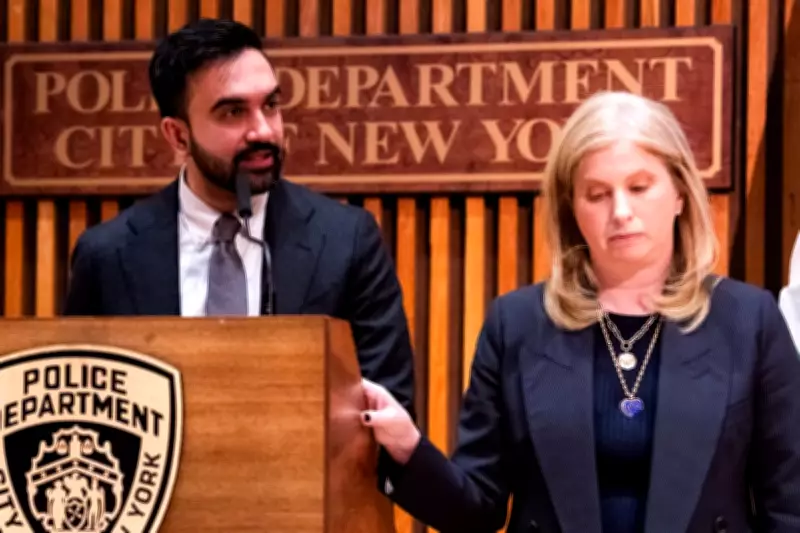
Zohran Mamdani, the democratic socialist mayor of New York City, faces his first major confrontation with the New York Police Department (NYPD) over its use of covert surveillance technology. As a former state assembly member, Mamdani sponsored the Stop Fakes Act, which aimed to prohibit law enforcement from creating fake online accounts to collect user information. Now, as mayor, he must decide whether to act against the NYPD's admitted use of such tools, risking alienation from the police force he relies on to govern a city of 8.4 million residents.
The Stop Fakes Act and Mamdani's Past Advocacy
During his tenure in the New York State Assembly, Mamdani co-authored a 2023 op-ed in City & State, declaring that "digital dragnet surveillance is widespread and dangerous, yet it continues to go unregulated." He highlighted the NYPD's refusal to provide public documentation of its social media surveillance policies, despite claims in a Department of Justice report. The Stop Fakes Act ultimately failed, but the battle over police surveillance has intensified, with Mamdani now in a position of greater power.
NYPD's Disclosure of Surveillance Tools
On February 4, the NYPD disclosed its use of "internet attribution management infrastructure" from the technology company Ntrepid. This tool allows personnel to "safely, securely and covertly conduct investigations and detect possible criminal activity on the internet," effectively creating the "sock puppet" online identities that Mamdani once sought to ban. Ntrepid has a controversial history; in 2011, the Guardian reported that the U.S. military collaborated with the company to use fake personas for pro-American propaganda on social media.

Mamdani's Evolving Stance on Policing
Mamdani's rhetoric has shifted since his days as an assembly member. In 2020, amid the Defund the Police movement, he posted on Twitter (now X) that the NYPD was "racist, anti-queer & a major threat to public safety" and advocated for defunding. However, after a police officer was killed in a July 2025 mass shooting in Manhattan, Mamdani, then the Democratic mayoral nominee, stated that police play a "critical role" in public safety and clarified he was not running to defund them. He attributed his earlier comments to frustration over the murder of George Floyd.
Upon election, Mamdani retained Police Commissioner Jessica Tisch, praising her work on corruption, crime reduction, and standing against authoritarianism. Despite this, the NYPD continues to face scrutiny over surveillance practices.
Legal Challenges and Non-Compliance
In 2020, the New York City Council passed the Public Oversight of Surveillance Technology (Post) Act, requiring the NYPD to disclose surveillance tool capabilities and safeguards. Since then, the department has not fully complied, according to the Surveillance Technology Oversight Project (Stop) and the Legal Aid Society. A 2022 report by the city inspector general found the NYPD used "boilerplate language" that lacked specific details, hindering audits.
The Legal Aid Society filed an open records request in 2020 for NYPD surveillance contracts, which was denied as "unduly burdensome." The state supreme court's appellate division later ordered the department to provide records quarterly. Over a year after the order, less than 600 of an estimated 165,000 pages have been released, with Jerome Greco, digital forensic director at the Legal Aid Society, noting it could take decades at the current pace.
Concerns Over Bias and Accountability
Advocates warn that surveillance tools like Ntrepid's could disproportionately target Black and Latino residents. Will Owen, communications director for Stop, cited an inspector general report where the NYPD considered someone a "known associate" for simple actions like wishing a gang member "Happy Birthday" on Facebook, potentially adding them to a criminal database. Owen argues this technology is "highly biased and racist" in flagging content.

Emile Ayoub, senior counsel at the Brennan Center's Liberty and National Security Program, added that AI agents enable police to collect and analyze information rapidly, undermining Fourth Amendment protections against pervasive surveillance.
Mamdani's Dilemma and Future Actions
As mayor, Mamdani has the authority to halt the NYPD's use of Ntrepid's technology, but doing so could strain relations with the police. Will Owen of Stop expressed cautious optimism, stating, "Mamdani was a strong partner in the fight against mass surveillance while an assembly member... Stop will continue to hold him accountable." Greco acknowledged the mayor's new administration has many challenges but hopes Mamdani will support anti-surveillance efforts given his past sponsorship of the Stop Fakes bill.
State lawmakers have reintroduced the Stop Fakes bill, offering a potential legislative solution if Mamdani does not act. For now, advocates are giving the mayor the benefit of the doubt, but the pressure is mounting for a decision that balances his activist roots with the realities of governance.