New York City's Police Misconduct Settlement Costs Approach $800 Million Landmark
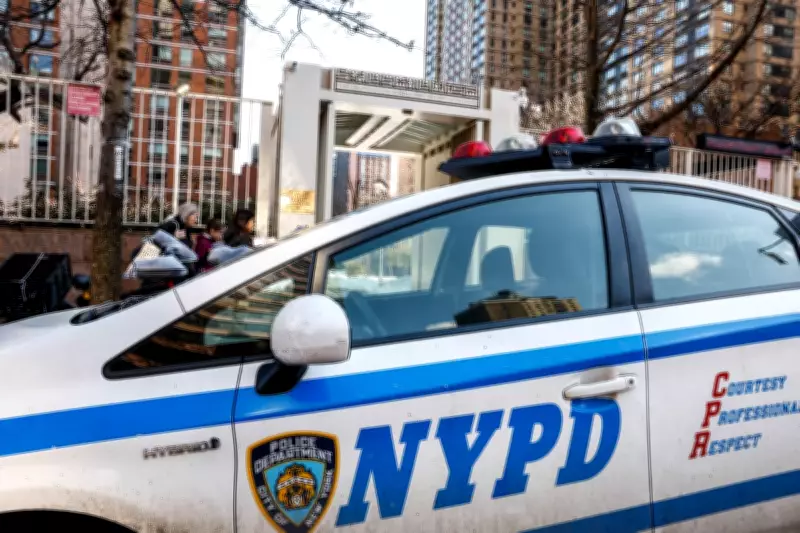
New York City has disbursed close to $800 million to resolve police misconduct lawsuits over the past seven years, with a significant $117 million paid out in the last year alone. This substantial financial burden emerges from cases spanning decades, from wrongful convictions in the 1980s to violent arrests during the 2020 protests.
Analysis Reveals Escalating Settlement Trends and Historical Cases
The comprehensive analysis, published on Monday by The Legal Aid Society, a nonprofit public defender organization, highlights that the city settled 1,044 police misconduct lawsuits in 2025. This marks the highest number since 2019, when 1,276 cases were resolved, and represents the fourth consecutive year where settlements have surpassed $100 million.
Last year's total nearly doubled the $62.1 million paid in 2020 for 929 lawsuits, following a $206.4 million payout in 2024 for 980 cases. The analysis specifically focuses on lawsuit settlements and does not include claims resolved by the city comptroller before formal litigation commenced.

Substantial Payouts for Wrongful Convictions and Excessive Force
Among the most notable settlements from last year, two men received a combined $24.1 million after spending over two decades in prison for a fatal 1986 robbery in midtown Manhattan that they did not commit. Eric Smokes and David Warren were awarded $13 million and $11.1 million respectively, following allegations that a corrupt detective relied on coerced witness testimony.
Another significant settlement of $5.75 million went to a man who claimed police blinded him in his left eye with a stun gun. Additionally, $3.9 million was paid to Steven Lopez, a sixth man arrested with the Exonerated Five in the 1989 Central Park jogger case, who pleaded guilty under pressure.
Further settlements included $1.7 million for four protesters beaten during a June 2020 demonstration in Brooklyn and $5.2 million to nine individuals framed by officers later convicted of falsifying evidence.
Accountability Concerns Amid Budgetary Pressures
Jennvine Wong, supervising attorney with The Legal Aid Society's Cop Accountability Project, emphasized that the analysis aims to provide transparency regarding the NYPD's financial impact. "This analysis is really about transparency around what the NYPD is costing us," Wong stated. "And from what we can tell here, I think it means that meaningful accountability has been lacking in the police department. It's a chronic problem that needs to be addressed."
These settlements arrive as New York City confronts a $5.4 billion budget shortfall. Mayor Zohran Mamdani has proposed trimming $22 million from the NYPD's $6.4 billion budget, despite the department touting lower crime rates. It is important to note that settlements are paid from a separate part of the city's budget, unlike in some jurisdictions where they come directly from police department operating funds.
NYPD Response and Ongoing Scrutiny of Stop-and-Frisk Tactics
In a statement, the NYPD acknowledged that wrongful conviction cases constitute a substantial portion of the $796 million paid since 2019 but argued they do not reflect current policing standards. "While these cases are very important to address, they tell you nothing about the state of policing today," the department said.
Under Police Commissioner Jessica Tisch, the NYPD claims to have taken significant steps to enhance accountability, compliance, and policy updates to mitigate risks. The department also noted collaboration with district attorneys' offices to review wrongful arrest and conviction claims.
However, a court-appointed monitor recently criticized the NYPD for poorly supervising and underreporting the use of stop-and-frisk tactics. Mylan L. Denerstein, the monitor, pointed out "unacceptably low compliance rates" with constitutional protections, despite a federal judge ruling in 2013 that the tactic violated civil rights.

Human and Financial Toll of Police Misconduct
Wong underscored the broader implications of these settlements, stating, "These judgments and settlement costs are costing the city so much money and are costing the victims of police misconduct not just monetary losses and financial losses, but also causing real human trauma that they carry with them."
The staggering settlement costs suggest that more comprehensive measures are necessary to reduce misconduct and foster a culture of accountability within the NYPD.