The Ermenonville Air Disaster: A Pilot's Chilling Final Words
Fifty-two years ago today, one of the deadliest aviation catastrophes in history unfolded over France, claiming 346 lives, including 177 British citizens. The Ermenonville air disaster remains a sombre milestone in aviation history, marked by a pilot's haunting final transmission.
The Fatal Flight and Its Tragic End
On March 3, 1974, Turkish Airlines Flight 981 departed from Istanbul's Yeşilköy Airport, bound for London Heathrow with a scheduled stop at Orly Airport in Paris. After taking off from Paris and turning west over the town of Meaux, controllers noticed alarming signals: the aircraft's pressurisation and overspeed warnings had been triggered.
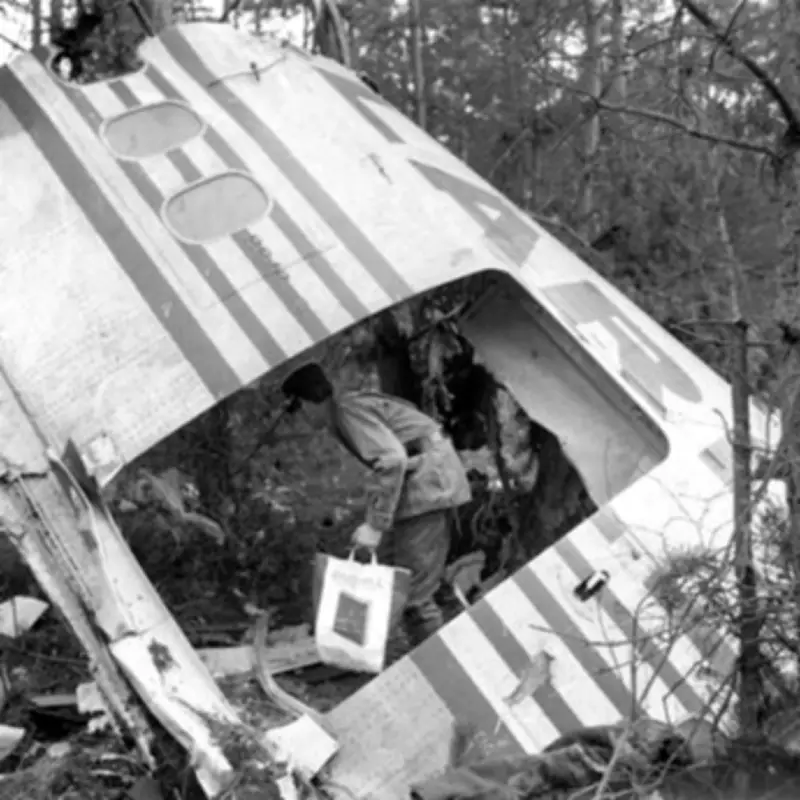
In a chilling moment captured on recordings, Captain Nejat Berkoz uttered his final four words: 'the fuselage has burst'. The McDonnell Douglas DC-10 vanished from radar shortly afterwards, its wreckage scattered across the Ermenonville Forest.

The Aftermath and Investigation
The crash scene was devastating. Six passengers were ejected over Saint-Pathus, discovered in a turnip field. Of the 346 people aboard, only 40 bodies were identifiable, with nine passengers never identified. A subsequent investigation revealed a critical failure in the rear cargo hold, which decompressed during flight.
The pressure difference caused the cabin floor to rip out, blowing open a hatch and ejecting the six passengers. This mechanical failure led to the aircraft's disintegration mid-air.
Personal Tragedies: The Human Cost
Among the victims were four members of Davenport Rugby Club from Stockport, Greater Manchester: Robert Breton, 33; Stephen Backhouse, 43; Sidney Waterhouse, 48; and Christopher Kendall, 33. They had travelled to France for an England rugby match.
In 2014, Sidney's daughter Louise recounted the harrowing moment she learned of the disaster. 'I wasn't aware my dad was on it,' she told the Manchester Evening News, 'but when the message came through three times, it suddenly struck me he could have been.'
Initially, her mother Leah believed Sidney had landed on an earlier flight and gone straight to the rugby club. However, the grim reality soon set in. 'When he wasn't at the club, I just knew that was it,' Louise added. 'It was devastating - your father goes away on the Friday and never comes back.'
Historical Context and Legacy
Shortly after the crash, a mass burial was held for the victims, many of whom had crossed the Channel for a Five Nations rugby clash between England and France the previous day. By chance, the England rugby team itself had travelled on an Air France Boeing 727 instead.
At the time, the Ermenonville disaster was the deadliest crash in aviation history. However, in March 1977, the Tenerife airport disaster claimed 583 lives when two Boeing 747 jets collided on the runway, surpassing this tragedy in scale.
Nevertheless, the Ermenonville air disaster remains the deadliest aviation crash ever to occur on French soil. Its legacy endures as a stark reminder of the vulnerabilities in early wide-body aircraft design and the profound human cost of such failures.