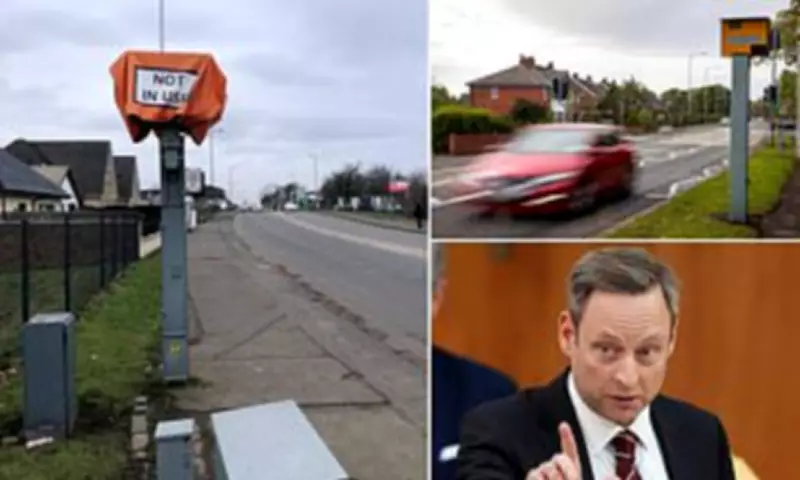
Police Scotland Deactivates 135 Speed Cameras Despite Rising Offences
They have long been considered both the bane of reckless drivers and the guardians of road safety across Scotland. The nation's network of roadside speed cameras has played a crucial role in protecting motorists and pedestrians for decades. However, a startling revelation by the Mail on Sunday shows that Police Scotland has switched off cameras at 135 locations nationwide, even as speeding offences were on the rise in many of these very areas.
Information Commissioner Forces Transparency
The concerning figures only came to light after Police Scotland was compelled to release the details by Scotland's Information Commissioner. The force had repeatedly refused to provide the Mail on Sunday with statistics on speeding offences in the areas where cameras were deactivated, claiming it was "not in the public interest" under Freedom of Information laws and would "prejudice substantially the detection of crime."
Scottish Conservative justice spokesman Liam Kerr responded with alarm, stating: "It is deeply concerning that a vast number of speed cameras have been switched off in areas where offences were actually on the increase. It is also worrying that the public would have been kept in the dark over this until the Information Commissioner stepped in. SNP ministers must ensure road safety is treated as a priority."

Contradictory Data and Community Concerns
The released data directly contradicts the official position that driver behaviour had improved, justifying the mass deactivation. Initial figures showed 119 cameras were switched off by April 2024, with another 16 disconnected since. The Scottish Government justified this by citing a review of over 500 sites that found 119 had no speed-related injury collisions and consistent speed limit compliance.
However, the obtained evidence tells a different story:
- One camera caught more speeding drivers in its final month of operation than in the entire preceding year.
- Another camera, which recorded an average of 27 offences per month in 2023, saw that rate surge by almost 50% before being deactivated.
- A camera situated for 25 years next to a Glasgow playpark in Rouken Glen Road, Giffnock, was turned off. Residents now describe the road as a "racetrack," with several personal injury collisions occurring at nearby traffic lights.
- On the A1 at Cockburnspath in Berwickshire, a camera was switched off just one month after recording 72 speeding offences in March 2024—double the monthly average for 2023.
- At a red light camera on Gorgie Road in Edinburgh, the 2023 monthly average for offences was exceeded in January, February, and March of 2024, immediately before switch-off.
In total, offences at 14 camera sites were higher in early 2024 compared to the previous year, with no evidence of improvement at 55 other locations.
Resident Testimonies and Safety Warnings
Local residents have voiced significant concerns. Anna Paterson, 74, living near the A80 at Moodiesburn, Lanarkshire, where two cameras were deactivated, reported: "They never should have switched them off. There's now a crash there every week. Last week, there were two. Drivers now know they can do what they want—you have them zooming through the lights at all speeds."
Ruth Billingham, head of campaigns and public affairs at the safety charity Living Streets, added a stark warning: "Speeding vehicles make our streets feel unsafe and puts people off walking. It's not without reason, when speeding contributes to around one in five deaths on Scotland's roads. Bagging cameras won't make the problem go away but will send a message that speeding and running red lights comes free from consequence."
Official Stance and Ongoing Monitoring
In an April 2024 news release, Safety Cameras Scotland—operated by Police Scotland—claimed a "national performance review" revealed "significant progress" in road safety, with no speed or red-light related injury collisions at the reviewed sites over five years. Mark Patterson, Police Scotland's Road Policing Chief Inspector, commended drivers for "improved behaviour."

A spokesperson for Safety Cameras Scotland later clarified: "As part of our site review process, it was decided that live operation at these sites would be stopped due to a reduction in speed-related injury collisions. Annually, over a three-year period, after live operation is stopped, we undertake a thorough assessment of the impact at these sites, meaning if speeds and/or collisions increase, we have the opportunity to reintroduce the location if that is deemed appropriate."
Broader Context of Camera Enforcement
This mass deactivation occurs alongside the expansion of other camera-based enforcement systems. Scotland's first Low Emission Zone (LEZ) was established in Glasgow in 2023, using number plate recognition cameras to police a square mile of the city centre, with similar zones later introduced in Edinburgh, Aberdeen, and Dundee. By June, over 169,000 fines, totalling more than £19 million, had been issued for LEZ breaches.
Additionally, the Scottish Government is investing £350,000 to pilot AI-controlled cameras designed to detect drivers using mobile phones or not wearing seatbelts—a move criticised by civil liberties groups as "intrusive" and "creepy."
Transport Scotland challenged the Mail on Sunday's interpretation of the data, emphasising that decisions are based on collision data and evidence of speed compliance by the majority of drivers, not the number of tickets issued. The debate continues as communities and officials grapple with the balance between enforcement, transparency, and road safety in Scotland.