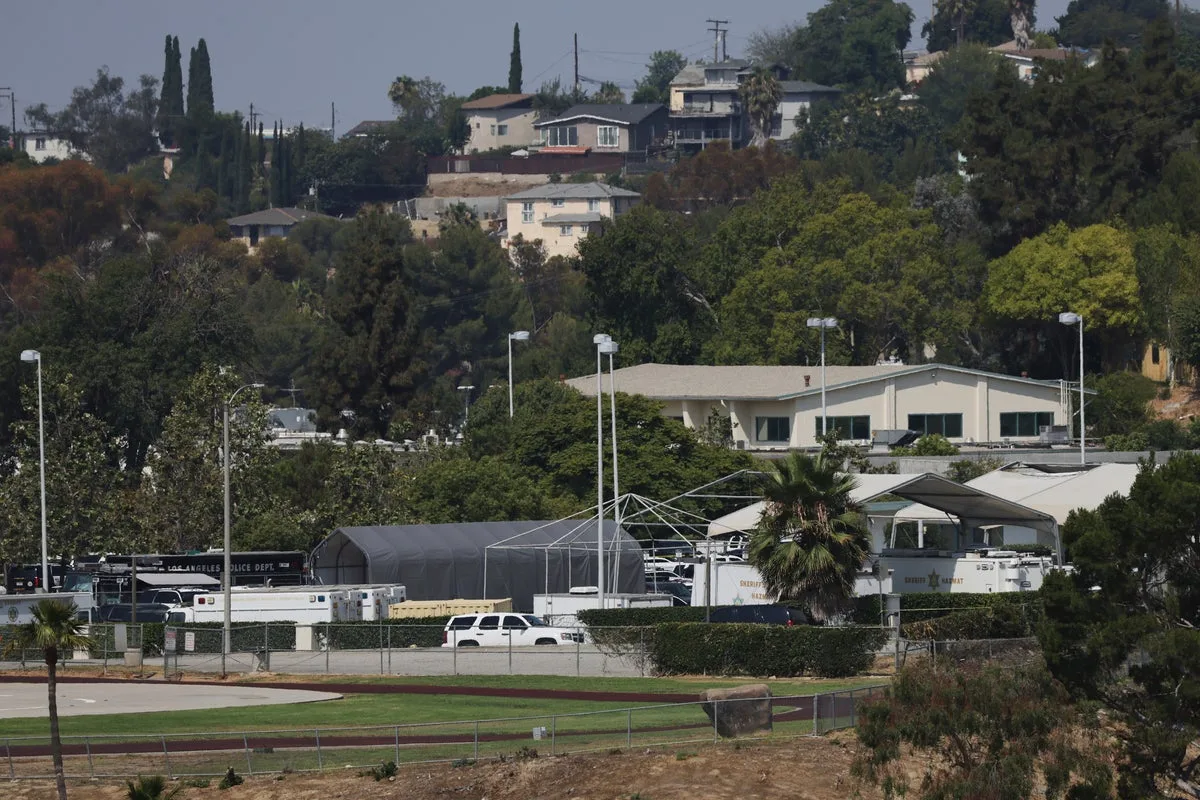
A state investigation has concluded that the tragic deaths of three Los Angeles County sheriff's deputies in a grenade explosion last year involved "willful" and serious safety violations within the department. The findings highlight critical failures, including inadequate training and the improper handling of explosives, which contributed to this devastating incident.
Investigation Details and Citations
California's Division of Occupational Safety and Health conducted a thorough probe into the July 2025 explosion that occurred in the parking lot of a training facility. The blast claimed the lives of detectives Joshua Kelley-Eklund, Victor Lemus, and William Osborn, all members of the arson and explosives team. This incident marked one of the department's most severe losses of life in a single event.
In January, the state division issued eight citations against the sheriff's department, resulting in approximately $350,000 in fines. The department is currently appealing these citations, as confirmed by state officials. The investigation results were initially reported by the Los Angeles Times, bringing public attention to the grave safety lapses.
Sequence of Events Leading to the Explosion
The day before the explosion, the arson and explosives team had recovered two grenades from a Santa Monica apartment complex. According to Sheriff Robert Luna, the detectives X-rayed the devices and believed they were "inert," or inactive. At least one of these grenades was transported to an LASD training facility, where it unexpectedly detonated, causing the fatal explosion.
A week later, Luna announced that the second grenade was missing, and the department continues to investigate its whereabouts. The handling and storage of these explosives have come under intense scrutiny following the state's findings.
Specific Safety Violations Identified
According to the state investigation, the sheriff's department failed to correct unsafe working conditions and practices related to explosive materials. Key violations included not providing effective training for employees handling explosives and failing to ensure the use of proper protective equipment. Additionally, the department did not properly document training sessions or adequately identify and evaluate hazards associated with transporting and storing explosive materials.
Denisse Gómez, a spokesperson for the Division of Occupational Safety and Health, stated that explosives were left unattended and not stored appropriately. They were also not placed in "suitable containers" during manual transport. Gómez emphasized, "This tragedy underscores the responsibility employers have to anticipate hazards and take meaningful steps to protect workers, especially in high-risk operations involving explosive materials."
Legal Challenges and Non-Compliance
In a further development, the Occupational Safety and Health Division sued the LASD in January for non-compliance with the investigation. The lawsuit alleges that the department failed to provide subpoenaed documents in a timely and complete manner. When the state initially requested training records, dispatch logs, incident reports related to the grenades, and safety inspection records, the LASD responded with only a limited number of documents, one of which was almost entirely redacted.
The state then issued a subpoena for additional documents, but the LASD "produced a limited set of documents responsive to only two of the nineteen categories requested in the subpoena," according to the lawsuit. In response, the sheriff's department argued in court documents that the state delayed its request for months, leaving insufficient time to fulfill it. They also cited that bomb squad training materials from the FBI could not be disclosed without "jeopardizing public safety and national security," suggesting such requests should be directed to the FBI directly.
Department Response and Ongoing Investigations
An LASD spokesperson did not immediately respond to an emailed request for comment on the recent findings. However, in a statement provided to the Los Angeles Times, a sheriff's spokesperson indicated that the department is cooperating with state investigators to the extent permitted by law, as other investigations remain ongoing.
The tragedy has sparked broader concerns about safety protocols within law enforcement agencies handling hazardous materials. As the appeals process and legal proceedings continue, the focus remains on ensuring such violations are addressed to prevent future incidents and protect the lives of those serving in high-risk roles.