Federal and local authorities throughout the United States have implemented significant new security protocols, driven by mounting concerns that Iran or its supporters may initiate attacks on American soil. This heightened state of alert is a direct response to recent military actions by the United States and Israel against Iran, with officials fearing retaliatory strikes could target sensitive locations nationwide.
Enhanced Patrols and Counterterrorism Measures
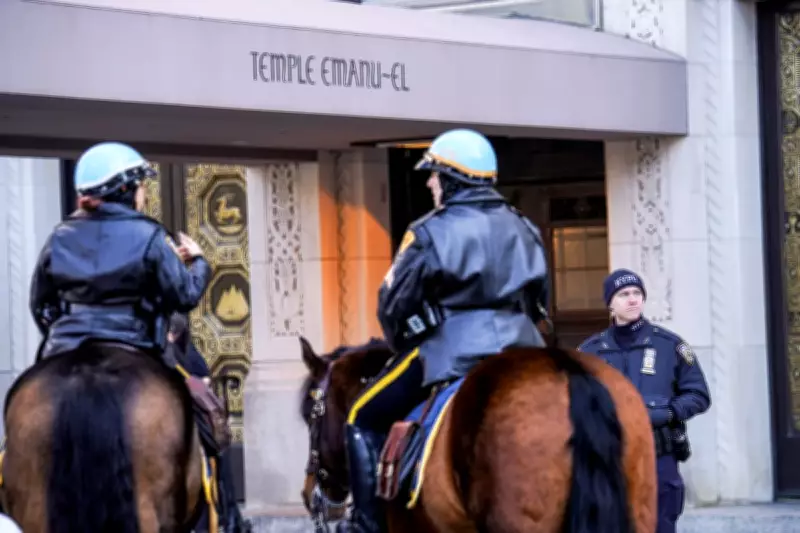
In major metropolitan areas including New York, Los Angeles, and Miami, law enforcement agencies have announced increased patrols around vulnerable sites such as places of worship, cultural centres, and educational institutions. This proactive stance aims to deter potential threats, whether orchestrated by the Iranian regime directly or carried out by lone actors inspired by its rhetoric.
Rebecca Weiner, Deputy Commissioner of Intelligence and Counter-Terrorism for the NYPD, confirmed that the city has been operating in a "heightened threat environment" since June, when the US assisted Israel in targeting Iranian nuclear facilities. She described the recent bombings as "definitely an escalation", prompting enhanced deployments and specialised resources across New York.

Expert Warnings and Intelligence Concerns
Security analysts have voiced serious apprehensions regarding Iran's capacity to execute attacks through various means. Matthew Levitt, Director of the Counter-Terrorism Program at the Washington Institute for Near East Policy, emphasised that the current geopolitical climate presents an ideal opportunity for Iran to activate long-developed operational capabilities.
"If there were ever a time when Iran would want to put into place all the different capabilities it's built up over these years as off-the-shelf operational planning … now would be it," Levitt stated, highlighting the regime's potential to utilise sleeper cells, hire operatives, or inspire independent actors to commit acts of terrorism.
Cyber Threats and Infrastructure Vulnerabilities
Beyond physical attacks, experts warn that Iran could launch sophisticated cyber offensives against critical American infrastructure. Jake Braun, Executive Director of the Cyber Policy Initiative at the University of Chicago, noted that Iran has previously deployed distributed denial-of-service (DDoS) attacks against US financial institutions, and similar tactics could be revived to disrupt online banking or target energy markets.
Braun explained that civilian entities such as water utilities, banks, and election systems remain particularly vulnerable, as they often lack the resources to defend against nation-state level cyber aggression. "These attacks, by design, live in this kind of nebulous world between civilian and military existence," he remarked, underscoring the complex challenges in safeguarding these sectors.
Internal Challenges and Resource Allocation
The effectiveness of federal agencies in countering the Iranian threat may be hampered by recent organisational upheavals. Reports indicate that the FBI has reassigned nearly half of its agents from major field offices to support immigration enforcement, potentially diverting focus from cybercrime, drug trafficking, and terrorism prevention.
Additionally, the dismissal of at least a dozen FBI staffers from a counterintelligence unit, as reported by the New York Sun, has raised concerns about a loss of institutional knowledge and capabilities. Levitt acknowledged this "brain drain" but maintained that overall, the US remains well-positioned to identify and mitigate threats, albeit with the perpetual challenge that "counter-terrorism people have to get it right every single time, and the bad guys have to get it right once."
Public Reassurance and Vigilance
Despite the elevated risk, security professionals stress that there is no cause for public panic. Richard Frankel, a retired FBI agent, advised citizens to maintain awareness of their surroundings and report any suspicious activities, echoing the familiar adage: "if you see something, say something."

Frankel emphasised that while vigilance is crucial, daily life need not be radically altered. "I don't think we have to change everything we do," he said, advocating for a balanced approach that combines enhanced security measures with public cooperation to effectively safeguard communities across the nation.